
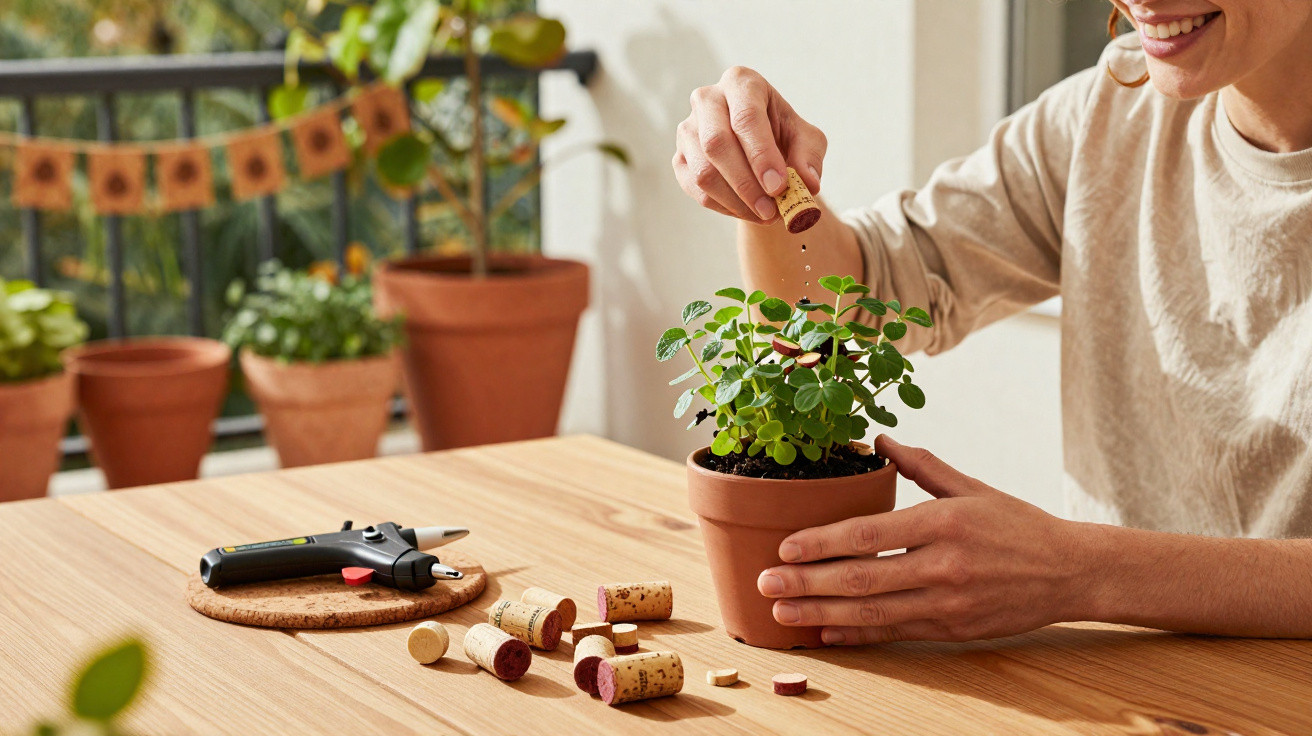
Wine corks nearly always end up in the bin, yet cork has unusual properties for anyone who enjoys gardening, plant pots, growing medium, controlled moisture and decorative objects with a natural texture. Lightweight, durable and porous, it offers an easy way to reuse material at home without needing complicated tools.
Why is cork so useful for these purposes?
Cork brings together low density, flexibility, thermal insulation and strong moisture resistance. These features make it useful in both gardening and décor. This is why wine corks can be repurposed as pot toppers, bases for arrangements, handmade frames and supports for small containers, all with an organic visual appeal.
The material also ages well in practice. Whether sliced into discs or cut into uneven pieces, it retains its texture, bulk and a degree of stability. This makes it useful for finishing planters, panels and decorative details in indoor spaces, on balconies and in entertaining areas.
How can wine corks be used in pots and garden beds?
One straightforward garden use is to turn wine corks into a covering for the top of a plant pot. Halved or sliced into rounds, they can reduce soil splashes, provide a neater finish around the plant and make displays of succulents, herbs and small-leaved plants more interesting.
Before putting them in place, a few precautions help make the reuse more effective and prevent too much moisture in small containers:
- clean the corks and allow them to dry completely
- choose pots with drainage holes
- keep cork only on the top layer, without compressing the growing medium
- avoid pieces with a strong drink smell or any signs of mould
What can you make for décor at almost no cost?
For home décor, wine corks work well on surfaces, in table centrepieces and on memo boards. A group of corks fixed to a rigid backing can become a pan stand, a note board or a textured frame, making use of cork’s warm shade in living rooms, kitchens and enclosed balconies.
They are also effective for seasonal details. On festive occasions, reused corks can be made into candle holders, place markers and small displays with dry branches, leaves and string. The finished look pairs naturally with wood, ceramic, glass and natural fibres.
Which mistakes lead to mould, mess and a poor finish?
Not every cork is suitable for every project. If it is crumbling, heavily soaked or contaminated with grease, it is best thrown away. In pots, the most frequent mistake is mixing too many pieces into the growing medium, which can interfere with drainage. For panels and bases, unsuitable adhesive or poor levelling is usually the problem.
A few simple adjustments can make the décor look tidier and the garden more practical:
- make uniform cuts when aiming for a more orderly pattern
- combine different sizes when a more rustic effect is wanted
- test the adhesive on a small section before final assembly
- keep decorative pieces away from direct rain and constant steam
How can small leftover pieces become useful items?
Even a small number of leftover wine corks is worth keeping. Halves can be used to label seedlings, with the name written on a stick secured in the piece. Thin discs can act as bases for small pots or as details on trays, alcoves and shelves containing plants.
Ultimately, reusing cork makes sense because it combines texture, lightness, surface drainage, insulation and visual presence in one material. Rather than discarding a clean, versatile item, it can be incorporated into home growing and décor through simple, practical and easy-to-maintain solutions.

Comments
No comments yet. Be the first to comment!
Leave a Comment