
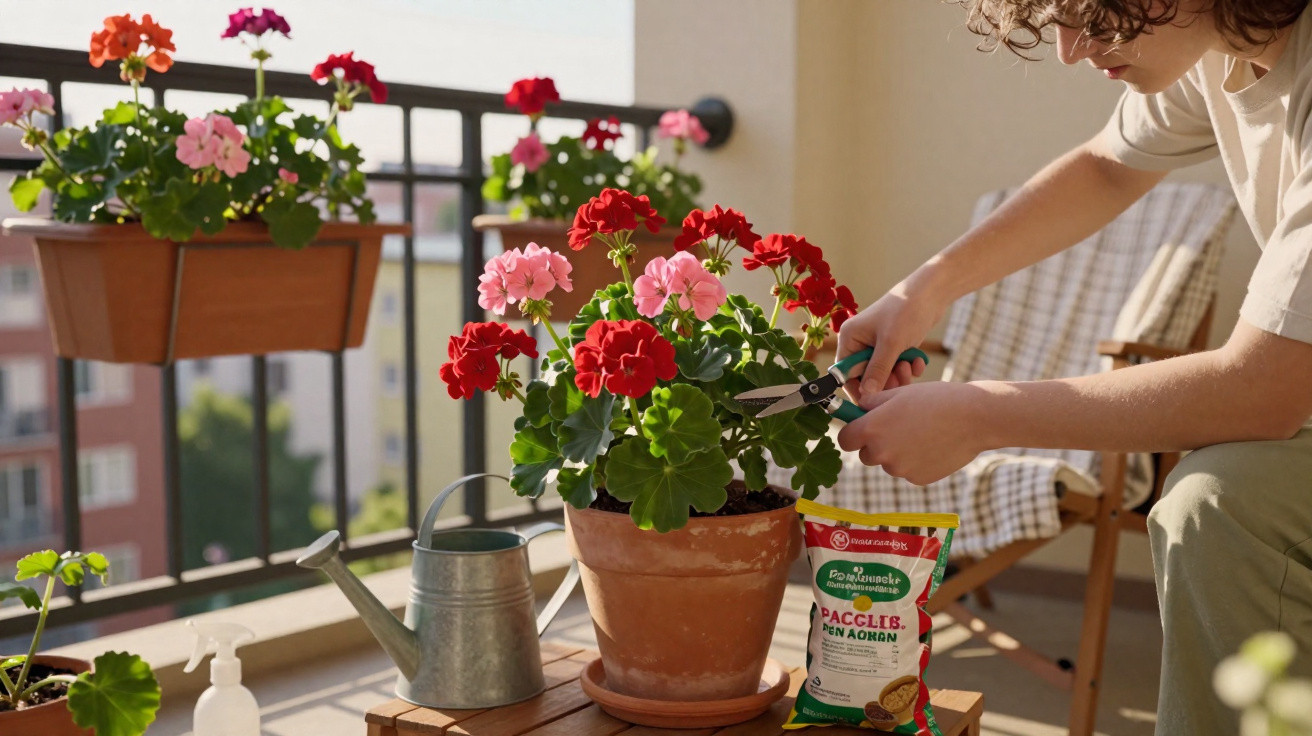
A balcony full of life is a goal for many people living in large urban centres. The geranium is an ideal choice for adding colour to sunny spaces, pairing lush beauty with exceptional ease of everyday cultivation in cosy apartments.
How do you choose the right geranium for your space?
Two main forms of this species are available on the horticultural market for ornamental use. The upright type has a bushier, more vertical habit, whereas the trailing variety is widely recommended for creating attractive hanging planters or charming vertical gardens on a sunny balcony.
Both choices have very similar needs in terms of care and ongoing maintenance. Understanding these growth habits makes it easier to plan the placement of pots at home, ensuring every plant has the right spot to reveal its full ornamental potential and distinctive colour.
Here are the key features of the two most common varieties of this plant:
- Upright Geranium: Has a noticeable upright, bushy growth habit in pots.
- Trailing Geranium: Produces flexible stems that are ideal for hanging planters.
- Required Light: Both varieties need consistent direct sunshine.
- Effective Drainage: They require a light growing medium to prevent root rot.
- European Charm: They create a flowering look reminiscent of Portuguese balconies.
How much sun is needed for flowering?
The main secret to achieving abundant flowers is directly linked to daily sun exposure. This plant needs at least six hours of direct sunlight to develop its flower buds fully and flourish in the outdoor areas of your apartment.
If the plant is kept in shade, it will continue growing but become leggy and weak. Insufficient light prevents the intense flowering that can turn any outdoor area into a genuine garden filled with vibrant colours.
Below is a video from the Spagnhol Plantas YouTube channel that explores the points discussed in this topic in greater depth:
How should you prepare the ideal pot and growing medium?
Preparing the container properly is essential, as this species dislikes waterlogged soil. Originally from South Africa, it needs a generous drainage layer made from expanded clay or gravel to prevent premature rotting of the roots and support healthy growth.
Golden Tip for the Growing Medium
Perfect Aeration
Mixing topsoil with coarse builders' sand in equal parts greatly improves soil aeration.
This ideal combination prevents excessive moisture from building up, allowing water to drain freely after watering.
In addition, placing a drainage membrane over the rocky material stops the soil from washing through. This simple measure keeps essential nutrients in the pot, prevents blockages in the lower drainage holes and creates a perfect environment for the roots.
Use the following materials to create an efficient drainage structure:
- Expanded clay or gravel to form the bottom layer;
- A drainage membrane or a protective piece of non-woven fabric;
- A light growing medium made from topsoil and builders' sand.
What is the ideal feeding and watering frequency?
To ensure spectacular flowering, fertilising plays a central role in care. It is advisable to apply specialist fertiliser every fortnight, using water-soluble formulas during watering or foliar products applied to the leaves to provide the plant with the right nutrition.
Watering should be done moderately, only when the surface of the growing medium shows signs of drying out. Watering the soil alone and avoiding the flowers protects the plant from diseases caused by fungi that are harmful to full botanical development.
Below are the main guidelines for feeding and watering your plants correctly:
- Fertilise every fortnight with products designed for flowering plants;
- Use water-soluble or foliar fertilisers according to the manufacturer's instructions;
- Water moderately, directing water exclusively onto the soil in the pot.
How do you carry out maintenance pruning and prevent disease?
Regular maintenance pruning is essential for keeping pathogens away from the plants. Using suitable scissors to remove yellowing leaves and faded buds prevents dead material from using the vital energy needed to produce new, healthy shoots.
Although these species are resistant to insects because of their aromatic oils, they often suffer from leaf rust. Applying fungicides every month provides complete protection, keeping the foliage clean and the stems ready to deliver a true visual display of striking flowers.
Read also: The hardiest plant to grow on the balcony: how to care for it and encourage flowering
Comments
No comments yet. Be the first to comment!
Leave a Comment