
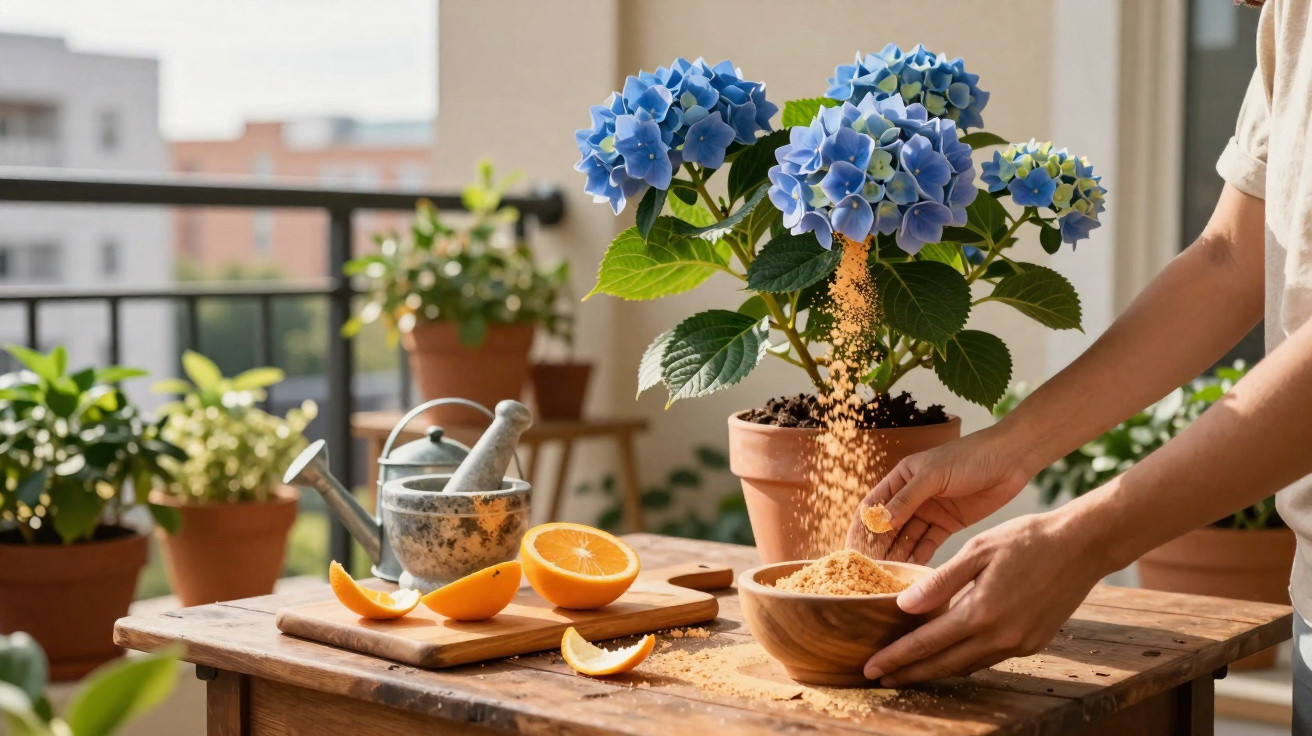
If you care about your hydrangeas, it is easy to reach automatically for specialist fertiliser or blame the weather. Yet the answer to many issues may be sitting in your kitchen - and would normally end up in the bin. One unassuming waste product can help adjust the soil pH, improve nutrient uptake and make the flowers noticeably more vigorous.
Why hydrangeas so often struggle
Hydrangeas are among the classic acid-loving plants. They thrive best in mildly acidic soil, generally at a pH of between 5 and 6.5. However, many garden soils are substantially higher on the pH scale and are therefore more alkaline or lime-rich.
When the pH rises, this is what happens: although the plant roots can reach nutrients, they are unable to absorb them efficiently. Common symptoms include:
- yellow leaves while the leaf veins remain green
- sparse, small or pale flowers
- slow growth despite regular watering
- greater vulnerability to heat or drought stress
Many amateur gardeners respond by applying more fertiliser. However, that does not address the underlying cause, which is often in the soil itself: it is insufficiently acidic and lacks organic matter.
“Lowering the pH of hydrangea soil gently while supplying organic nutrients strengthens the plant naturally and improves its colours.”
The surprising kitchen aid for hydrangeas
Most people think of compost, bark mulch or specialist fertiliser when improving soil. Less widely known is that dried orange peel makes an excellent gentle boost for hydrangeas.
Like lemons and mandarins, oranges are citrus fruits and naturally contain mildly acidic components. That is precisely what hydrangeas appreciate. The peel also contains small but useful quantities of minerals, including:
- Potassium – supports flower formation and reinforces cell structure
- Magnesium – encourages chlorophyll production and richer colour
- Calcium – helps maintain stable cell walls and balanced soil life
Together with its slight soil-acidifying effect, this offers a practical double benefit. Professional gardeners have long used organic acidic materials of this kind. In domestic gardens, orange peel is still something of an insider tip.
Turning orange peel into hydrangea fertiliser
A common mistake is to put fresh, damp, large pieces of orange peel straight onto the soil. They rot down very slowly, attract gnats and have little effect.
Step 1: dry it properly
For the peel to work quickly in the soil, it must be dried completely. It can then be broken up, and soil organisms will decompose it more readily.
Suitable methods include:
- cut the peel into narrow strips and spread it in a sunny, airy place for several days
- dry it in the oven at a low temperature, ideally below 80°C, leaving the door slightly ajar
- place it on a warm windowsill above a radiator and turn it regularly
The peel is ready when it snaps easily and no damp centre remains.
Step 2: break it down for faster results
The smaller the pieces, the more quickly soil organisms can act and release nutrients. Two practical options are:
- grind it into a coarse powder using a blender or food processor
- chop it very finely with a knife, then crush it lightly in a pestle and mortar
“Dried, finely broken-up orange peel makes a straightforward, almost free supplementary fertiliser for hydrangeas, sourced directly from kitchen waste.”
Step 3: apply the powder around the roots
Do not simply tip the orange-peel powder into one heap; spread it in a thin layer instead. A light ‘carpet’ around the root zone is entirely sufficient.
For plants in borders or containers:
- loosen the soil gently without damaging substantial roots
- scatter a thin layer of powder around the shrub, roughly to the radius of its canopy
- cover it with a hand-width layer of soil or compost
- water thoroughly so that the material comes into contact with moist soil
There is no need for more than one thin layer at each application. Applying too much organic material at once may seal the surface and temporarily overwhelm microorganisms.
When and how often hydrangeas can have orange peel
Orange peel works gently, but it should still be used in measured amounts. During the growing season, applying it roughly once a month is usually quite enough.
| Period | Frequency | Note |
|---|---|---|
| March–April | 1 application | Start of the season; provides the first stimulus for soil life |
| May–July | every 4 weeks | Flowering period; colours and leaf growth benefit |
| August | optionally 1 application | Only for vigorous plants; do not overdo it |
| September–February | no application | Resting period; plants do not need an extra boost |
For container-grown plants, an even smaller quantity is often enough because the volume of compost is limited. Start with half the dose and observe how the plant responds.
The right combination: orange peel is not a miracle cure
Dried orange peel does not replace essential soil care; it complements it. Especially in areas with very alkaline, lime-rich soil, gardeners need to use several measures together.
Reliable combinations for healthy hydrangeas include:
- regular applications of mature compost
- mulch made from bark chips or pine needles
- watering with rainwater rather than hard tap water
- if necessary, growing plants temporarily in containers using specialist rhododendron or hydrangea compost
“Orange peel works best as one element of a complete care routine: a suitable site, loose soil, little lime and moderate feeding.”
Common mistakes and possible risks
As with many household remedies, using it incorrectly can quickly lead to disappointment. It is worth considering the most frequent pitfalls.
- Amounts that are too large: a thick layer of orange peel disrupts the soil environment, attracts insects and can encourage mould.
- Fresh, damp peel: this decomposes slowly, develops an unpleasant smell and promotes small flies.
- Using it as the only ‘fertiliser source’: hydrangeas require a broad nutrient range. Orange peel alone will eventually cause nutrient deficiencies.
- Applying it at the wrong time: late-autumn applications delay the ripening of shoots, which may result in frost damage.
By using modest amounts, choosing dry, finely processed peel and keeping an eye on the plants, these risks can be greatly reduced.
When clear results may appear
Many gardeners expect a ‘wow effect’ within a week. Organic material works gradually, though, so the first changes often become apparent only after several weeks or months.
Possible signs that the treatment is working include:
- new leaves emerge a stronger green
- flower heads become fuller
- the plant produces more even, less ‘sparse’ growth
- watering intervals lengthen slightly because soil structure has improved
Patience remains essential. Those who use orange peel regularly over a season, while also applying compost and mulch, will generally notice a clear difference.
A practical example from an urban garden
A typical situation is a terraced-house garden with fairly compact, lime-rich soil and three blue hydrangeas along the patio edge. Every year, the flowers become paler and the leaves develop yellowish discolouration. Specialist fertiliser has produced only a short-lived improvement.
The change begins in spring: the owner works a thin layer of mature compost into the root zone and starts collecting dried orange peel. Each week, the peels go into a container, are dried in the oven and, once a month, are ground finely and scattered around the plants.
After the first season, the leaves appear more robust and yellowing occurs less often. In the second year, the flower heads are noticeably fuller. All without costly specialist fertiliser - just kitchen scraps and a little patience.
Other ways to use orange peel in the garden
Once you begin saving orange peel, you may soon have more than your hydrangeas need. Some of it can easily be combined with other gardening practices.
- add a small proportion to homemade compost to increase the variety of organic materials
- use sparingly beneath rhododendrons, azaleas or blueberries, which also prefer acidic soil
- mix it with coffee grounds to create a more balanced, mildly acidic soil topping
The combination with coffee grounds is particularly worthwhile: coffee adds extra nitrogen, while orange peel contributes structure and a different nutrient profile. Both should be applied only in thin, evenly distributed layers so that the soil surface stays loose.
Using kitchen waste more thoughtfully not only cuts down on rubbish, but also gradually creates living, humus-rich soil. Hydrangeas respond with exactly what many garden owners want: deep-green leaves, sturdy shoots and bright flower heads that become a summer focal point.

Comments
No comments yet. Be the first to comment!
Leave a Comment