

Rose bushes need fertile soil, regular watering and balanced feeding to produce strong buds throughout the year. The most useful natural fertilisers are those that nourish the plant without concentrating salts around its roots, such as organic compost, worm castings, bone meal, carefully measured castor bean cake and aged banana peel. The key is to use small amounts at a time, always on moist soil and away from the stem.
Which natural fertilisers help rose bushes produce more flowers?
Rose bushes have high nutrient requirements, particularly when they are producing shoots, new leaves and flower buds. To bloom successfully, they need a moderate supply of nitrogen, phosphorus for roots and buds, potassium for resilience, and organic matter to keep the soil active.
The most commonly used natural fertilisers serve different purposes. Compost improves soil structure, worm castings release nutrients gradually, bone meal provides phosphorus, and banana peel contributes potassium. None should be overapplied, as rose roots can also be damaged by concentrated fertiliser.
How can natural fertilisers be prepared at home?
Home-made preparations should avoid vigorous fermentation, unpleasant odours and direct contact between raw waste and the roots. The more matured, strained or mixed into the soil a fertiliser is, the lower the risk of attracting flies and fungi or scorching young shoots.
These options work well in pots and flower beds:
- Organic compost: use decomposed plant material that is dark and free from strong smells, mixing it into the top layer of soil.
- Worm castings: spread a thin layer around the plant, or dilute 2 tablespoons in 1 litre of water and strain before watering.
- Banana peel: chop 1 peel, leave it in 1 litre of water for 24 hours, strain it and apply it as a light watering.
- Bone meal: use a small amount, distributing it evenly through the soil without allowing it to touch the stem.
- Aged coffee grounds: dry them before use and add a small quantity to compost; never leave a thick layer over the pot.
How should fertiliser be applied without harming rose roots?
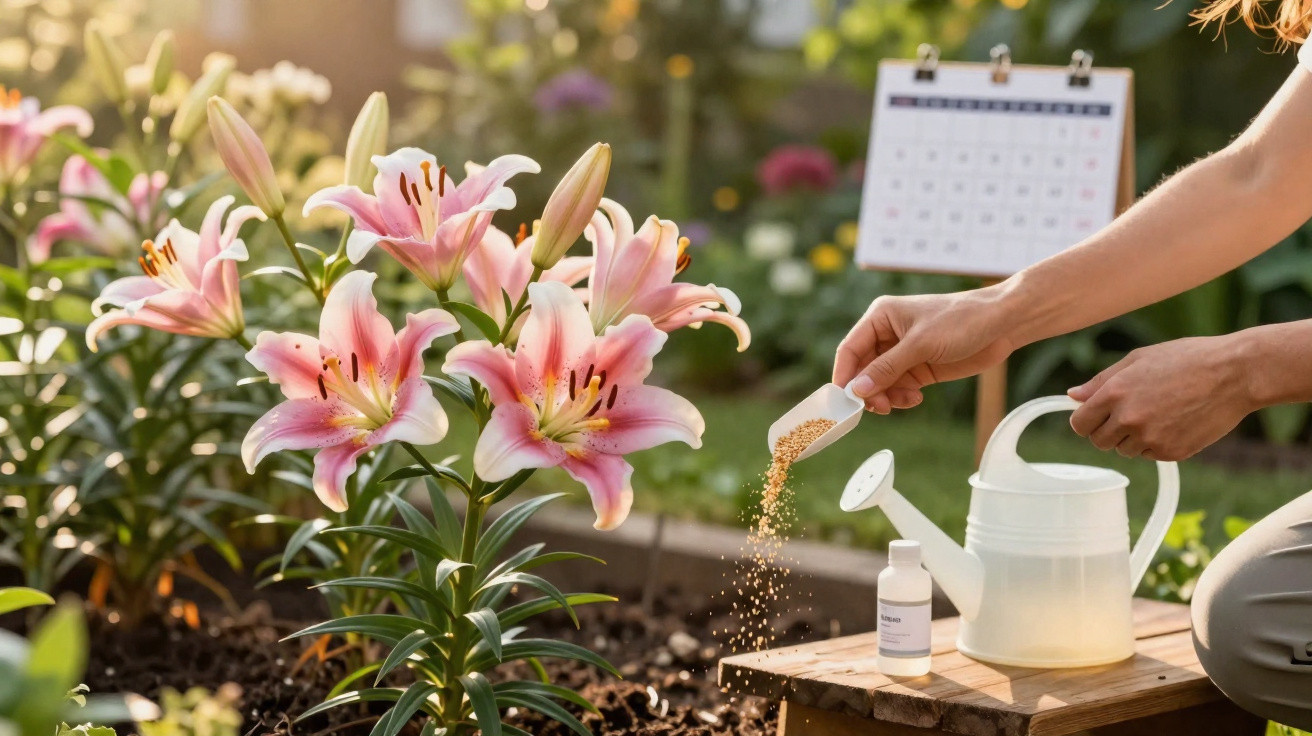
Correct application begins with keeping it away from the stem. Fertiliser should be placed around the plant’s canopy spread, where active roots take up nutrients, rather than piled against the base of the rose bush. Watering afterwards helps carry the nutrients into the soil without leaving concentrated clumps.
To minimise mistakes, follow this straightforward routine:
- Water the rose bush before feeding it, especially on hot days.
- Scatter the fertiliser around the plant, leaving several centimetres between it and the stem.
- Lightly blend it into the surface layer of soil without digging deeply.
- Water again to settle the fertiliser into the soil.
- Do not fertilise a recently transplanted, wilted plant or one with damaged roots.
How often should rose bushes be fertilised to encourage flowers?
For mature, healthy rose bushes, a light organic feed every 30 or 45 days during the growing period is usually enough. Following pruning, the plant can be given compost and worm castings to support the new growth that will form fresh buds.
Bone meal and castor bean cake require longer intervals because they are more concentrated. They are generally applied every 60 or 90 days, always in low doses. Pots require closer attention: water washes nutrients away more quickly, yet the restricted space also makes over-fertilising easier.
What signs show that a rose bush needs more nutrients?
Very pale leaves, weak shoots, few flowers and buds that dry out before opening may point to a nutrient deficiency, especially if the plant has direct sunlight and sufficient water. Before increasing the amount, also check for pests, waterlogged soil or a lack of pruning, as these issues reduce flowering even when fertiliser is being used.
A favourable response is shown by sturdy shoots, green leaves without marks caused by excess fertiliser, stronger stems and well-formed buds. When rose bushes bloom regularly, with no scorched leaf edges or foul-smelling soil, the fertilising routine is feeding the plant at the right pace to support its roots, branches and new flowers.





Comments
No comments yet. Be the first to comment!
Leave a Comment