
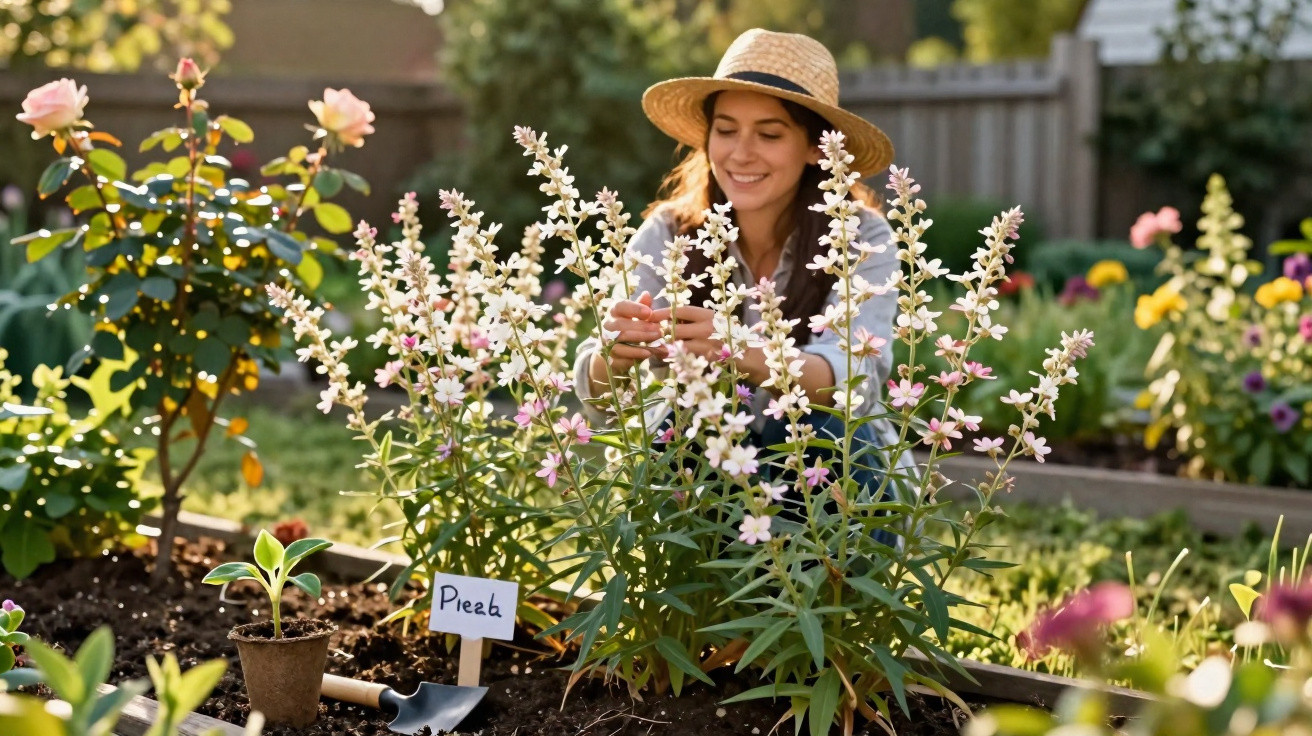
Anyone hoping for a garden full of abundant flowers instinctively thinks of roses. Yet the reality of powdery mildew, pruning and endless rounds with the watering can is often far less romantic. An unassuming perennial from North America is quietly moving into the spotlight: Gaura, also known as bee blossom or butterfly flower. It is increasingly regarded as an insider choice for anyone who wants colour without having time for care schedules.
Why more gardeners are swapping roses for Gaura
Roses represent fragrance, nostalgia and garden romance, but in everyday life they can be demanding. Regular pruning, carefully timed fertiliser applications, pressure from diseases such as powdery mildew and black spot, as well as aphids and often considerable watering needs, make them the divas of the flower bed.
This is where Gaura lindheimeri comes in. In favourable conditions, this perennial flowers for up to eight months of the year, without anyone constantly needing to stand beside it with secateurs. A sunny position and reasonably free-draining soil are enough to get it growing.
Gaura is considered a “plant-it-and-forget-it” perennial: once established, it produces a sea of flowers for years – with almost no maintenance.
Many garden owners say that Gaura has enabled them, for the first time, to create a genuinely long-flowering border without having to work on it every weekend. It offers a practical alternative to rose beds, particularly for people balancing work, family and other hobbies.
The perennial that flowers for almost the whole year
Its greatest advantage may be its exceptionally long flowering period. Depending on the region and weather conditions, Gaura opens its buds from May until December. While roses often take a break after their main flush or need cutting back, Gaura simply keeps producing more flowers.
The perennial develops an open, bushy shape of slender, flexible stems. Countless small buds sit along them and open one after another. The result is a continual “supply of flowers”, rather than one brief burst in June.
- Start of flowering: usually from May
- Flowering period: up to eight months, depending on the position
- Colours: white, rose pink, pink and, in some cases, bicoloured
- Height: around 60 to 100 centimetres, depending on the variety
Gaura never looks “heavy” in appearance. Its flowers are held lightly on the shoots and genuinely resemble tiny butterflies dancing above the border. It is an appealing contrast for anyone who dislikes rigid, formally clipped gardens.
Tough as a weed, beautiful as a prized perennial
Gaura originally comes from the southern United States and Mexico, where it must cope with heat, dry spells and poor soils. This background is exactly what makes it so straightforward in Central European gardens.
Its key strengths at a glance:
- Heat- and drought-tolerant: needs little water, making it ideal for summers affected by climate change
- Hardy in cold weather: depending on the variety, it can tolerate temperatures down to around –15 degrees Celsius
- Hardly prone to disease: common rose problems such as powdery mildew or aphids are of little concern to it
- Low-maintenance: no regular shaping prune is required; cutting back in late winter is usually sufficient
- Undemanding about soil: tolerates sand, gravel and poor ground – as long as drainage is good
Anyone who has experienced how effortlessly a perennial can perform soon wonders why they spent years struggling with sensitive roses. Even in gravel gardens that become intensely hot in summer, Gaura still looks fresh.
How to plant Gaura correctly
Gaura is generally available as pot-grown plants in garden centres during spring and autumn. Even beginners can plant it successfully without extensive specialist knowledge.
The ideal position
Gaura loves sunshine. A spot in full sun is ideal; bright partial shade will do if necessary, but it often means fewer flowers. The soil needs to be loose and free-draining. Heavy, wet clay soils do not suit this perennial at all.
- Loosen the soil and, if needed, mix in sand or fine gravel.
- Space plants around 40 centimetres apart.
- Water thoroughly after planting – really soak the root area.
- Ensure there is enough moisture during the first few weeks, then reduce watering.
A generous soaking immediately after planting is normally enough. Later, the perennial draws what it needs from the soil. Only during an exceptionally long dry period without rain will an extra watering do no harm.
Pruning and care through the year
Unlike roses, Gaura does not need a complicated pruning routine. Many gardeners simply leave the plant standing until winter. The dried stems protect the root area and provide shelter for insects.
In late winter or very early spring, it is enough to cut the old shoots back just above ground level. The perennial will send up fresh growth from its base. If desired, the faded shoot tips can be lightly shortened in midsummer to keep the plant more compact, but this is not essential.
Where Gaura works best in the garden
This perennial performs well almost anywhere it receives sunshine. Its airy character is especially effective when combined with other long-flowering plants.
| Use | Effect | Suitable companions |
|---|---|---|
| Perennial border / middle of a bed | softens rigid planting schemes and adds movement | ornamental grasses, sage, lavender, coneflower |
| Border along paths | a gentle edge with lightly arching stems | low-growing catmint, lady’s mantle, thyme |
| Drought-tolerant garden | a flowering accent in sparse, sunny positions | Cistus, steppe sage, feather grass |
| Pot on a balcony or terrace | long flowering in limited space |
Comments
No comments yet. Be the first to comment!
Leave a Comment