
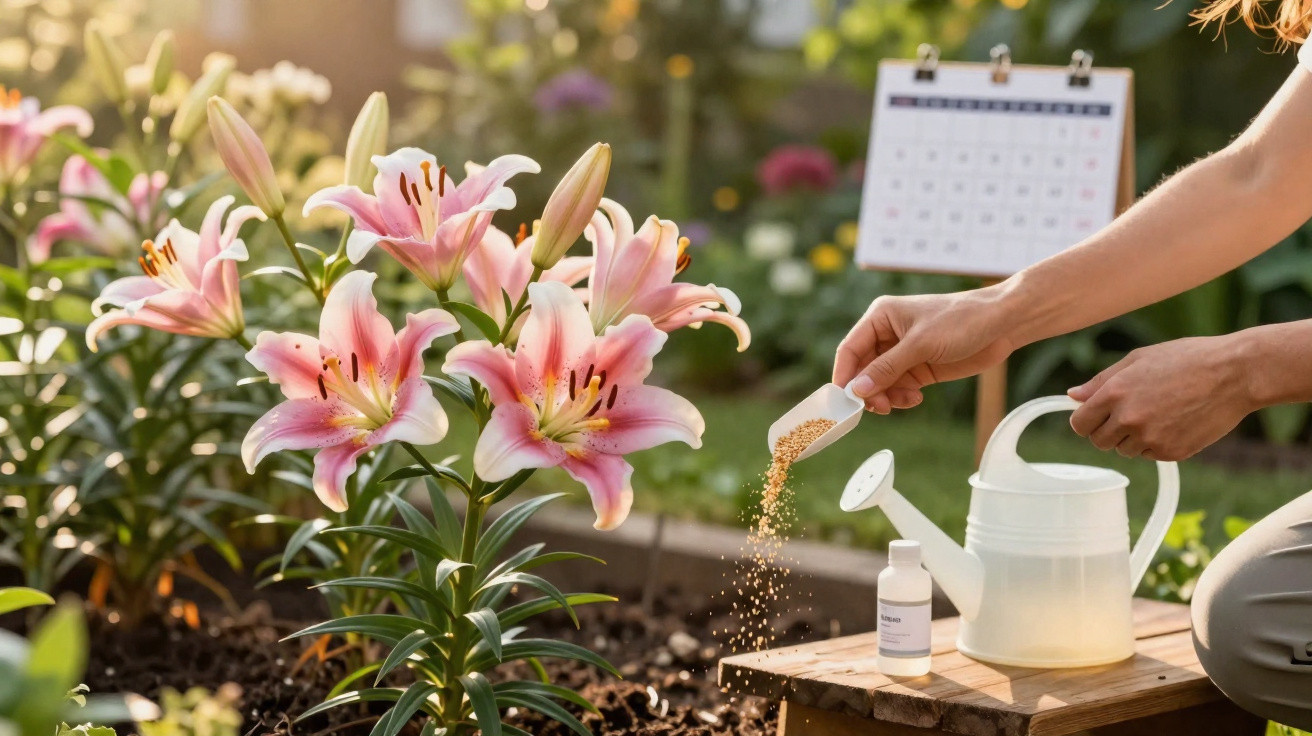
Oriental lilies are considered the divas of the flower bed – fertilise them incorrectly and you will get plenty of leaves but scarcely any impressive blooms.
Anyone who has grown these magnificent perennials in the garden will never want to be without them: enormous, intensely fragrant flowers that provide a true summer highlight for weeks. Water alone is not enough to achieve this. The crucial factor is using the right fertiliser at the right time – and this is exactly where amateur gardeners make most of their mistakes.
What Oriental lilies really need from fertiliser
Oriental lilies are among the flowering bulbs that invest an enormous amount of energy in their blooms. As a result, they require a different nutrient balance from traditional leafy plants such as lawn grasses or lettuces.
The ideal fertiliser for Oriental lilies contains plenty of phosphorus and potassium, but only moderate nitrogen.
In professional horticulture, NPK ratios such as 5-10-10 or 10-10-10 have proved effective. The three figures represent:
- N = nitrogen (for leaves and shoots)
- P = phosphorus (for roots and flowers)
- K = potassium (for strength, health and flower colour)
For Oriental lilies, the emphasis is clearly on phosphorus and potassium:
- Phosphorus encourages a strong root system and the formation of substantial flower buds.
- Potassium reinforces the plant’s cells, produces sturdy stems and deepens flower colours.
- Too much nitrogen only promotes long, soft shoots and lots of foliage – while flowering visibly suffers.
When to fertilise Oriental lilies: timing matters more than the brand
The timing of application is at least as important as the nutrient mix. Oriental lilies reward a carefully planned feeding routine with noticeably more and larger blooms.
| Growth stage | Recommended fertiliser | Frequency | Main effect |
|---|---|---|---|
| Early shoot growth | 5-10-10 | every 2 weeks | Root development, strong stems |
| Vigorous growth | 10-10-10 | every 2–3 weeks | Balanced nutrition, healthy foliage |
| Bud formation | 5-10-10 | every 2 weeks | Flower formation, colour intensity |
| After flowering | 0-10-10 | once a month | The bulb builds strength for the following year |
Begin fertilising as soon as the shoots reach around 10 to 15 centimetres tall in spring. From then on, the plants need a steady nutrient supply until the buds begin to show colour. Stop all further feeding once the flowers start opening. At that stage, the plant should direct its energy into flowering rather than fresh foliage.
Granules, liquid or organic? Comparing the best fertiliser types
Slow-release granules – convenient and reliable
For many amateur gardeners, slow-release granular fertilisers are the simplest option. Typical choices include Osmocote Smart-Release fertilisers for flowers and vegetables. They release nutrients in response to temperature over a number of weeks, reducing the risk of root damage.
- ideal for flower beds and larger planters
- one application at the start of the season, with occasional top-ups, is often sufficient
- little risk of overfeeding when used at the correct rate
Work the granules lightly into the top layer of soil and water them in thoroughly so that they can take effect at all.
Liquid fertiliser – accurate and fast
Water-soluble fertilisers, including many flowering-plant feeds from DIY shops, act much more quickly. Familiar options include products of the “Bloom Booster” type: they dissolve in watering water and are immediately available to the roots.
They are especially useful for lilies grown in pots or containers, as nutrients there are rapidly washed out by frequent watering. A proven approach is:
- apply weekly at half strength or

Comments
No comments yet. Be the first to comment!
Leave a Comment