
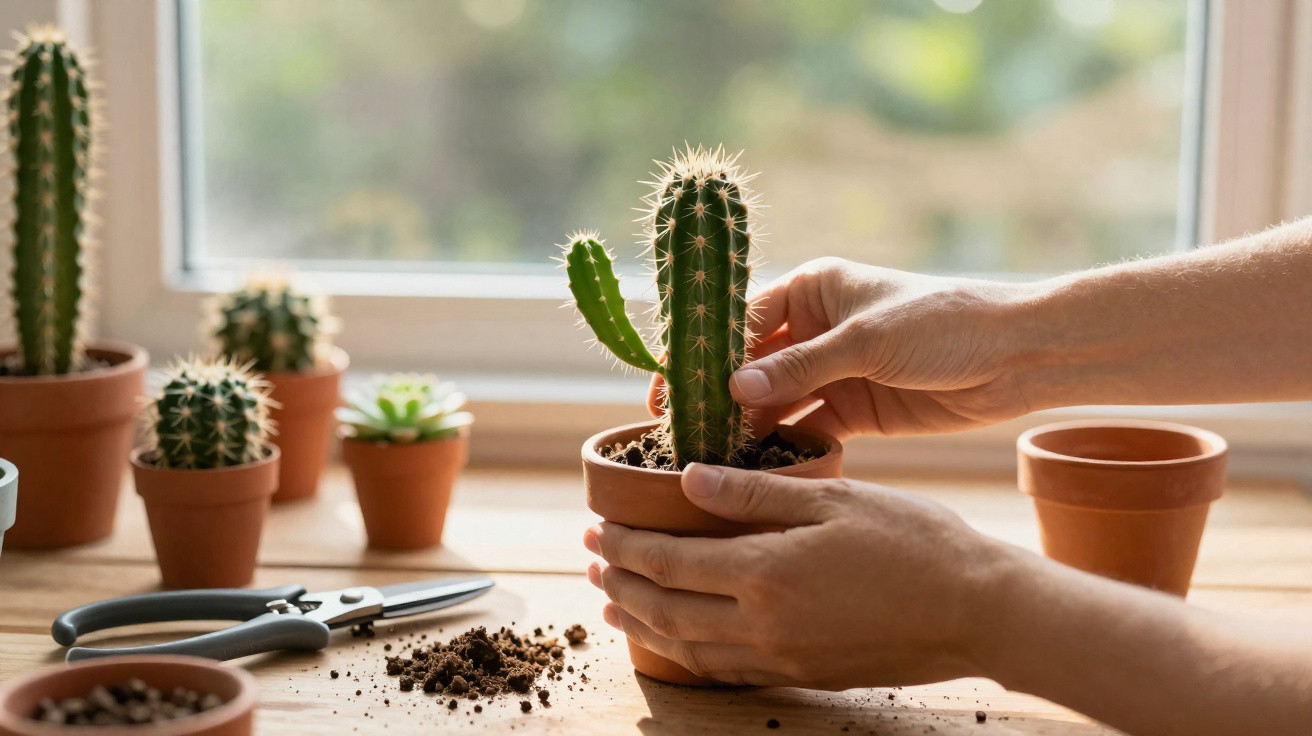
When a cactus suddenly starts producing a lateral shoot, many people wonder whether it signals a problem or is simply part of the plant’s natural development. This unexpected growth often attracts attention because it changes the cactus’s shape and can, in some cases, turn a solitary specimen into a cluster with several stems.
What does it mean when a cactus produces a lateral shoot?
The main meaning of a lateral shoot on cacti is connected to vegetative propagation: the plant reproduces through sections of its own stem. When conditions are favourable, the cactus uses its stored energy to enlarge its structure, creating new branches that may eventually become independent plants.
In other cases, a lateral shoot develops in response to a particular stress factor, such as excessive shade, physical damage or interrupted growth at the tip. In these situations, the cactus activates dormant lateral buds to ensure that growth continues even if the main axis is no longer in ideal condition.
Watch a video on the Junior Romualdo YouTube channel explaining how to speed up shoot production on a cactus:
Is a lateral shoot on a cactus always a sign of good health?
The appearance of a lateral shoot does not always mean the cactus is developing in completely healthy conditions, although it is often associated with a vigorous plant. With good light, moderate watering and well-draining compost, new branches can emerge as a normal part of its growth cycle.
When care is not ideal, however, the shoot may serve as a warning sign and appear alongside other visible changes:
- Etiolation: a stretched, thin and paler stem, suggesting insufficient light;
- Damage to the top: cuts, rot or breaks at the tip can encourage several shoots around the affected area;
- Constricted roots: a pot that is too small restricts upward growth and can encourage lateral growth;
- Signs of weakening: soft tissue, patches or wilting show that the plant’s overall care needs reviewing.
What does a cactus’s lateral shoot reveal about its environment and soil?
The way a lateral shoot grows can reveal a great deal about the light, ventilation and growing medium in which the cactus is planted. In a free-draining mix containing sand, a moderate amount of organic matter and inert material, offsets generally remain firm, evenly coloured and slow-growing, which indicates that the roots are active and adequately supplied.
In waterlogged or compacted soil, soft sections, dark marks and wilted areas may develop near the shoot, pointing to excess water or the onset of rot. In poorly lit places, offsets become more elongated as they seek light, showing that the cactus should be moved to a brighter position with filtered sunlight and good air circulation.
How should you decide whether to leave or separate a cactus lateral shoot?
Whether to keep a lateral shoot attached to the cactus or remove it depends on the growing aim, available space and the plant’s stability. Leaving the offset in place can create a fuller clump, provided that the pot can accommodate the additional volume and the mother plant shows no signs of fungus or rot.
If the shoot’s weight makes the pot lean, the cactus is severely pot-bound, or you want to propagate the plant, separating the offset can be a worthwhile option. Selecting a well-formed shoot, cutting it with a clean tool, allowing its base to dry for a few days and planting it in a well-draining growing medium improves its chances of rooting. This allows both the new plant and the original cactus to continue their growth cycle safely.


Comments
No comments yet. Be the first to comment!
Leave a Comment