
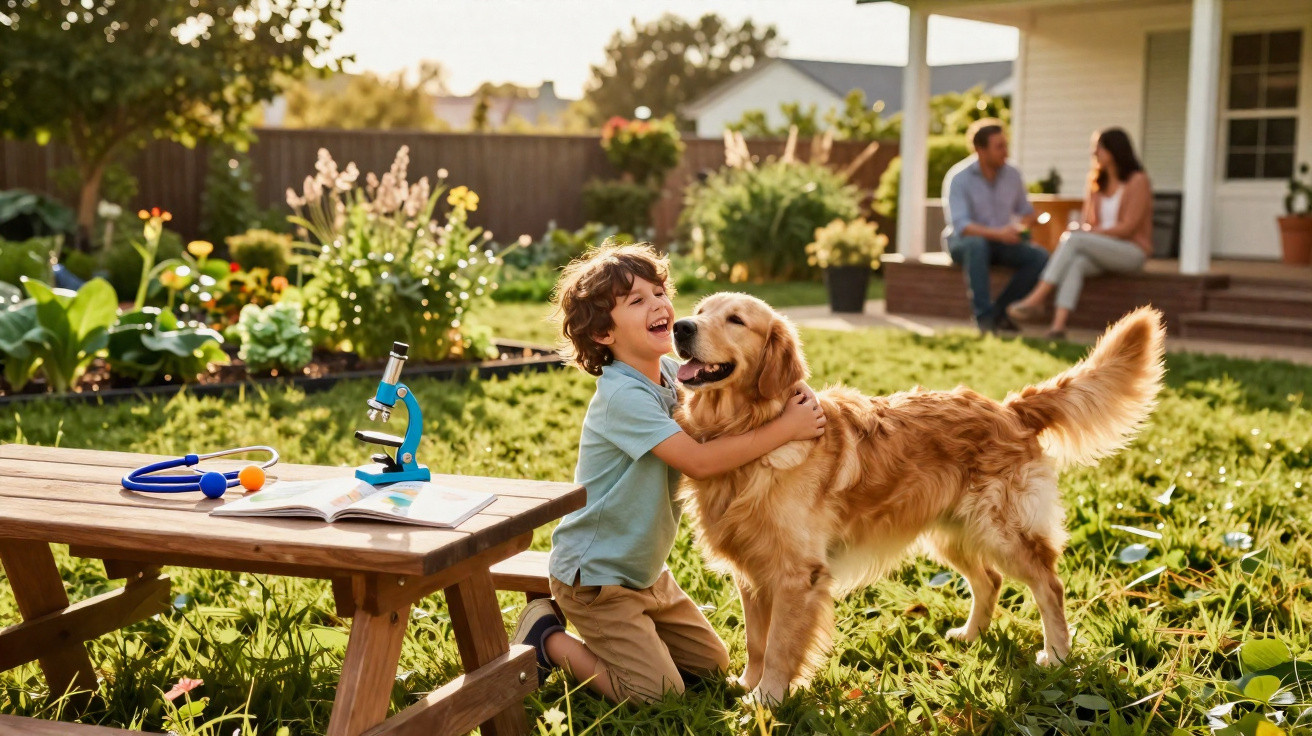
On World Dog Day, marked on 26 August, science offers fresh reasons to view the relationship between people and dogs as extending beyond companionship and affection. Studies have indicated that living with a pet may be linked to a range of health benefits, from protection against infections in the early years of life to positive effects on emotional wellbeing.
The study “The role of dog keeping in the home microbiota and its impact on children’s health”, published in the journal Pediatric Allergy and Immunology, presented findings on the connection between the presence of pets and strengthening babies’ bodies. According to the research, exposure to bacteria commonly found in homes with dogs can reduce the need for antibiotics in early childhood by up to 25%.
Dr Carolina Affonseca, postgraduate co-ordinator in Paediatrics at Afya Medical Education Belo Horizonte, says the benefit does not appear to stem simply from a greater quantity or diversity of microorganisms in the environment, but rather from particular groups associated with the presence of a dog.
“One explanation involves stimulating the still-developing immune system. Early contact with different environmental microorganisms could help train components of innate immunity and encourage more balanced responses to common infections. Another possible route involves the gut microbiome. Studies have found differences in the composition of this microbiota in babies who live with dogs, including greater diversity among bacterial groups during the first 18 months of life and a greater presence of bacteria,” she explains.
Dogs and children’s health
Specific microorganisms may explain part of the association
The research followed babies from their 9th to their 52nd week of life, examining data on episodes of fever, ear infections, weeks considered healthy and antibiotic use, as well as samples of household dust. Dr Carolina Affonseca explains that, when analysing dust from the homes, researchers identified certain groups of bacteria and fungi linked to the presence of dogs, including bacteria from the Pasteurella genus. These specific microorganisms were statistically able to account for around 10% to 25% of the observed association between having a dog at home and lower rates of fever, ear infections and antibiotic use.
“An interesting finding is that the potential benefit does not appear to depend merely on a home having a higher quantity or diversity of microorganisms. The total microbial richness of the dust, the overall concentration of bacteria and the proportion of bacteria of human origin did not explain the association. The effect appears to be linked mainly to certain microorganisms associated with the presence of the dog,” the doctor adds.
Benefits of living with dogs
In adulthood, the benefits of living with a dog continue to build, with notable effects on the psyche and emotional wellbeing. The research “Survey: Pet Owners and the Human-Animal Bond September 2016”, conducted by the Human Animal Bond Research Institute (HABRI) in partnership with the Cohen Research Group, found that 74% of owners reported significant improvements in their mental health because of their bond with pets. This highlights that an animal’s presence can ease depression, anxiety, stress and loneliness, while also raising self-esteem and encouraging social interaction.
Sabrina Magalhães Teixeira, psychology co-ordinator at Afya Sete Lagoas, says three mechanisms help explain the benefits that living with dogs can bring to people:
- Physiological: physical and visual contact with dogs activates the oxytocin-mediated neuroendocrine system, involving a hormone that is important in forming bonds. Stroking a dog can increase oxytocin while reducing cortisol levels and heart rate, helping to manage stress and increase wellbeing and a sense of security;
- Psychological: this relates to attachment theory and the perception of the dog as a “secure base”. Its presence can lessen feelings of threat and fear, supporting wellbeing, security and the ability to cope with everyday challenges;
- Social: a dog may be seen as a source of support and companionship, helping to reduce loneliness, strengthen self-esteem and foster a sense of purpose through care and the bond with the animal.
“It is important to stress that this bond is not automatic. Having an animal alone does not guarantee these benefits; it is also necessary to build and work on the bond between owner and animal. Through these mechanisms, living together may be associated with reduced stress, anxiety and worries, as well as stronger self-esteem, security, emotional regulation and a sense of purpose and responsibility,” explains Sabrina Magalhães Teixeira.
By Matheus Garcia






Comments
No comments yet. Be the first to comment!
Leave a Comment