
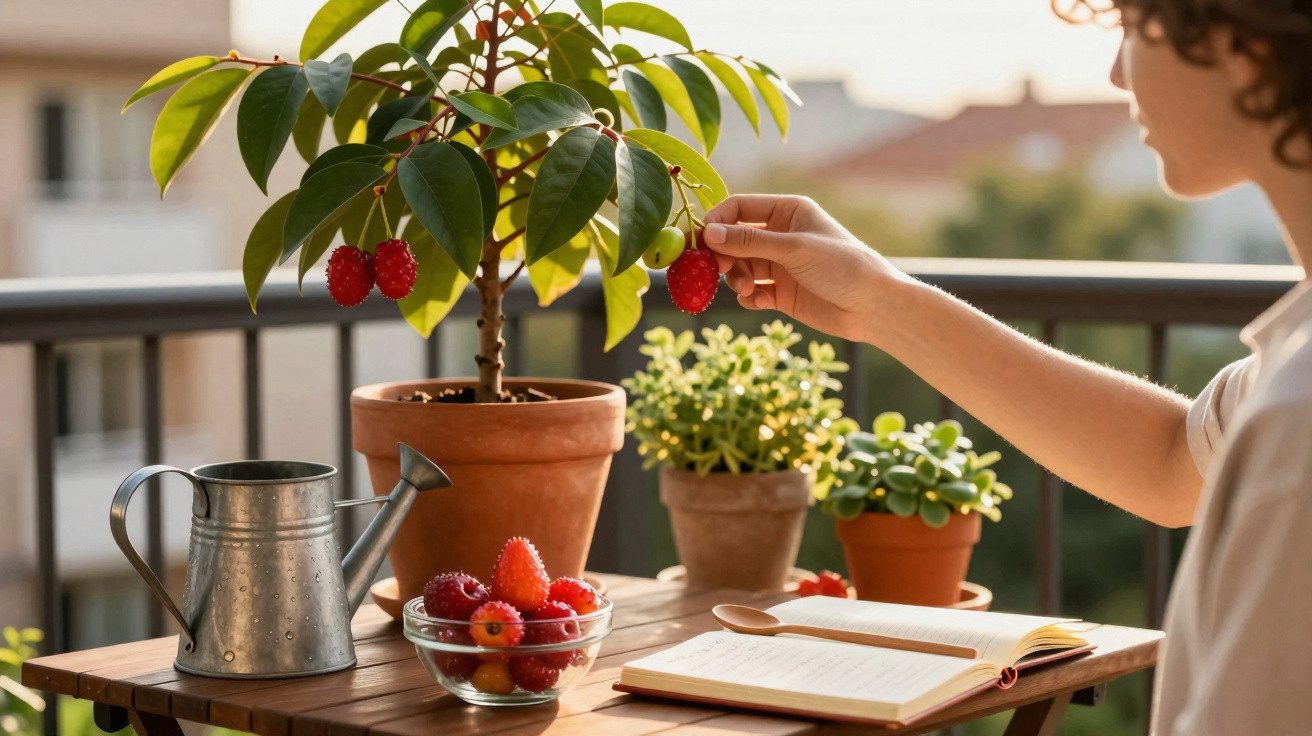
Pitanga, also known as Surinam cherry, is a small, fragrant fruit native to Brazil. Its flavour combines sweetness, sharpness and an aroma reminiscent of guava and ripe strawberries. Although the pitanga tree can grow quite large in the ground, it also adapts to container growing when given direct sunlight, effective drainage and light pruning. On a bright windowsill or sunny balcony, it becomes a compact, ornamental and productive fruit tree.
Why does pitanga have such a distinctive flavour?
Pitanga belongs to the Eugenia uniflora species and, depending on the variety, ripens from red through to deep purple. Picked at the right stage, its flesh is juicy and fragrant, with enough acidity to evoke red berries.
Its pronounced taste comes from the balance of natural sugars, acidity and aromatic compounds in the skin and flesh. This is why pitanga is often best enjoyed fresh, in juices, jams and quick sauces, where its fragrance comes through without requiring many other ingredients.
How do you grow pitanga in a small pot?
A potted pitanga tree needs a container with unobstructed drainage holes and enough room to support its roots and canopy. A 20- to 30-litre pot is suitable for a young plant at first; as it develops, it can be moved into a larger container.
For safer planting, follow these simple steps:
- Choose a healthy young plant, preferably from a fruit-tree nursery.
- Add gravel, expanded clay or broken pot pieces to the base of the pot for drainage.
- Fill the container with a light mix of topsoil, organic compost and coarse sand.
- Keep the base of the stem at the same level as it was in the nursery bag.
- Water thoroughly after planting and keep the plant in a sheltered position for the first few days.
How much light and water does a pitanga tree need?
Pitanga trees crop more successfully with plenty of light. Ideally, they should receive at least 4 to 6 hours of direct sun daily, especially morning or late-afternoon sun in very hot locations.
Watering should keep the growing medium slightly moist, but never waterlogged. Soil dries out more quickly in small pots, so it is worth checking the surface before watering. If the top few centimetres are dry, water until it runs out through the drainage holes.
When should you pick pitanga at the right stage?
Pitanga should be picked when it is fully coloured, soft to the touch and comes away easily from the branch. Fruit that is still orange or very firm is likely to be more acidic and astringent, creating that mouth-puckering sensation.
To make the most of the harvest, look for these signs:
- Deep-red or purple fruit is usually sweeter.
- The skin should be glossy, with no shrivelled or split areas.
- Ripe fruit drops easily, so it is worth picking daily during the fruiting season.
- Once picked, pitanga is delicate and should be eaten or processed quickly.
Which recipes make the most of this Brazilian fruit?
Pitanga has a sufficiently bold flavour for juice, jam, dessert sauce, ice lollies, yoghurt topping and frozen pulp. For straightforward recipes, simply blend the fruit with a little water, strain out the seeds and add sugar only if the acidity is too high.
Growing it in a pot brings this unusual flavour closer to everyday home life. With direct sun, carefully measured watering, free-draining growing medium and harvesting at the right stage, the pitanga tree fits on a windowsill or balcony and provides Brazilian fruit with an intense aroma, vivid colour and acidity that is ideal for fresh recipes.


Comments
No comments yet. Be the first to comment!
Leave a Comment