
The odd-looking sight conceals a surprisingly effective trick.
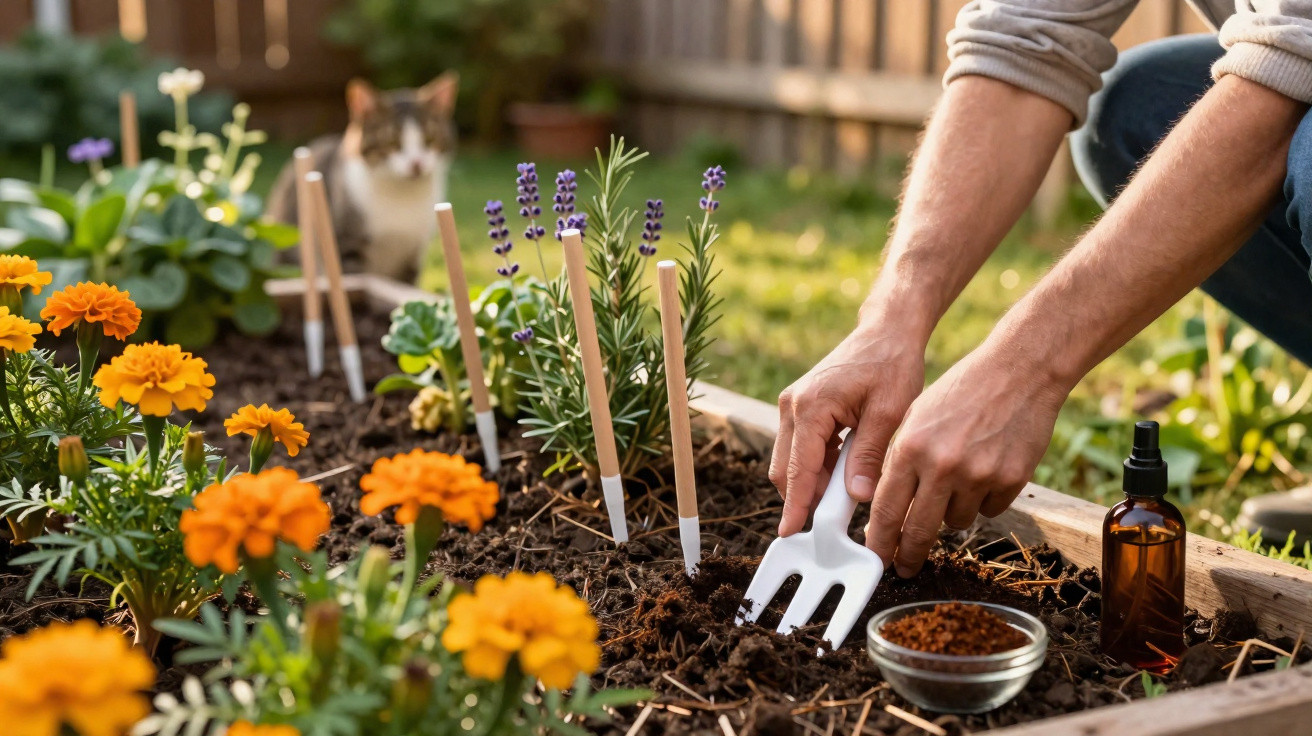
Anyone strolling through allotments in spring or summer will increasingly spot white prongs sticking out of the soil among lettuce, strawberries and cabbages. It is not a new decorative trend, but a practical answer to an age-old problem: cats, birds, rabbits and other visitors can wreck carefully prepared vegetable beds in just a few nights.
Why plastic forks work so well in vegetable beds
At first, the idea may sound almost ridiculous: can a few disposable forks really keep animals away? They can, for one straightforward reason. This approach takes advantage of animals’ instincts and their preference for comfortable, soft ground.
“Where lots of plastic forks are planted, a vegetable bed feels like a trip hazard to animals – and that is exactly how they experience it.”
Cats, rabbits and squirrels look for loose soil where they can scratch, dig or settle down comfortably. When forks are positioned close together with their prongs pointing upwards, that soft soil becomes an unpleasant obstacle course. Every step prods them, and plastic points are in the way wherever they turn.
The appearance itself also acts as a deterrent. To animals, a row of upright forks can look like an unpredictable barrier. Many will turn back at the edge of the bed because the pattern seems unfamiliar and risky. Unlike sprays or granules, forks simply remain in place after rain and wind.
This can be especially useful during the delicate period when seedlings are still small and vulnerable, as one nocturnal visit can destroy everything. Gardeners who surround young plants closely with forks report far fewer paw prints, dug-up transplants and chewed leaves.
How to position the forks correctly
The trick only works properly when forks are placed deliberately. A few isolated forks in the middle of a bed achieve very little; spacing and a systematic arrangement are what matter.
The four most important strategies at a glance
- Protective ring around the edge: Place forks close together along the bed border to block the usual entry points.
- Protective circles around individual plants: Arrange four to six forks in a semicircle or ring around vulnerable plants such as lettuce or strawberries.
- Secure the rows: Position forks between vegetable rows so that no animal can comfortably walk through.
- Block animal routes: Where tracks or worn paths regularly appear, set up an entire “fork row”.
As a general rule, gaps of around seven to eight centimetres work well. The closer the spacing, the less appealing the area becomes to inquisitive noses and paws. The prongs should face upwards, with the handle pushed into the soil.
After a storm or heavy rainfall, it is worth doing a quick inspection. Straighten any forks that have bent over and fill larger gaps. Animals are remarkably patient: they actively look for weak points and will exploit every opening.
Which animals are deterred by forks – and which are less affected
Cats are particularly sensitive to this method. Freshly dug beds make ideal toilets for them. If they encounter a point with their first step, they will usually find another place quickly. Rabbits and squirrels also avoid areas where they cannot move around and scratch freely.
The effect on birds is mixed. Larger birds, such as crows, are more likely to be held back because they lack a clear landing area. Small songbirds can hop between the forks, although they often cause less damage in vegetable beds than mammals do.
The method has only limited effect on slugs. They can slide between the forks, so other barriers are far more suitable for them, including copper tape, strips of coarse bark mulch or coffee grounds.
The plastic fork trick and natural methods: making the garden more resistant
Plastic forks will not solve every problem in a vegetable bed, but they are a strong part of a natural protection system. Combining several measures can greatly reduce damage without resorting to chemical treatments.
Scent barriers using herbs and flowering plants
Many aromatic plants deter certain animals and insects. Common examples include:
| Plant | Effect in the garden |
|---|---|
| Tagetes (French marigold) | Has a strong scent, deters some soil pests and breaks up crop rotation. |
| Basil | Attracts insects that eat pests while also disrupting aphids. |
| Mint | Its intense smell means many small mammals dislike being nearby. |
Planting these around sensitive beds creates a living scented wall. Combined with rows of forks at the edges, they form zones that animals avoid because they smell unpleasant and are difficult to cross.
Hot spices and essential oils
Spices and oil mixtures provide another layer of protection. Hot cayenne pepper scattered around plants irritates animals’ noses, encouraging them to avoid those spots. It needs to be reapplied after heavy rain.
Essential oils such as peppermint, eucalyptus or citrus oil, diluted with water and sprayed on paths or bed edges, can strengthen the deterrent effect without endangering beneficial insects such as bees or bumblebees. Adding forks to these areas reinforces the message: this is an uncomfortable and unsafe place.
Coffee grounds as a twofold defence
Coffee grounds work on two levels. Their strong scent unsettles many small animals, while their rough texture forms a barrier against slugs and some insects. At the same time, the grounds add a little nitrogen and help loosen the soil.
“Coffee grounds plus plastic forks: together, they create an inexpensive, entirely natural protective belt around young lettuce plants.”
Sustainability: turning a disposable item into a garden tool
Anyone uneasy about plastic waste can give this trick an environmentally minded angle. Rather than buying new disposable forks, reuse old ones already collected from barbecues, takeaway meals or household supplies.
This gives items that would otherwise be thrown away a second purpose. Instead of going into general waste or being incinerated, they can protect vegetables for several growing seasons. In autumn, store the forks in a box so they are ready to use again in spring.
Those wishing to avoid plastic altogether can achieve the same effect with sturdy wooden skewers, broken chopsticks or thin sharpened twigs. The material is not important; what matters is creating a dense, uncomfortable surface for paws and noses.
Practical tips from the garden
A few small adjustments can noticeably increase the effect:
- White forks are highly visible and enhance the startling effect.
- In beds with vigorous weed growth, use slightly longer forks or skewers.
- Use even closer spacing around especially desirable plants, such as strawberries and young cabbage plants.
- In rented gardens or shared allotments, tell neighbours about the forks so that nobody mistakes them for rubbish.
Especially in years with heavy pressure from rabbits or stray cats, this can make the difference between bare rows and a full harvest basket.
When the plastic fork trick is most worthwhile
The technique is most beneficial in three situations: immediately after sowing, after planting out young plants, and in areas already frequented regularly by animals. In these cases, the fork barrier should stay in place for at least two to three weeks, until the plants are robust enough.
By also using scented plants, hot spices and tidy bed maintenance, you create a kind of layered defence. Animals no longer see the bed as a comfortable playground, but as an area full of disruptions – and that is often enough to make them choose the next garden instead.




Comments
No comments yet. Be the first to comment!
Leave a Comment