
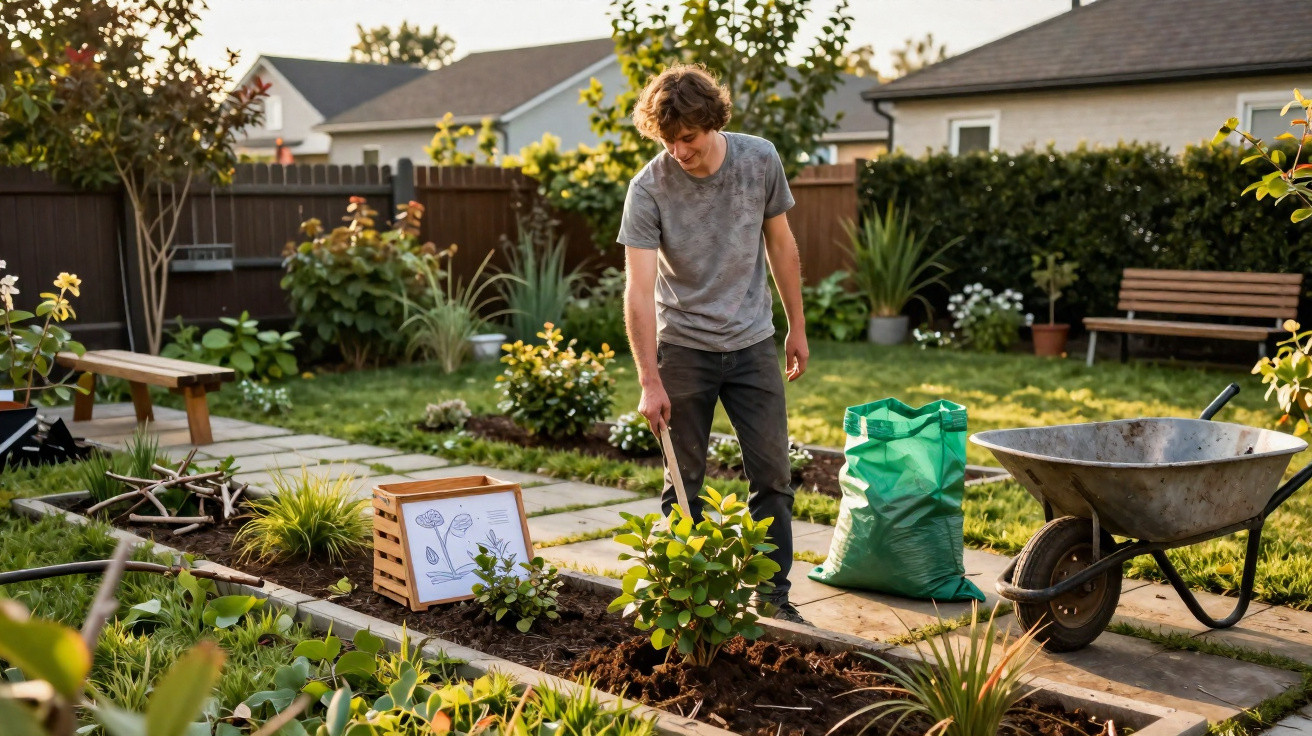
On Saturday morning, the gate was still creaking as Julien set his wheelbarrow down on the path. Behind the hedge, his garden looked like the sort of place you avoid staring at for too long: long grass, empty pots, wind-felled branches and a patio that was barely visible beneath the leaves. For months, work, rainy weekends and a lingering tiredness had won out. The neighbours had eventually grown used to the scene, some sympathetically, others with that quietly curious look everyone recognises on a peaceful street. Yet within two days, the plot looked entirely different. There was no digger and no outrageous budget. It simply took a method, some hard work and a few sensible choices. By Monday, people were looking at it differently.
The turning point often comes when the garden becomes a mental burden
There is a particular moment when you no longer see a garden, only a list of silent reproaches. Whenever Julien opened the kitchen blinds, he saw the weeds, the garden furniture covered in pollen and the border that had once been full of flowers but had become a brown mass. It was not enthusiasm he lacked, but time and, above all, a starting point. A neglected outdoor space always seems bigger than it really is. On Saturday, he stopped trying to fix everything at once and instead decided to make the space usable by Sunday evening.
His garden measures only 85 m², yet it easily felt twice that size. At 8.30 am, he began by filling eight bags of garden waste with damp leaves, snapped stems, old cracked pots and a few toys forgotten since the previous summer. “My neighbours thought I was going to tear everything up,” he says with a smile. Instead, they mainly heard the steady sound of the rake, followed by the lawnmower, rather than the racket of a building site. By midday, the ground was visible again. That first, highly visible success was enough to ease the pressure.
There is nothing magical about a rapid transformation. It follows one straightforward rule: deal first with whatever obscures the view. Tall weeds, accumulated belongings and overgrown edges create an impression of complete chaos, even when the planting can still be saved. Once these are removed, the garden regains clear lines and identifiable areas. Let us be honest: nobody really does this every day. However, half a day devoted to clearing the space can restore the motivation that has been missing for weeks.
Over a weekend, reveal the garden rather than reinventing it
The first useful move is to establish a clear route through the space. Julien began by clearing the path, then the way between the patio and the shed, before mowing everything else. This approach prevents you from repeatedly trampling the same areas and creates an immediate sense of order. He worked in forty-minute blocks, taking a coffee break after each stage. His phone stayed indoors, which is not a minor detail: interruptions can quickly turn a two-hour job into an all-day task. By the end of Saturday, the garden was tidy, if not yet beautiful. That was already a major achievement.
The most common trap is buying too much in an attempt to feel motivated: new planters, furniture, lanterns, gravel or discounted plants. Those purchases can wait. Julien reused three containers he already owned after washing them thoroughly, and moved an old bench beneath the apple tree. He also cut back the perennials, without touching shrubs that might still recover. A living garden does not need to be perfect to feel welcoming. A swept patio, two planted pots and an accessible dining area already transform the way you use an outdoor space.
On Sunday, he kept one instruction in mind, almost as though it were a note on the fridge: do not create more work for the following weekend. He selected hardy plants, used dry leaves as mulch and stored his tools in a single storage chest instead of allowing them to gather beside the fence.
“I did not want a magazine garden. I wanted to be able to sit outside on Sunday evening without wondering where to begin.”
- Cut back and clear up before planting anything at all;
- Keep just one area for regular maintenance;
- Reuse pots and furniture that are still sound;
- Plan for twenty minutes of maintenance each week, no more than that at first.
This may seem like a modest approach, but it primarily guards against discouragement. Many gardens slip back into neglect after an overly ambitious big clear-out, because their owners have used up all their energy in two days. It is better to leave an intentionally wild corner at the back of the plot than to impose complex borders you will not want to maintain. The right garden is the one that suits real life, with late arrivals home, holidays, busy weeks and Sundays when you would rather read outside than weed for four hours.
The most visible garden change is not always the one you expect
At about 6 pm on Sunday, Julien placed two chairs on the newly cleared patio. He had not replaced the fence, repainted the shed or created a perfect lawn. Even so, his neighbours stopped at the gate. One of them remarked, sounding almost surprised: “It looks as though the garden has gained ten metres.” That is often what happens when you remove the excess. The space can breathe, light travels through it and the pleasing details that had gone unnoticed reclaim their place: a rosebush still holding on, an old stone or the shade cast by a tree late in the afternoon.
There were still tasks left on Monday morning, of course. One section of fencing was still waiting to be repaired, and the herbs had not yet been planted. But the garden no longer reflected back an impossible backlog. It offered something else: a coffee outdoors, an impromptu meal, perhaps even ten minutes of calm after a day that had gone on too long. That is where the real transformation lies. Not in perfection, but in the very tangible feeling of taking back a place you had allowed to slip away.
These quick transformations can be infectious too. A neighbour may lend a lawnmower, offer a few cuttings or simply dare to tackle their own patio corner after seeing the outcome. Julien’s garden has not become spectacular; it has become lived in. That distinction matters. Between the immaculate images circulating online and everyday constraints, there is a gentler path: an imperfect outdoor space, tidy enough to make you want to return to it. Sometimes, the biggest project begins with a bag of garden waste and a free morning.
| Key point | Detail | Added value for the reader |
|---|---|---|
| Clear before landscaping | Removing waste, tall weeds and unnecessary items instantly reveals the space. | Achieve a visible result within the first few hours. |
| Work in zones | Path, patio, lawn, then planting: one step at a time. | Avoid exhaustion while retaining a genuine sense of progress. |
| Reduce future maintenance | Choose tough plants, mulch and limit complicated areas. | Keep a pleasant garden without sacrificing every weekend to it. |






Comments
No comments yet. Be the first to comment!
Leave a Comment