
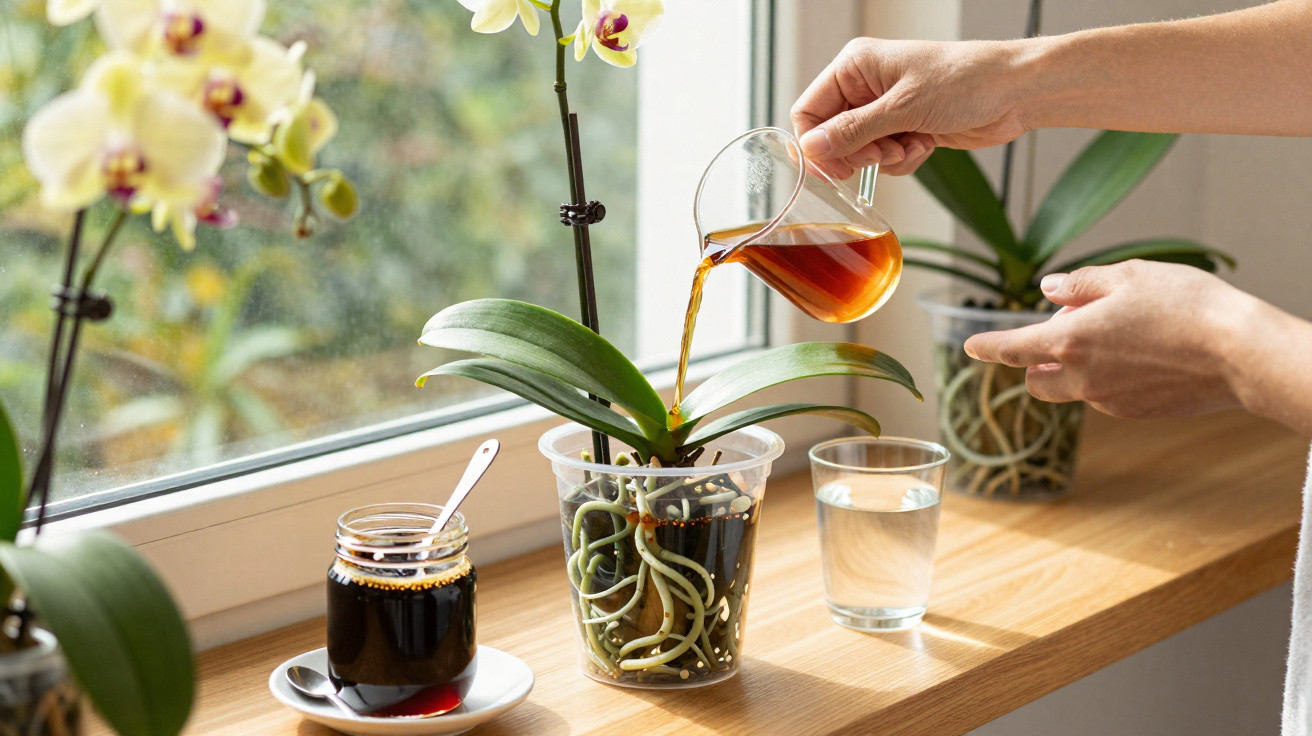
Do your orchids stay green yet refuse to produce fresh blooms? An ingredient kept beside the cake tins may help them along.
An orchid that fails to flower again is not necessarily unwell. In many homes, it simply lacks suitable light, a small temperature difference between day and night, or accessible nutrients. Among the tips tried by houseplant enthusiasts is using molasses, a thick brown syrup, highly diluted in watering water. This should remain an occasional treatment: once a month is more than enough.
Molasses supplies elements that may benefit roots
Made during the processing of sugar cane or sugar beet, molasses is best known as a cooking ingredient. Its thick consistency and distinctive flavour make it popular in certain sweet recipes. It also contains potassium, magnesium and a few trace elements.
These elements may be of interest to orchids, particularly Phalaenopsis, which are very common in flats. Potassium contributes to the overall strength of plant tissues and supports the development of flower spikes. Magnesium plays a role in chlorophyll, the pigment that enables leaves to capture light energy.
“Molasses is not a substitute for light, controlled watering or suitable fertiliser. It can only provide an occasional addition when the plant is in good condition.”
The sugars in this syrup may also feed certain microorganisms in the growing medium. In a healthy, well-aerated bark mix, this activity can improve the availability of some nutrients around the roots. It should not be treated as a guaranteed solution: an orchid will not bloom simply because it has received sweetened water if it lacks light or if its roots are suffocating in a waterlogged pot.
The right dilution to avoid damaging the orchid
Caution matters more than quantity. Molasses is concentrated and sticky. Pouring it neat into the pot could upset the growing medium, create fermenting odours and attract insects.
If you wish to try it, use an extremely small amount. A straightforward mixture can be made with room-temperature water and a little syrup.
- Pour 240 millilitres of water into a clean container or spray bottle.
- Add half a teaspoon of molasses.
- Stir thoroughly until the water is evenly mixed.
- Moisten the growing medium around the base of the plant, without spraying the flowers.
- Repeat no more than once a month.
Another commonly used guideline is to use no more than one teaspoon per litre of water. If there are several orchids in the home, it is better to make a small quantity of solution and divide it between the pots. The mixture does not keep well: its sugars can ferment, especially in warm conditions.
Water when the roots are already slightly moist
Avoid applying this enriched water to a completely dry growing medium. Dry roots absorb rapidly, which can make the treatment too sudden. Watering normally the day before, or soaking the plant in plain water for a few minutes, helps prepare it.
Always allow the pot to drain after treatment. An orchid should never sit for extended periods in a saucer full of water. Its roots need moisture, but they also require air. When they remain submerged, they turn brown, become soft and can no longer perform their function.
Signs that mean you should stop
A plant does not always respond well to homemade treatments. After applying molasses, keep an eye on the pot over the following days. A sour smell, a slimy surface or a white deposit are warning signs that should be taken seriously. Small gnats around the compost should also prompt you to stop using sweet treatments.
“If the growing medium becomes sticky or smells of fermentation, flush it with clean water and leave several weeks between any fertiliser applications.”
To flush an orchid, place its pot in the sink and gently run lukewarm water over the bark for one or two minutes. Then allow the whole pot to drain completely. This also helps remove mineral salts that may build up after repeated watering with fertiliser.
Fragile orchids, recently repotted plants, unwell plants, or those affected by mealybugs are not suitable candidates for this type of experiment. It is better to resolve the main issue before adding any supplement.
Habits that genuinely encourage the next flowering
Molasses can complement a routine, but it cannot replace one. To produce a new flower spike, growing conditions matter far more than an ingredient added once a month. A bright windowsill without harsh midday sun is often the best position.
Phalaenopsis also benefit from a slight drop in night-time temperature for a few weeks, often around 4 to 6 degrees lower than during the day. This variation may encourage a flower spike to emerge. In a continuously heated home, moving the plant into a slightly cooler room at night can help, provided cold draughts are avoided.
- Check the roots through the transparent pot: green roots are still moist, while silvery grey roots need water.
- Water with soft water once the growing medium is almost dry.
- Use a very diluted orchid fertiliser during growth periods.
- Remove a dried-out flower spike with a clean tool, without touching healthy leaves.
- Repot every two to three years into fresh bark if the mix is breaking down.
Be cautious with other kitchen remedies
Rice water, eggshells and banana skins frequently appear in gardening advice. However, they all require considerable care. Plant matter buried in bark decomposes quickly and may encourage mould. Crushed eggshells release their elements very slowly, so they do not always meet the plant’s immediate needs.
Molasses has the advantage of being easy to measure, provided you choose a plain version without flavourings or unnecessary additions. One monthly trial, paired with appropriate light and careful drainage, is enough to monitor how the orchid responds over the weeks. A firm leaf, plump roots and the appearance of a green tip near the base remain the best signs that the plant is returning to its natural rhythm.



Comments
No comments yet. Be the first to comment!
Leave a Comment