

Hidden among it are magnetic nanoparticles-minute specks that jerk towards a magnet-which scientists have traced to dust propelled through space when a star died. The earth underfoot, it seems, may partly come from the sky. How does it alter our view to learn that garden soil contains the remnants of an ancient explosion?
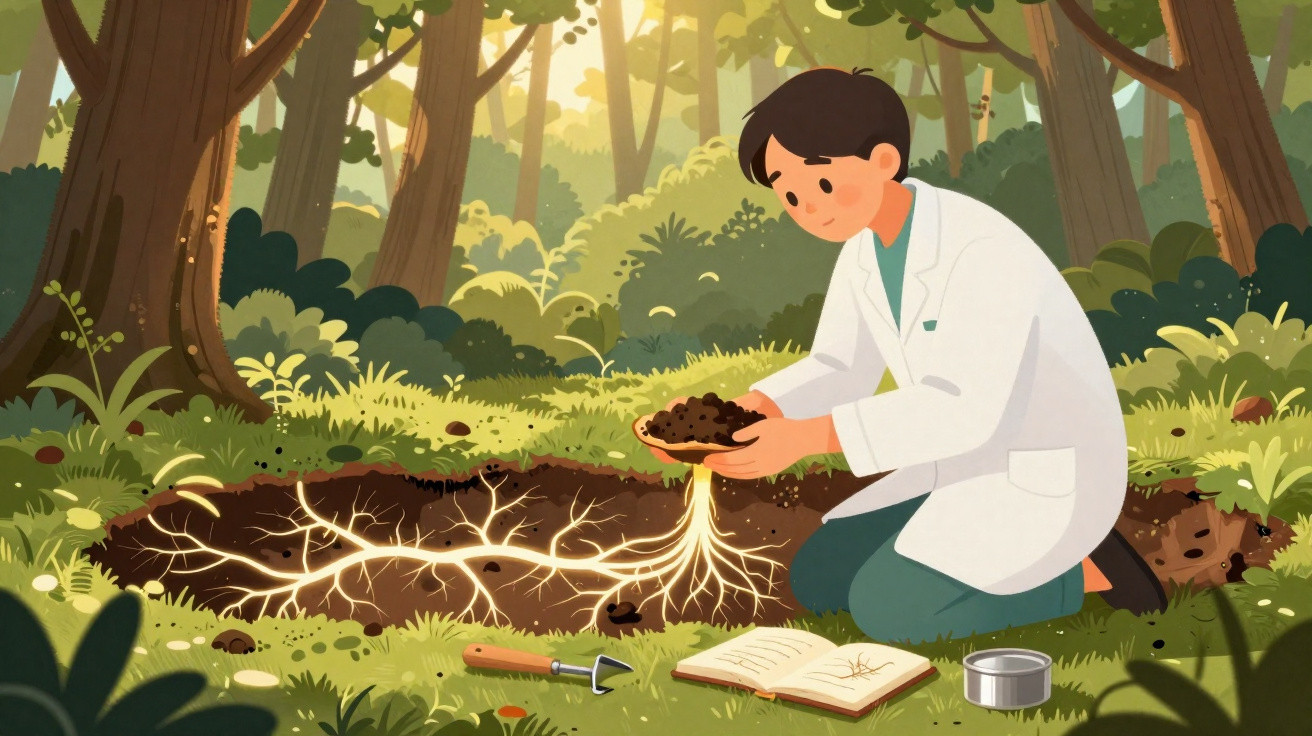
At first light, the boat nudged against the shore. The air was warm and salty, like a kitchen after a stew has simmered for hours. Beneath a pandanus, a field geologist crouched, lifted a teacupful of soil and tested it with a small neodymium magnet covered in plastic. Black grains darted towards the metal like timid fish. He grinned as people do when they have witnessed a private bit of magic.
We climbed a ridge overlooking the lagoon. There was a light wind, a rooster calling somewhere and the sea murmuring below. For a moment, I sensed the island drawing a thread from the sky. He handed the magnet to me. The soil trembled beneath it. The earth seemed to hum.
Stardust that clings to a fridge magnet
When you first watch it happen, you almost expect a film crew to emerge. Move a magnet across sieved soil and something shifts: minuscule, iron-rich particles slide towards an unseen invitation. Of course, local stone can be magnetic; basalt is hardly subtle. But among these grains sit smooth microbeads and sharp fragments with a distinctive lustre-the residue of dust that scorched in Earth’s atmosphere before cooling into glassy droplets as it descended.
The quantities are striking. Each year, Earth gathers tens of thousands of tonnes of space dust, much of it so fine that it resembles dark pollen. On one square metre, this may amount to only a few pinches over twelve months-small enough to disappear in a child’s hand. A proportion of these grains bears an unusual signature: the isotope iron-60, which has not occurred naturally on Earth for millions of years. Ocean deposits, Antarctic snow and certain undisturbed soils have preserved slight surges of it, like muted heartbeats from an explosion long past.
Why attribute it to a supernova? Iron-60 has a half-life of roughly 2.6 million years. Finding it relatively fresh means it was created in a stellar furnace and delivered here in interstellar dust. The island’s remoteness is useful: there are fewer factories, fewer brake systems releasing metal and fewer nails to cloud the evidence. Trade winds filter the atmosphere, while rain filters the land. It is a dot on a map, but in physical terms it is a clean notebook on which the sky has been writing.
How to detect a supernova’s whisper in soil
Before laboratory analysis, there is a straightforward field routine. Let the soil dry in the shade, then sieve it carefully until it has a sand-like consistency. Cover a powerful magnet with thin plastic and pass it just above the sample. Knock the collected flecks into a clean vial. A mild acid wash can remove ordinary rust, and another magnetic sweep further purifies the sample. In the laboratory, equipment separates particles according to their size and form. The decisive stage then begins: accelerator mass spectrometry searches for individual atoms of iron-60, needles in an interstellar haystack.
If you want to investigate at home, experiment without making grand claims. Apply a magnet to beach sand or volcanic soil and magnetic minerals will leap towards it. They are generally terrestrial rather than cosmic. We all know how quickly a simple demonstration can become an elaborate theory when we hope for the extraordinary. Keep in mind that depth is important: newer dust remains near the surface, whereas older deposits lie deeper down. Be careful with equipment, too. Steel scrapers release fragments, and magnets collect filings. In truth, nobody really remembers to do that every day.
On the ridge, one scientist watched the grains attach themselves to the magnet and quietly said,
“You’re holding the cooled breath of a dead star.”
He was not merely being poetic. It was literal enough to hurt. The list below offers no proof, only prompts for an inquisitive observer-small points of reference for wonder during a walk.
- Rounded, glassy microspherules can suggest melting during atmospheric entry.
- Highly magnetic grains with a metallic, rather than earthy, appearance.
- Consistent sizes ranging from tens to hundreds of micrometres, resembling ground pepper.
- Flecks containing tiny nickel-iron beads when viewed through a hand lens.
- Context: settings with little contamination, away from roads and steel debris.
What it means to walk on the remnants of an ancient explosion
Consider it like this: each step on that island presses a few cosmic crumbs further into its history. Somewhere, a sun became unstable, expelled its outer layers, made heavy elements in a fire beyond any kiln and set the material adrift. That dust travelled across light-years, endured stellar winds, passed through the heliosphere and landed as invisible night-time snow. Then, on a hillside, a magnet twitched and someone caught their breath. That is the entire story.
People wonder what difference this makes. It may not change your journey to work, but it changes the sense of scale. Everyday life appears different when a teaspoon of soil makes the case for a universe that continues to reach into our world. It encourages both humility and courage. Earth is not a closed room, and the past is not over. Our tools-magnets, vials and patient hands-are apparently sufficient to welcome a visitor that began its journey before our ancestors discovered fire.
| Key point | Detail | Why it matters to the reader |
|---|---|---|
| Stardust in soil | Magnetic nanoparticles discovered in remote island soil can be traced to ancient supernova dust. | It turns a familiar substance-soil-into a cosmic archive beneath our feet. |
| The smoking gun | The isotope iron-60 indicates relatively recent, on geological timescales, supernova material. | A clear, memorable explanation of how scientists connect soil with dying stars. |
| Try a small experiment | Use a covered magnet to draw out magnetic grains; observe them, but do not overstate the result. | A hands-on curiosity that can turn a beach walk into a miniature field laboratory. |
Frequently asked questions
- Which island does this refer to? Researchers favour remote Pacific locations with consistent wind patterns and low contamination. The specific island is less important than the quiet, stable environment.
- Are these particles dangerous? No. They are microscopic and inert under normal exposure. The “radioactive” isotope signature is identified atom by atom using large instruments, not something you could feel or absorb.
- How old is the dust? Ocean-sediment evidence indicates pulses within the past few million years. Some grains arriving today may still retain that legacy, having been stirred and reworked by weather and living things.
- Can I find supernova dust at home? Magnetic micrograins can be found almost anywhere, particularly near roads and beaches. Distinguishing cosmic material from human-made or volcanic particles requires laboratory testing, not simply a magnet.
- What tools do scientists use? Field sieves and covered magnets gather the material; microscopes, magnetometers and accelerator mass spectrometers test for rare isotopes such as iron-60.





Comments
No comments yet. Be the first to comment!
Leave a Comment