
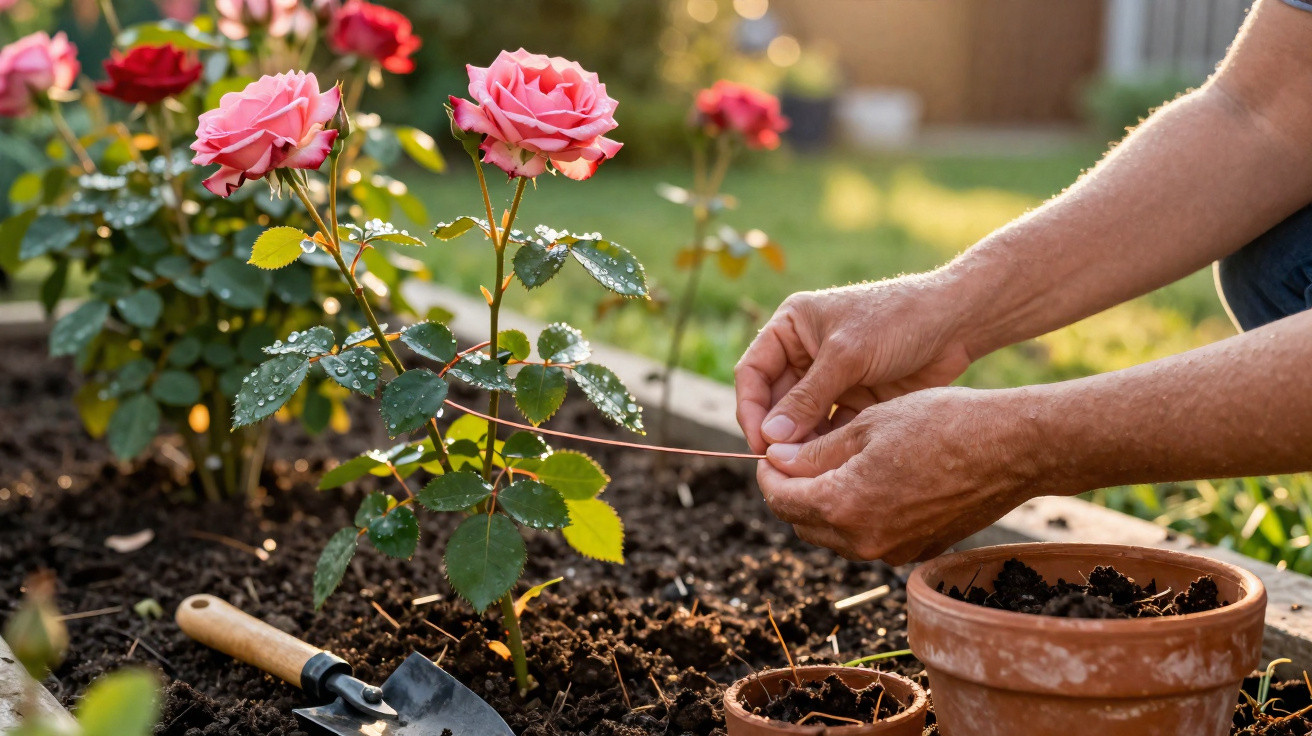
With a simple wire technique, branches like these can be turned into fresh, flower-rich shrubs.
Anyone with an older rose bush in the garden will recognise the sight: bare at the base, a few final blooms at the top, and grey branches in between that seem to be crying out for saws or secateurs. Many people simply cut these stems away – and in doing so give up considerable potential. A carefully placed wire ligature can turn an apparently tired rose shoot into an independent young rose bush, requiring almost no specialist equipment and offering a surprisingly high success rate.
Why old rose branches are far too valuable for the compost heap
A rose branch that looks grey and lifeless on the outside often still contains plenty of energy within. As long as the wood has not dried out completely, sap is still moving through it. The wire method relies precisely on this.
“As long as a rose branch does not snap easily like dry wood, sap is circulating – and with it comes the chance of a new life as an independent shrub.”
Many amateur gardeners remove such shoots because they no longer expect them to produce fresh flowers. However, botany and practical gardening suggest otherwise: a targeted intervention in the right place can encourage the plant to form new roots on an old branch. The result is a fully developed, healthy rose bush – genetically identical to the favourite rose growing in the border.
What happens inside a rose: sap channels and the rooting trigger
Two crucial transport tissues run through every rose branch:
- Xylem: carries water and minerals upwards from the roots
- Phloem: sits directly beneath the bark and transports sugars and growth hormones downwards
The wire trick makes use of exactly this structure. A thin, soft wire is placed around the shoot so that it partly constricts the phloem while allowing the xylem to keep functioning. Water therefore continues to travel upwards, but hormones and nutrients accumulate above the wire.
“Growth hormones gather at the constricted point – after three to six weeks, a thick root base forms there, becoming the future ‘foot’ of the new rose bush.”
In particular, plant growth hormones known as auxins become concentrated at the pinched section. The plant responds by creating root tissue there. Gardeners call this swollen area root callus. It later produces the fine, white fibrous roots.
The best timing and the right shoot to choose
The wire method works especially well while the rose is actively growing. Two periods have proved effective:
- Early spring, when sap is rising strongly
- Late summer to early autumn, when the plant is still growing but is no longer under heat stress
Choosing the shoot is important. The best option is a shoot from the previous year: not very fresh green growth, but slightly woody material around the thickness of a pencil. The branch should be healthy, with no cracks, fungal marks or obvious pest damage.
Step by step: how the wire trick works on roses
Equipment needed
This method needs only a small collection of items that many people already have at home:
- Soft wire (1–2 mm), preferably galvanised, or copper wire as an alternative
- Flat-nose pliers for tightening
- Sharp, disinfected secateurs
- A pot or planting container with a saucer
- A mix of 50% loose growing medium and 50% washed sand
- A transparent cover, such as a cut-off plastic bottle or indoor propagator
- A dated label for monitoring
How to apply the wire ligature
- Select a healthy shoot from the previous year, about pencil thickness.
- Measure approximately 15 centimetres up from the base of the shoot.
- Wrap the wire tightly around the branch once at that point.
- Use the pliers to tighten the wire until the bark is clearly indented but not cut through.
The area may develop a clearly visible constriction. This is exactly where the root callus should form. The shoot remains attached to the parent plant, continues receiving water and can gradually prepare new roots.
The next step is simply to wait. Within three to six weeks, a noticeably thickened ring develops above the wire. Once this section feels firmer and slightly knobbly, there are two possible approaches.
Option 1: Ground layering – a new rose from a soil-layered shoot
With this approach, the shoot remains connected to the parent plant and is guided into the soil until enough roots have formed. Proceed as follows:
- Dig a small trench around 10 centimetres deep in the border.
- Add a layer of sand and loose soil.
- Bend the shoot so that the wired section sits in the trench.
- Secure it with a bent piece of wire or a peg so the shoot does not spring back up.
- Cover the wired area completely with soil, firm it lightly and water it.
Over the course of the season, a new root system will develop at this point. The following spring, carefully uncover the layer. If there are plenty of fine white roots, the young rose bush can be permanently separated by cutting between the parent plant and the rooted area, then planted on its own.
“A layer made from an old but still sap-filled shoot often achieves considerably higher success rates with historic, non-grafted rose varieties than conventional cuttings.”
Option 2: A potted cutting – a flexible answer for balconies and containers
Those without space to layer a shoot in a border can use a pot instead. In this method, the shoot is fully detached from the parent rose after callus formation.
Follow these steps:
- Cut the shoot just below the wire so that the whole root callus remains on the upper section.
- Shorten the shoot to around 15 to 20 centimetres and remove the lower leaves.
- Fill a pot with the sand-and-soil mix and moisten it thoroughly.
- Plant the cutting deeply enough for around two thirds to sit in the growing medium, with the callus completely covered.
- Cover the pot with a transparent hood or bottle to create a humid microclimate.
- Position the pot in partial shade, avoiding direct midday sun, and keep the growing medium lightly moist.
Note: Gentle resistance when carefully pulling the shoot, or fresh growth at the tip, indicates successful rooting. The cover can then be removed gradually.
When the new rose bush can move to its permanent position
Once the ground layer has formed a dense mass of roots, or the potted cutting is producing strong new growth, the young rose bush can be moved. The best times are frost-free spring or early autumn.
Choose a site with free-draining, deeply loosened soil. Waterlogging causes significant harm to young roots. A sturdy support cane helps during the first few months, preventing wind from loosening the young shrub. Water it in thoroughly after planting, then water regularly but not excessively during the first weeks.
Why copper wire is often the better choice
Many gardeners use copper wire rather than ordinary iron wire. The reason is that copper has a mildly antiseptic effect and can reduce the risk of rot around the tiny injury in the bark. This has proved particularly useful in rainy regions or in heavy soils.
The wire stays on the plant rather than being removed. Over time, the bark grows over it while the root callus continues to develop. Once the area is beneath the soil, the wire is barely noticeable.
Common mistakes – and how to avoid them
- Wire tightened too much: The shoot is cut through completely and dries out. Solution: tighten it gradually, until the bark is only just still holding together.
- A shoot that is too thin and fresh: Green wood is more sensitive and may snap. Choose slightly woody shoots from the previous year instead.
- The wrong timing: Roses root far less effectively during dormant periods. Use phases of active growth.
- Constantly wet growing medium: This quickly leads to rot, especially in pots. An airy mix and moderate watering are essential.
Who will benefit most from this method
The wire trick is particularly suitable for gardeners who:
- have a rare or historic rose they want to preserve,
- want to rejuvenate an old shrub that has become bare at the base,
- want to multiply a favourite rose for free rather than buy new plants,
- want to grow more roses even with limited room, such as in a terraced-house garden or on a balcony.
Anyone who has so far been hesitant to try conventional cuttings, or has had little success with them, may find the wire method a robust and forgiving alternative. The shoot remains attached to and supplied by the parent plant for a long time, while the new root base develops undisturbed – a clear advantage over cuttings taken directly from the plant.
This approach is also interesting for gardeners who enjoy experimenting: the principle of deliberate constriction works not only with roses, but generally with many woody ornamental shrubs. Similar effects can be achieved with forsythia, currants or hydrangeas. The essential process is always the same interplay of sap flow, hormones and the skill of directing a plant’s natural healing powers with a simple piece of wire.



Comments
No comments yet. Be the first to comment!
Leave a Comment