
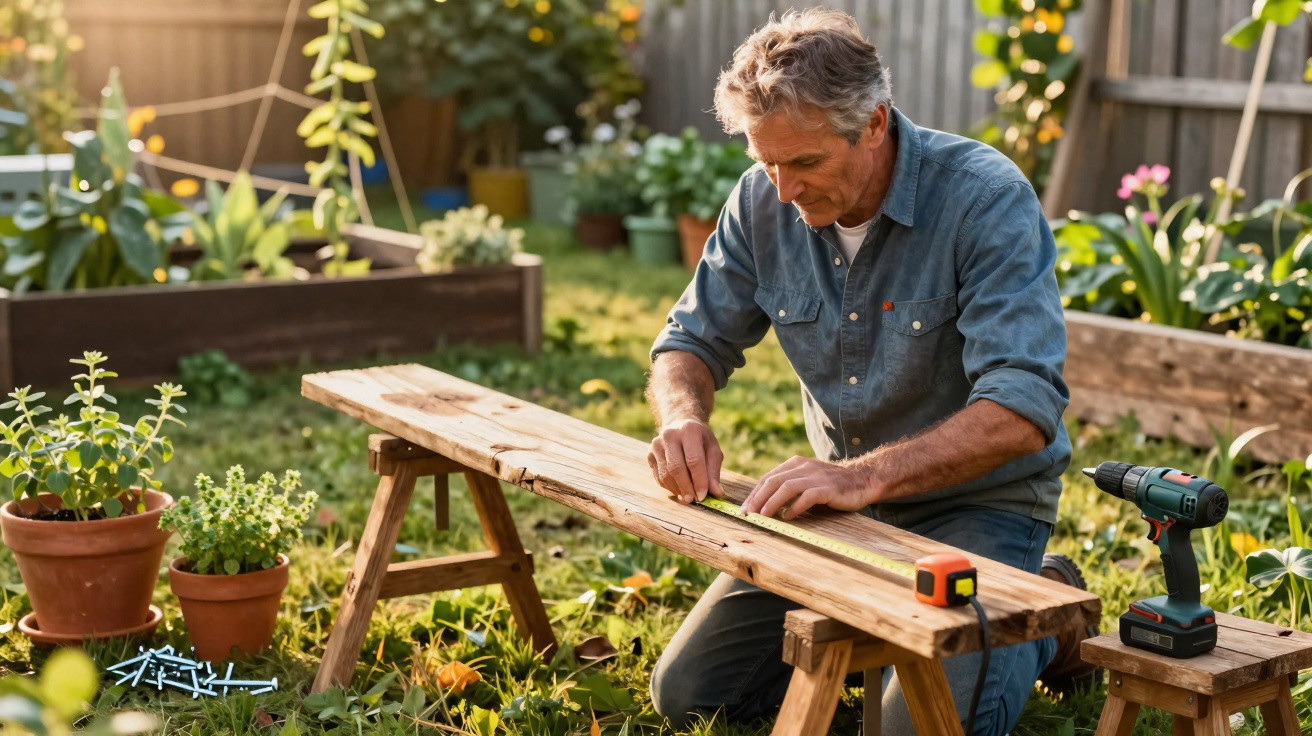
An old plank in the garden can be given a fresh purpose as a plant stand or identification sign. Before reusing the wood, however, assess its condition, remove damaged sections and select a finish suited to the setting.
Why can an old plank be useful in the garden?
A wooden plank can serve as a base for small stands, shelves or signs for labelling plants. As it can be cut and adapted easily, it offers a practical way to make use of a piece that no longer serves a purpose indoors.
Repurposing it can also bring a rustic look to the space. However, badly weathered wood may lose strength when exposed to rain, sunlight and moisture from the soil, so its condition should be checked before assembling anything.
Which wood detail needs the closest attention?
Check the plank for deep cracks, loose sections, mould or signs of decay. Old nails and screws should also be removed or replaced if they are rusty or could cause injury.
If the wood is in good condition, sand its surfaces to remove splinters and uneven areas. For outdoor use, choose a protective product suitable for timber and follow the manufacturer's directions for application and drying time.
How can you turn the old plank into a garden feature?
One straightforward option is to cut the wood into small pieces and write the plant names on them, creating identification signs. Their size can be adjusted to suit the pot or flowerbed, with part of each piece pushed into the soil or fixed to a support.
Another option is to build a small structure for holding light pots or arranging tools. Stability is vital in this case. Test its strength before adding weight, and do not use a thin or weakened plank to support heavy containers.
Who should adapt this reuse, and in what circumstances?
In gardens directly exposed to rain, the wood will deteriorate more quickly and will need regular maintenance. In covered areas, it may last longer, although the piece should still be protected from moisture where necessary.
It is also best to avoid wood of unknown origin that may have been treated with chemicals unsuitable for the intended use. In this way, an old plank in the garden can become an appealing sign or stand, provided that the timber's safety, strength and preservation are taken into account.



Comments
No comments yet. Be the first to comment!
Leave a Comment