
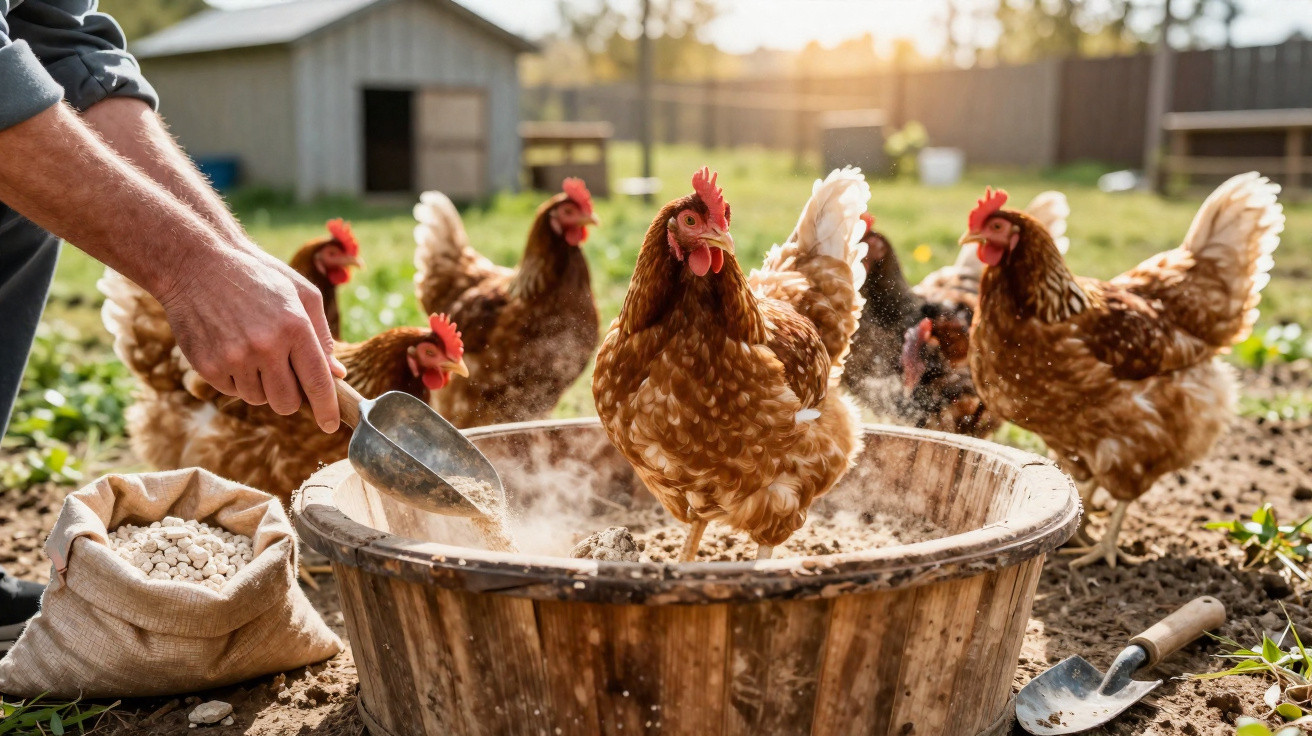
Many backyard keepers reach straight for chemicals from the DIY shop or pet supplier in situations like this. These sprays cost money, have a harsh smell and usually work only for a short time. Yet there is an almost free solution that chickens naturally enjoy – and which puts red mites and other parasites under significant pressure.
Red poultry mites: the nightmare for many chicken keepers
Especially in spring, many people notice that something is wrong in the coop. The birds seem restless, sleep poorly on their perches, pull out their feathers and egg production drops sharply. Typical warning signs include:
- chickens scratching themselves unusually often
- raised, scruffy feathers, particularly around the belly
- pale combs caused by blood loss
- poor sleep and restlessness on the perch
- noticeably fewer or smaller eggs
Red poultry mites are often behind all of this. During the day, they hide in cracks, gaps in the wood and beneath perches; at night, they emerge to feed on blood. Their numbers can increase dramatically in damp, poorly ventilated coops.
“Those who only spray and dust are often treating the symptoms – not the problem in the birds’ daily lives.”
This is precisely where a simple trick comes in, one that many chickens display entirely naturally: thoroughly rolling in dry soil.
Why a dust bath is the natural enemy of mites
Anyone watching chickens in the garden will soon see it: as soon as they find an exposed patch of dry earth, they settle into it, flap their wings and let dust filter through their plumage. It may look like fun, but it is actually highly effective body care.
Several things happen at once during a dust bath:
- fine particles reach all the way down to the skin
- larvae, eggs and mites are dislodged mechanically
- excess skin oil is absorbed
- parasites lose their grip and dry out
As a result, external parasites find it far more difficult to establish themselves and breed. The chickens’ skin stays drier, their feathers remain well cared for, and itching is noticeably reduced.
“A good dust bath works like a combination of dry shampoo, exfoliator and insect repellent – entirely without chemicals.”
Why water baths are more likely to make chickens ill
Many people apply human hygiene habits to their animals and consider giving them a water bath. For chickens, this is usually a poor idea, except in very specific situations and where considerable expertise is available.
Wet feathers lose their insulating properties. The bird becomes chilled, particularly in draughts. Moisture in the plumage also creates ideal conditions for bacteria and fungi. At the same time, mites and other parasites thrive in a damp coop environment.
Regularly getting birds wet is therefore more likely to weaken them and raise their risk of illness. Dry care using dust and soil is much better suited to a chicken’s biology.
How keepers can create an effective dust-bath area
The good news is that a proper dust bath does not require an expensive specialist container. Almost anything can be improvised from leftover materials, provided a few basic rules are followed.
The right tub for a chicken spa
Suitable options include:
- a sturdy wooden box without gaps in the base
- a robust plastic container
- an old builder’s mixing tub
- a shallow livestock or feed trough
The sides should be high enough – around 15 centimetres – to keep the mixture in the container rather than allowing it to be scratched straight out. For four to five chickens, a size of roughly 50 x 50 centimetres is generally sufficient.
The mixture: dry from the first grain to the last
The contents determine how useful the dust bath will be. A simple three-part recipe has proved effective and can be made for very little money:
- 10 litres of fine, dry sand
- 5 litres of well-sieved wood ash (cold!)
- 5 litres of very fine, stone-free garden soil
Each ingredient has its own role:
- Sand acts as a gentle exfoliant, mechanically loosening parasites.
- Wood ash blocks the mites’ breathing openings and absorbs skin oil.
- Fine soil makes the mixture pleasant and easy to shape for longer baths.
“Wood ash must come only from untreated timber – with no paint, glue or barbecue lighter residue.”
The best location in the run
Dust baths work only when the mixture stays dry over time. The location is therefore crucial.
A sheltered spot is ideal:
- beneath a small roof or canopy
- underneath the coop, if it is raised off the ground
- under a securely fixed tarpaulin that keeps off rain
Direct rain quickly turns a dust bath into sticky sludge that chickens will avoid. Moisture should not rise from below either, as damp will otherwise gradually work its way into the mixture.
Maintenance and checks: keeping the dust bath effective
Once installed, the dust bath needs only limited upkeep. A set routine helps maintain its effectiveness over the long term:
- loosen it once a week with a small rake or hand cultivator
- remove visible droppings, feathers and coarse debris
- monitor the fill level and top up the mixture when needed
As soon as the contents become heavy, slightly clumped or noticeably grey, it is time to replace everything. The old mixture can go on the compost heap or be used to improve soil beneath shrubs.
“Many keepers notice within just a few weeks: less scratching, less feather pecking and nests filling up better again.”
How the dust bath fits into a comprehensive parasite-control plan
A good dust bath does not replace basic coop hygiene, but it strengthens every other measure. To keep chickens healthy, keepers should ideally combine the following in everyday care:
- regular mucking out and keeping the coop dry
- smooth, easy-to-clean perches without deep cracks
- liming or flame-treating problem areas
- an appropriate stocking density so birds are not sitting on top of one another
- a dust bath in a permanent, dry place in the run
This disrupts parasites at several points: they find fewer hiding places, less moisture and chickens that repeatedly remove them with dust and sand.
Common mistakes that significantly reduce its effectiveness
Many attempts fail not because the idea is wrong, but because of small details. Frequent pitfalls include:
- a location that is too wet, such as the middle of a lawn
- a concrete or gravel base in the tub that draws moisture upwards
- using barbecue charcoal ash containing additives
- soil that is too coarse, with stones and roots
- containers that are too small for the birds to turn around properly
Correcting these points often reveals how quickly chickens accept the new facility: cautiously at first, then with increasing enthusiasm. The rolling, wing stretching and feather shaking can sometimes look almost dramatic – but it is all part of the process.
Background: why chickens love dust so much
The urge to take dust baths is deeply rooted in the birds’ behaviour. Even wild chickens use dry areas of ground to control parasites and care for their plumage. In intensive systems, these opportunities are often lost, especially on concrete surfaces or in very small runs.
Giving chickens space to perform this behaviour achieves more than parasite control alone. The birds have meaningful activity, relieve stress and display calmer social behaviour. Aggression and feather pecking often decrease.
For keepers, this means that a well-planned dust-bathing area is not merely an “anti-mite remedy”, but a central element in maintaining healthy, balanced birds – with a direct effect on egg numbers, shell quality and overall welfare in the coop.






Comments
No comments yet. Be the first to comment!
Leave a Comment