
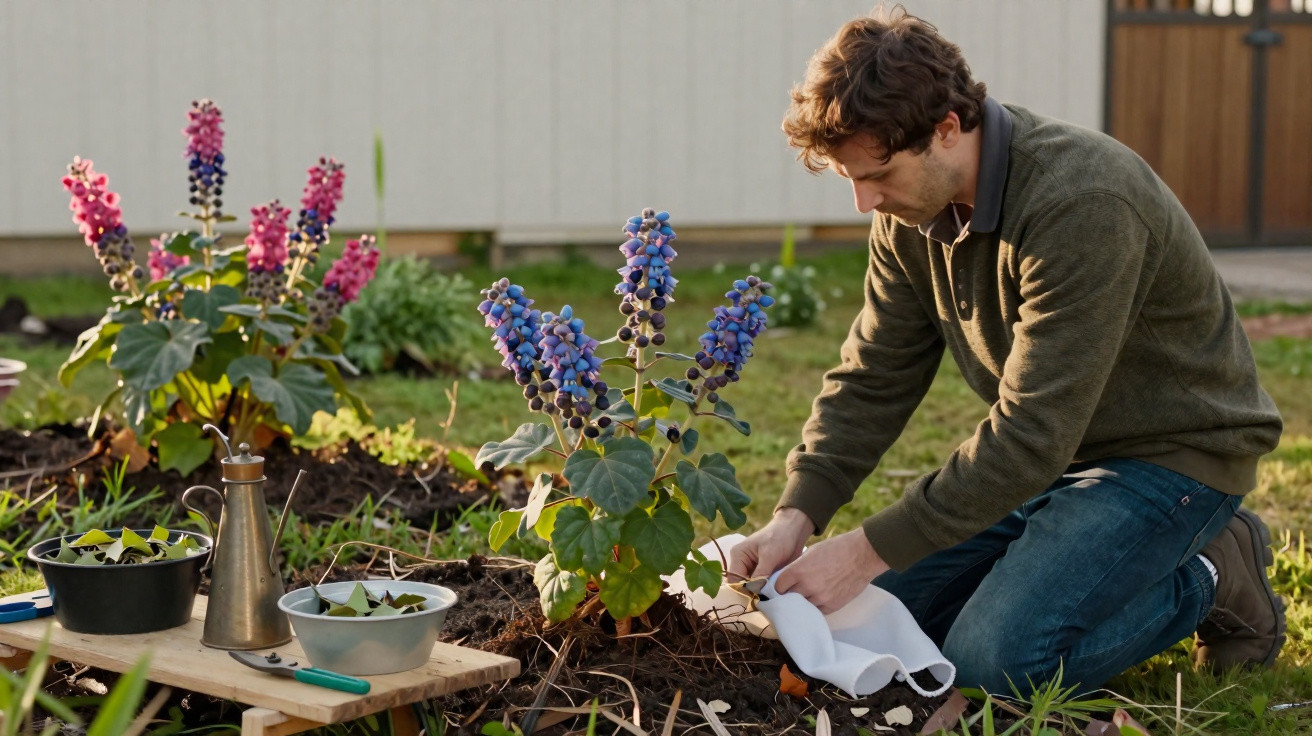
It arrives at 3 a.m., nips the buds and leaves velvety foliage resembling cornflakes by breakfast. When hydrangeas are the centrepiece of your summer garden, those pre-dawn hours may determine whether next June brings an explosion of flowers-or merely an uneventful patch of green.
Last October, I stepped outside in slippers, my breath misting in the air, and saw a neighbour wearing a head torch as she wrapped her mophead hydrangeas in blankets as though tucking in sleeping children. She was not in a panic. For days, she had been watching the weather, recognising the warning signs: abruptly clear evenings, fading wind and the metallic cold that clings to your knuckles. Hydrangeas remember a damaging night. Their plump buds, already carrying the following year’s display, sit high on the plant, where frost reaches them before you can even fetch the fleece. Her garden flowered spectacularly the next summer; the garden opposite did not. One small action had made a considerable difference.
When frost makes petals papery: what is really at risk
Hydrangeas carry the promise of next year’s display on this year’s stems. Their buds are tiny storehouses containing flower beginnings, leaf development and even the schedule for colour, so one penetrating freeze can undo months of unseen preparation. Paniculata and arborescens varieties are more resilient because they flower on new growth, whereas macrophylla and serrata conceal their potential on older wood, which is more exposed and vulnerable. A dry shrub freezes more severely and recovers more slowly, while a properly hydrated one withstands a cold spell like a well-fuelled walker. As temperatures plunge, you can almost imagine the stems creaking as their cells contract.
We have all seen forecasts of 2°C followed by a morning garden temperature of -1°C. Official weather stations are positioned in open, level fields, but your hydrangea may be beside a brick wall, above a slope or in a hollow where cold air settles like water. In USDA Zone 5, the median first frost may arrive in early October; in Zone 8, it may not appear until late November. Four years out of five, the actual date varies by one or two weeks in either direction. That is why neighbours with almost identical plants can have entirely different tales to tell in June.
Frost damage is not simply dictated by the temperature displayed on a screen; it depends on physics and timing. On a calm, clear night, radiational cooling allows heat to escape directly into space, leaving exposed buds to lose warmth like open hands. Damp soil stores heat and releases it overnight, increasing the air temperature around the root zone by a valuable degree or two. Mulch reduces this loss of heat. Buds with greater sugar levels, resulting from sound autumn care, tolerate frost better because sugar lowers the freezing point within cells. Taking action 24–48 hours before the first harmful frost is not indulgence; it improves the odds.
Five urgent steps before the first frost for hydrangeas
Give the plant a thorough watering the day before the expected freeze, applying it slowly around the drip line. For shrubs planted in the ground, provide roughly 25–50 mm of water over 30–60 minutes; for containers, water until it runs freely from the base, then repeat after ten minutes. The purpose is not to leave the soil saturated, but to replenish the plant’s tissues so they are less vulnerable to ice forming inside cells. Water deeply 24–48 hours before the freeze. If using a hose feels inconvenient, set a timer and leave it to do the work. Your future self will be grateful.
Spread an 8–10 cm layer of shredded leaves, pine needles or bark over the root area, keeping it about 2.5 cm clear of the stems. Mulch retains daytime warmth and cushions the roots when the thermometer drops towards -7°C. Gather sprawling canes into a loose bundle with soft twine to prevent snow and wind from breaking them, then place frost fleece or hessian over a simple teepee of stakes, leaving the sides open on mild days. Realistically, few people will do this daily. On a sharply cold night, a bedsheet held away from the leaves with stakes is still better than no protection, and is usually close at hand.
“The fight is won two days before the frost,” says Kerry Michaels, a longtime garden photographer who baby-sits hydrangeas from Maine to Oregon. “If you’re rushing out at dusk with a wet hose and a flimsy sheet, you’re gambling with June.”
- Hydrate: Soak the soil slowly 24–48 hours before the cold front reaches you.
- Mulch: Apply 8–10 cm around the root zone, without letting it touch the stems.
- Protect: Use stakes and cover with hessian or frost fleece on calm, clear nights.
- Prune wisely: Cut away dead wood only, keeping buds on old wood undisturbed.
- Tidy up: Remove diseased leaves and avoid applying nitrogen fertiliser this late.
What you do now determines June’s colour
There is a reason experienced gardeners move with a relaxed, almost unhurried manner on the eve of a frost: they have acted earlier and need to do less. Mulch is your winter insurance policy. Do not hard-prune old-wood hydrangeas in autumn. Deadhead paniculata and arborescens lightly if the weight could cause breakage, but do not disturb the large buds on old wood of macrophylla, serrata and quercifolia. If your plants are in pots, move them against a wall sheltered from wind, raise them on pot feet for drainage, and wrap the container in bubble wrap beneath a layer of hessian. The first frost seldom arrives conveniently. When it does, you can already be indoors with the kettle clicking on, rather than rushing outside with freezing fingers.
| Key point | Detail | Why it matters to the reader |
|---|---|---|
| Hydrate before frost | Water deeply 24–48 hours in advance; moist soil releases heat overnight | Improves bud survival and lessens freeze stress |
| Mulch and protect | Apply 8–10 cm of organic mulch; stake and drape with hessian or frost fleece | Protects roots and buds against rapid changes in temperature |
| Prune with restraint | Remove only dead or diseased wood; avoid hard autumn pruning of old-wood types | Retains next year’s flower buds and the shrub’s structure |
FAQ:
- When should I cover hydrangeas for the first frost? Cover them on calm, clear nights when temperatures are forecast to reach around 0°C or below, after you have watered and mulched. Take covers off in the morning once temperatures rise, to prevent trapped moisture and mould.
- Can I prune my hydrangeas in autumn to “tidy them up”? Avoid hard-pruning old-wood flowering types such as macrophylla, serrata and quercifolia, as this removes next year’s flowers. You may tidy paniculata and arborescens lightly, but leave major cutting until late winter.
- How thick should the mulch be to help with frost? A layer of 8–10 cm provides the ideal insulation. Keep it about 2.5 cm away from stems to prevent rot and deter creatures from nesting directly beside the crown.
- What about potted hydrangeas on my patio? Place them against a wall protected from wind, lift them on pot feet, water them well and wrap the containers with bubble wrap under hessian. On freezing nights, add frost fleece over a small frame of stakes.
- My hydrangea got nipped-now what? Do not cut it back immediately; wait a week to see what recovers. Prune only genuinely blackened tips, maintain even watering and feed lightly in spring. If the main buds have died, side buds may still produce a smaller but attractive display.





Comments
No comments yet. Be the first to comment!
Leave a Comment