
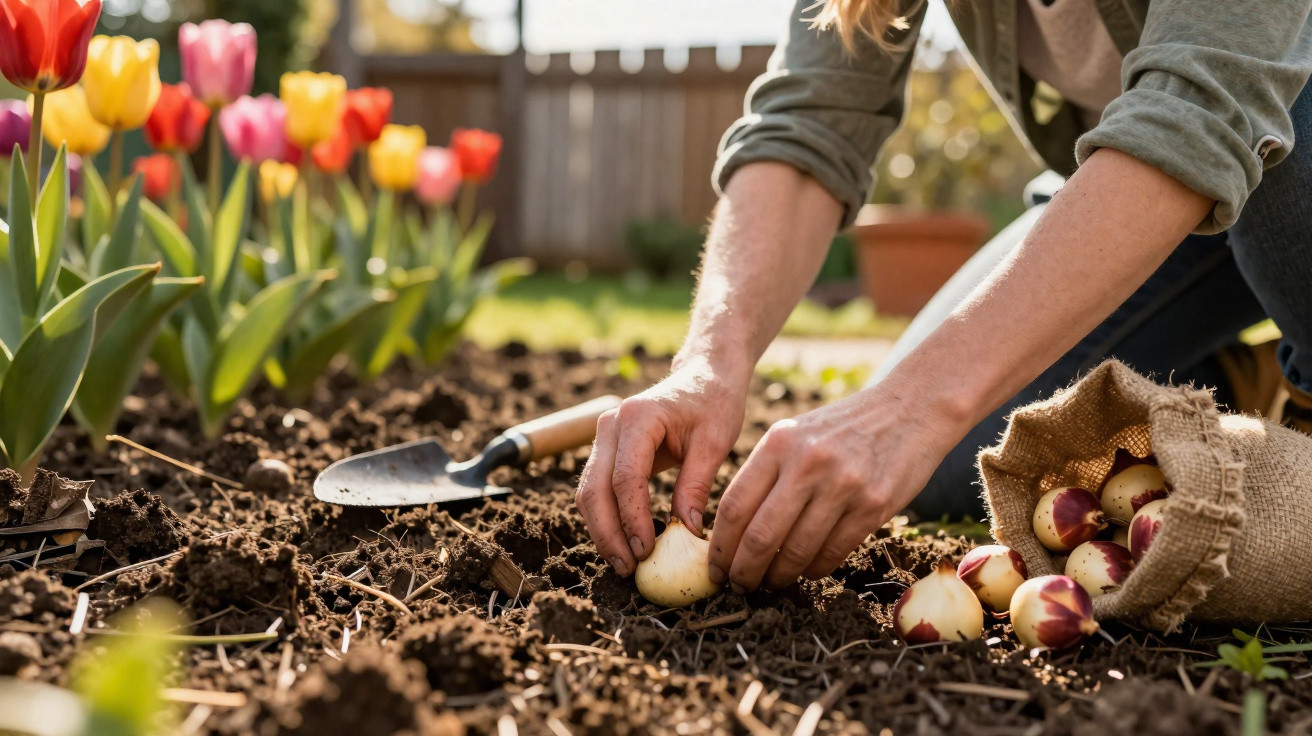
Tulips are among spring’s most sought-after flowers, valued for their vivid colours and their ability to turn any garden into an elegant, lively display. Achieving an impressive result depends not only on selecting the bulbs, but above all on planting them correctly and at the right time. Understanding this process can make the difference between weak blooms and a spectacular display of flowers.
When is the best time to plant tulips?
In most areas, tulips should be planted in autumn, once the soil starts to cool. This timing matters because the bulbs need a cold period before they can flower in spring; it is a natural process that triggers their development.
In colder locations, planting is generally done at the beginning of autumn, whereas warmer regions call for later planting. This ensures the bulbs have enough time to establish roots before severely low temperatures arrive.
How should you prepare the soil for healthy growth?
Soil type is one of the most important considerations when growing tulips. They favour light, well-drained soil that is rich in organic matter, as too much moisture can quickly cause the bulbs to rot.
Before planting, loosen the soil and improve its structure with natural compost. This supports drainage while also helping to strengthen the roots throughout the dormant period.
- Use well-drained soil to prevent bulb rot
- Add organic compost to boost nutrient levels
- Avoid places where water collects
- Choose light, aerated soil
- Maintain a balance between moisture and air circulation
What is the correct technique for planting tulip bulbs?
How a bulb is placed in the ground has a direct effect on the final flowering result. The key rule is straightforward: plant it at the appropriate depth and always with its pointed end facing upwards.
Spacing between bulbs is also important, as it gives every plant sufficient room to grow and flower without competing for nutrients.
- Dig the soil to the suitable depth
- Place the bulb with its pointed end facing upwards
- Leave space between bulbs for healthy growth
- Cover with light, even soil
- Water lightly after planting
What care is needed after planting to produce strong flowers?
Once they are planted, tulips need little attention, although a few details can have a major impact on the final result. Watering should be moderate, providing only enough moisture to keep the soil slightly damp.
Throughout winter, the bulb remains dormant, with the first shoots appearing in spring. At this stage, the plant begins to form its flowers, bringing colour and life to the garden.
- Avoid overwatering after planting
- Allow for the winter dormancy period
- Keep the soil well drained at all times
- Wait for natural flowering in spring
- Remove faded flowers to strengthen the bulb
Transform your garden with tulips today
Planting tulips is a simple, effective way to bring beauty and sophistication to any space. With suitable soil preparation, planting at the ideal time and a few basic care measures, you can enjoy vivid, long-lasting blooms every year.
If you want to see your garden come alive next spring, start planning today and prepare your bulbs with care. The result will surprise you.




Comments
No comments yet. Be the first to comment!
Leave a Comment