
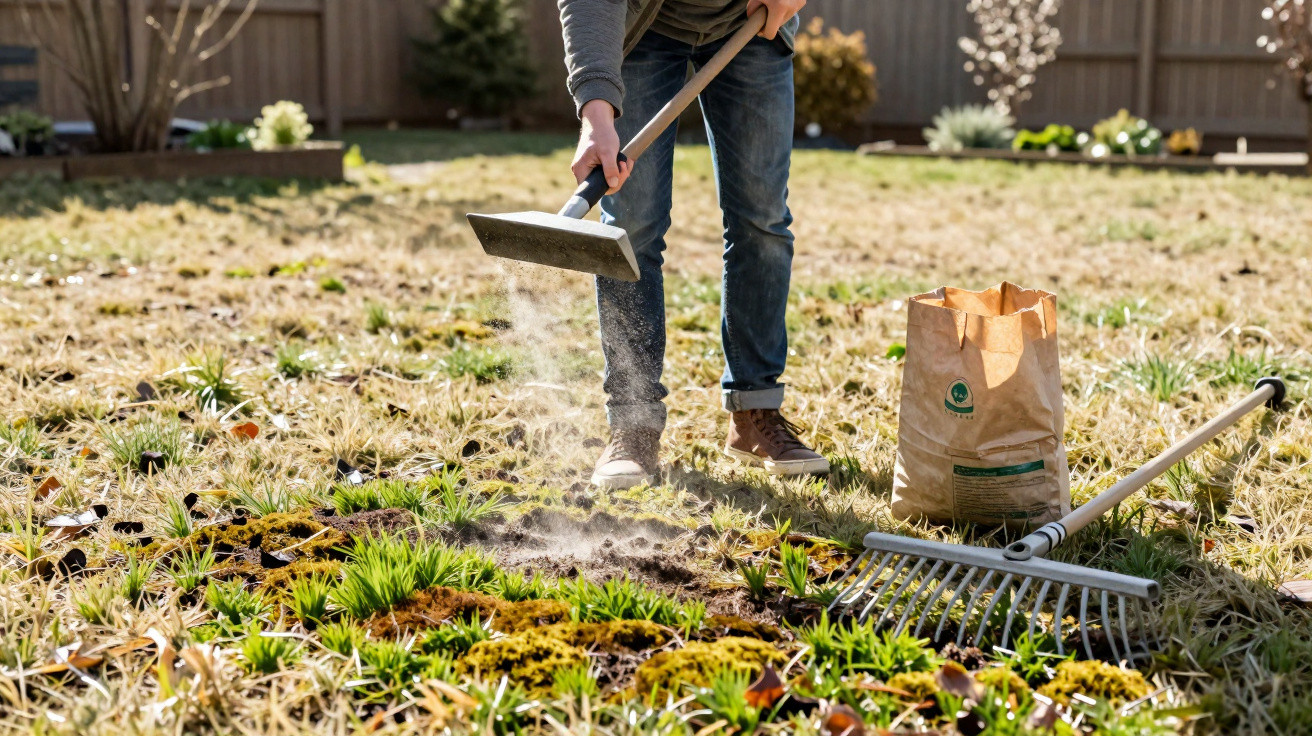
Many amateur gardeners begin the gardening year by reaching for the lawnmower or applying a generous dose of fertiliser. Professionals take a different approach: they first use an unassuming powder that destroys moss, gives grass a boost and can make the lawn look noticeably greener even before spring arrives.
Why lawns look so battered after winter
Winter puts every lawn through a severe test. Damp air, limited sunshine, persistent wet conditions and recurring frosts weaken the grass blades. Over time, rain and snow compact the soil, making it increasingly firm. As a result, air and water cannot reach the roots as easily.
Moss thrives particularly well under these conditions. It spreads through the gaps between the grass and gradually crowds it out. Garden owners will recognise the results: yellowish patches, soft spongy areas and an ever-growing layer of dark moss, while the grass barely recovers.
Yet March is when renewal should begin. Days become longer, temperatures gradually rise and the roots start working again. This is precisely the right time to give the lawn some support before vigorous spring growth begins.
“Anyone who supports their lawn properly in March determines how it will look for the entire season: deep green or patchy and full of moss.”
The key role of iron sulphate: powder against moss and pale grass
At this stage, gardening professionals use a mineral treatment: iron sulphate. Despite its somewhat technical name, it is simply a grey to brownish powder or granule that dissolves in water. Its appeal lies in its two-fold effect.
Moss disappears and grass can breathe again
Iron sulphate acts as a targeted treatment against moss. The fine moss cushions tolerate the salt poorly, react quickly and turn dark. Within a few hours to several days, treated moss patches become black and dry out. Grass copes with the treatment far better, allowing it to reassert itself afterwards.
This restores space and light between the blades. The moss remains only as a thin, dry layer on the surface, which can later be removed easily. Rather than being smothered by a green carpet, the lawn can grow upwards again.
Iron gives leaf colour a boost
Iron sulphate also supplies the soil with iron in a form that plants can absorb readily. Grass needs this trace element to produce chlorophyll: the pigment that makes blades green and drives photosynthesis.
When iron is lacking, a lawn may look dull, yellowish and tired even if it has received enough fertiliser. Once fresh iron is available, the blades improve, their colour deepens and the lawn appears visibly denser. Many garden owners notice the difference within just a few days.
“With a targeted application of iron in March, a dull winter lawn can look richly green weeks before spring properly begins.”
How to apply iron sulphate correctly in March
Timing is crucial. The best period is early to mid-March, once prolonged frost is no longer expected and the soil is slightly damp rather than completely waterlogged. Bright midday sunshine is unnecessary; an overcast day is generally more suitable.
Step-by-step application
- Check the forecast: no frost, no intense heat and no rain expected within the next 24 hours.
- Mow the lawn short one or two days beforehand and remove the clippings.
- Dissolve the iron sulphate in water according to the manufacturer’s instructions, often 20–30 g per litre.
- Apply it evenly with a watering can fitted with a rose or a pressure sprayer.
- Avoid surfaces such as patio slabs, decking and lawn edging stones, or rinse them immediately.
Slightly damp soil helps the solution soak in properly without running off straight away. Applying it to dry, hard ground can lead to uneven patches. Excessive moisture, meanwhile, can wash the treatment away before it has time to work.
Frequently overlooked safety considerations
Although iron sulphate is a common garden product, it should not come into contact with unprotected skin. Contact may cause irritation. It is therefore important to:
- wear rubber gloves and sturdy footwear or wellington boots;
- use old clothes that can tolerate staining;
- keep pets off the treated area during and immediately after application.
The product can leave unattractive rust stains on stone surfaces that are difficult to remove. When treating lawn edges, spray carefully or cover the bordering surface.
Two weeks later: continue lawn care
After around 10 to 14 days, the outcome becomes clear: the moss is black, dry and crumbly, while some areas may initially appear sparse. This is exactly when the next essential stage is needed.
Rake out moss and improve soil aeration
If left in place, the dead moss cushions form a felt-like layer in the lawn. A scarifier – electric, petrol-powered or hand-operated – removes this layer and opens up the soil surface. It may seem drastic at first, but in the long term it enables more air, water and nutrients to reach the roots.
Small bare patches are often left behind. This is normal and provides an opportunity to make the lawn denser.
Overseeding and nutrients for the whole season
Overseeding is ideal immediately after scarifying. Scatter a high-quality lawn seed mix suited to the location – full sun, partial shade or family lawn – lightly over the exposed areas. Then gently roll the surface or press it down with a board, and water carefully.
At this point, thanks to the iron treatment and improved aeration, the lawn responds particularly well to organic fertiliser. A moderate application rather than an excessive nutrient boost strengthens the roots and helps the turf knit together as spring progresses.
- Scarify after 2 weeks: remove moss remnants and loosen the soil.
- Overseed sparse areas: fill gaps and increase density.
- Apply organic fertiliser in measured amounts: ensure a lasting nutrient supply.
Common application mistakes and how to avoid them
The most frequent issues result from impatience or overdosing. Using more powder than recommended can cause brown patches and scorched grass blades. The temptation to “quickly spray before the rain arrives” often proves equally counterproductive: the solution is washed away, has little effect and may run into beds or onto paving.
Another common mistake is treating the lawn with iron sulphate once, then leaving it unattended for months. In that case, the effect is only partial because moss remnants remain in the soil and gaps are not overseeded. It is the combination of treatment, moss removal, overseeding and restrained fertilising that truly restores the lawn.
When iron sulphate is unsuitable and which alternatives are available
Iron sulphate has limitations in very dry regions or on highly calcareous soils. In these conditions, it may be sensible to check the soil pH as well. Strongly acidic soils encourage moss growth. In such cases, applying lime can help stabilise the pH and create better long-term conditions for grass.
Anyone wishing to avoid this product entirely can take a mechanical approach: regular scarifying, thorough overseeding, appropriate watering and a considered fertilising strategy. This takes longer, but with consistent effort it can also produce a healthier, more vigorous lawn.
“Iron sulphate is not magic dust, but it is an effective tool – especially when used selectively in March and combined with good lawn care.”





Comments
No comments yet. Be the first to comment!
Leave a Comment