
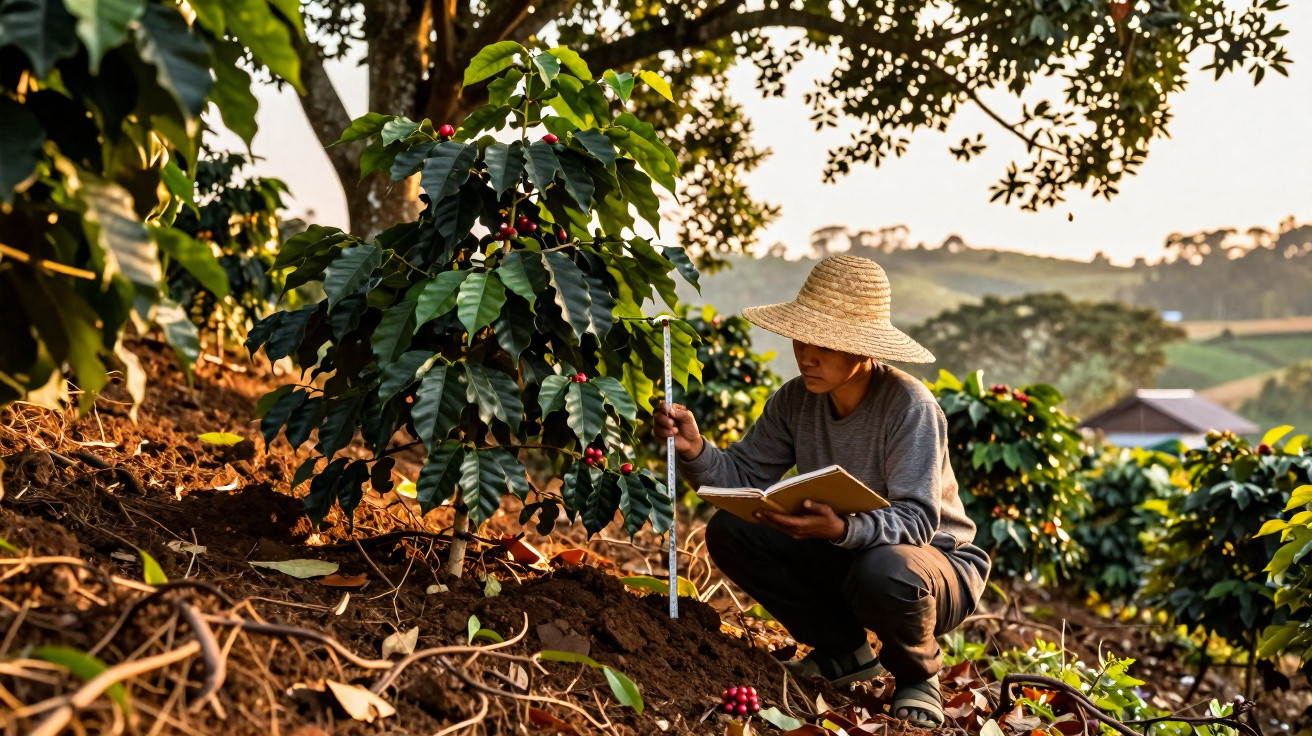
Shade-grown coffee has long been presented as an environmentally responsible option.
Cultivating coffee beneath a tree canopy is believed to benefit wildlife, safeguard soils and improve farms’ ability to withstand disruption.
A new study examined how strongly those claims are supported. Using research gathered over several decades, it concluded that some of shade-grown coffee’s most important environmental advantages are backed by solid evidence.
Yet the analysis also shows that other claimed benefits are less straightforward than the label implies.
Pressure on coffee production
Coffee provides a livelihood for more than 25 million smallholder families, largely on small plots in tropical regions, while a recent study has highlighted the crop’s vulnerability to rising temperatures.
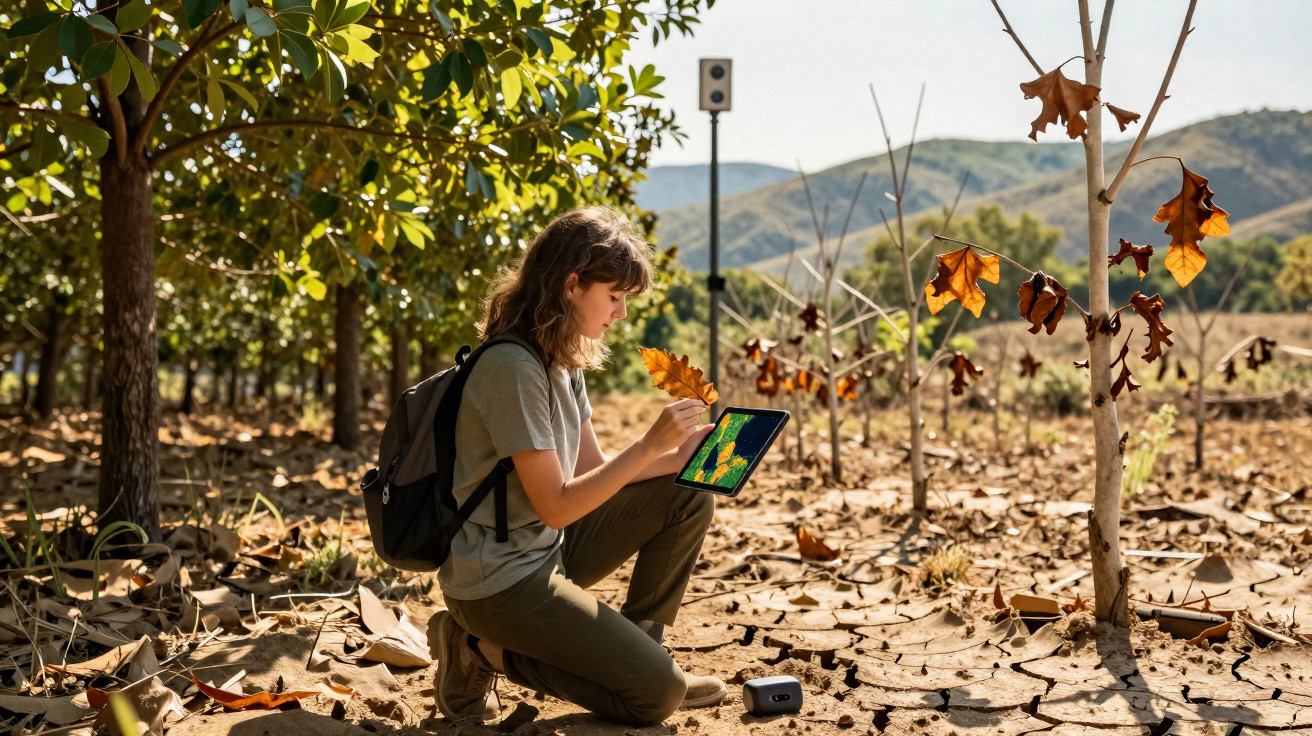
The climate conditions on which coffee relies are becoming increasingly unfavourable, bringing hotter seasons, unreliable rainfall and more prolonged dry periods.
Higher temperatures, erratic rain and extended droughts also create conditions that worsen soil erosion in coffee-growing areas.
This pressure falls most heavily on growers with the fewest resources to cope with a poor harvest.
Agroforestry is one approach attracting increasing attention. Rather than growing coffee in open sunlight, farmers cultivate it below a canopy of shade trees, changing the conditions across the farm.
To assess the effects of shade on coffee farms, researchers led by Altyeb Ali Abaker Omer of Puer University in Puer, China, compiled 46 field studies published between 2006 and 2025.
Where carbon is stored in shade-grown coffee
Most of the 46 studies measured carbon in two main pools: the above-ground woody material of trees and shrubs, and the carbon held in soil below them. Both appeared consistently in the evidence.
The findings challenge the most obvious assumption. Soil, rather than trees, generally contained the greatest proportion of carbon, often accounting for 60 to 90 percent of the total. Although the canopy is more visible, the ground commonly stores more.
Roots and deeper soil layers were more difficult to assess, meaning that many studies estimated their carbon rather than measuring it directly.
Comparisons between farm soils are also complicated when researchers collect samples at different depths.
Tree size and carbon storage
Introducing shade had a clear effect. Coffee grown under shade stored between two and four times more carbon than the same crop cultivated in full sun, retaining approximately 1.2 to more than 7.4 tonnes per hectare each year.
The more unexpected result related less to the number of species present on a farm than to the size those plants reached. The distinction was based entirely on size, not diversity.
A small number of large, established trees stored more carbon than an extensive range of smaller ones, a difference that coffee-specific research had largely obscured before this synthesis.
Farm management could have the opposite effect. Removing shade, thinning trees or replanting coffee as a sole crop consistently reduced stored carbon.
Excessive shade can, however, lower yields, making a moderate canopy the balance point between production and carbon storage.
A buffer against climate extremes
The canopy that captures carbon also alters the microclimate beneath it. Shade reduces air temperatures below the trees.
It also slows moisture loss through evaporation and enables soils to retain water during dry periods, an effect associated with more stable production.
Some of the strongest evidence emerged following extreme events. On farms affected by hurricanes in Puerto Rico, shaded plots recovered more quickly than sun-grown plots and retained more carbon.
In Ethiopia, systems with greater shade had higher carbon stocks and more robust tree cover than neighbouring stripped-back farms. In these settings, soil served two functions.
Carbon included in storage estimates is often linked with improved soil structure and greater water-holding capacity, which is likely to help farms endure drought.
Put simply, the soil becomes healthier as well as holding more stored carbon.
What has not yet been demonstrated
The review makes a distinction that earlier research has often blurred. The damage climate change can cause to coffee is well documented, with one review recording contracting suitable growing areas and increasing pest pressure.
The evidence for protection is less secure. Only a limited number of studies tested how farms with high carbon stocks performed during an actual drought or heatwave.
Many instead used proxy indicators, including canopy cover and leaf litter, rather than examining the coffee plants themselves. A connection between carbon and survival appears credible, but it remains largely untested.
The geographical spread of the research further limits its scope. Most available evidence comes from Latin America, East Africa and parts of Asia, leaving significant coffee-producing regions insufficiently studied.
Consequently, a pattern observed in Ethiopia may not hold true for farms with different soils or rainfall regimes.
The financial case for shade-grown coffee
For farmers weighing up whether to retain trees, the financial outcome is usually decisive.
Carbon credits, which pay growers for the carbon stored on their land, have been proposed as one possible incentive. To date, the financial returns appear modest.
In one of the few studies to calculate the figure, carbon payments represented less than one percent of a farm’s income.
Trees delivered financial value through other routes. Fruit, firewood, timber and the more dependable harvests associated with mixed cultivation contributed more to household livelihoods.
This difference affects how the benefits should be framed. The evidence that diverse, shaded farms help spread risk is reasonably strong.
By contrast, evidence that carbon storage alone substantially boosts farm income remains limited, so promoting shade as a straightforward carbon windfall may promise too much.
What the review could change
The review clarifies where coffee-farm carbon is held: in large, long-lived trees and in the soil protected beneath them, with both working together.
It is the first review to combine carbon storage, resilience and livelihoods in one assessment focused specifically on coffee.
That finding matters. Farmers and the programmes that advise them have grounds to preserve mature shade trees and maintain a moderate canopy instead of clearing it for a short-term increase in yield.
It also gives designers of carbon schemes a clearer warning that payments alone cannot sustain a farm.
The remaining challenge is to move beyond inference and collect direct measurements, following carbon-rich farms through droughts, heat and difficult years.
If future research verifies these results, the trees above a coffee plant may become a documented defence against climate stress for the farm and, ultimately, the cup.




Comments
No comments yet. Be the first to comment!
Leave a Comment