
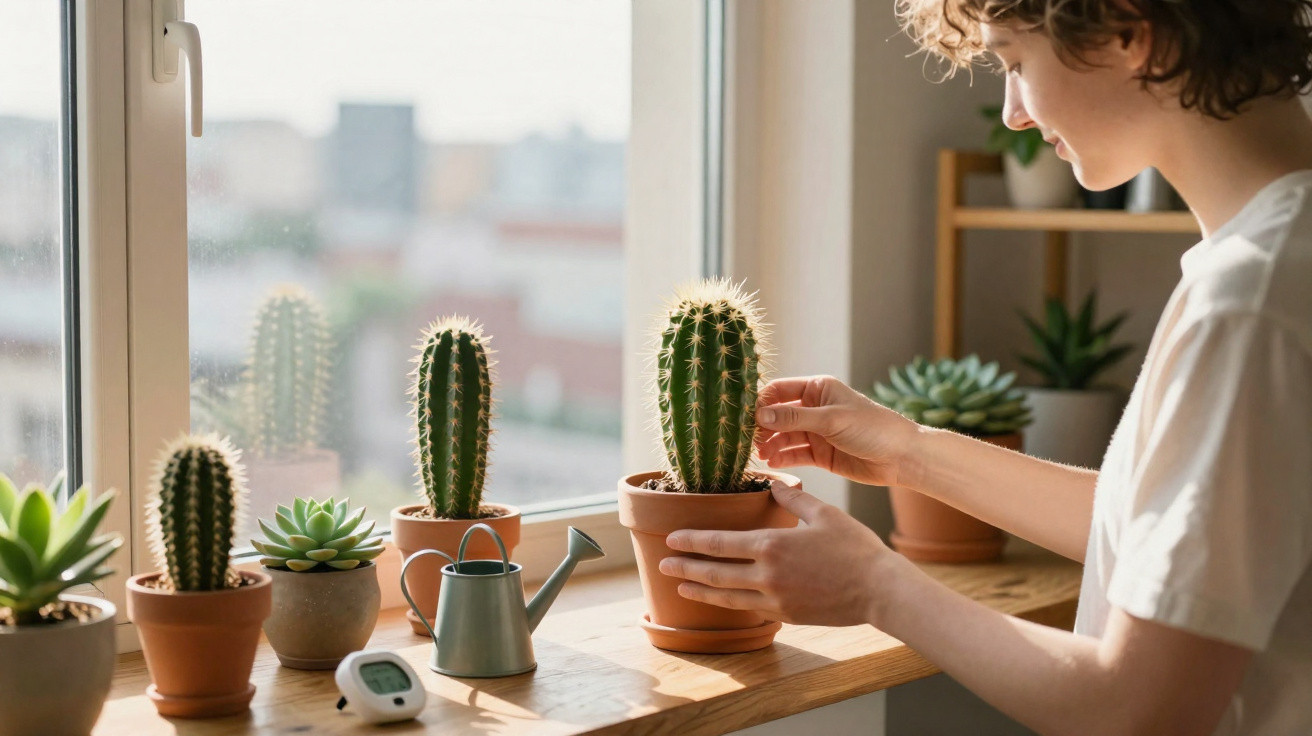
Growing cacti in a flat often appeals to people who want hardy plants for compact spaces, yet the outcome is not always as hoped. Beginners frequently overwater, select an unsuitable pot or place a cactus where there is too little light. With a few straightforward but regular measures, however, a cactus can remain healthy, adjust to indoor conditions and grow evenly over the years.
How does a cactus adapt to a flat’s indoor environment?
Before looking for unusual species, it is worth understanding how a cactus responds to filtered light, small windows and the temperature changes common in urban homes. This makes it easier to regulate watering, compost, pot size and the distance from the window, helping to prevent root rot or etiolation, when the plant becomes thin as it stretches towards sunlight.
Some small, globe-shaped species generally cope better indoors because they need less room and direct sunlight. Even so, every cactus needs a rest period with reduced watering during winter, as well as regular checks to ensure it adjusts gradually whenever its environment changes.
Watch a video from the YouTube channel CACTOS E VIAGENS COM A LÉIA, which explains how to grow cacti indoors:
How does ideal light affect growing cacti in a flat?
Sunlight is the key factor when growing cacti in a flat, as most varieties favour bright conditions with direct sun for part of the day. If lighting is inadequate, a cactus may become pale, soft and elongated, clearly showing that it needs to be moved closer to a window or supported with artificial lighting.
To begin, track the sun’s path during the day and introduce the cactus gradually, moving the pot over several weeks until it reaches stronger sunlight. In flats where light is heavily filtered, grow lights can supplement natural brightness, provided they are used for a few hours each day and kept at a safe distance.
Practical tips for caring for cacti in a flat
In everyday care, minor changes to watering, drainage and pot choice can make a substantial difference to a cactus’s health. Below are basic measures that prevent common issues and make maintenance easier, particularly for those new to growing plants in urban homes.
- Choose suitable species: smaller, slow-growing cacti that tolerate filtered light are better suited to flats.
- Provide good light: place the pot near bright windows to lower the risk of etiolation.
- Use free-draining compost: mixes containing coarse sand, small stones or perlite prevent water from collecting around the roots.
- Select a pot with drainage holes: containers without an outlet for water encourage rot; terracotta pots dry out more quickly.
- Water only when the compost is dry: test the soil with your finger and water only once it has dried completely.
- Match watering to the pot size: small pots dry faster; water until it runs through the drainage holes, without leaving the saucer waterlogged.
- Avoid sudden changes: moving between strong sun, shade and intense air conditioning stresses the plant.
- Fertilise sparingly: specialist fertilisers at low doses promote healthy growth without burning the roots.
How can you tell whether a cactus is healthy and when should care be adjusted?
Assessing the health of a cactus in a flat involves monitoring its colour, firmness and growth over the months. A healthy plant has an even colour, well-developed spines, no soft patches and roots without a strong smell, showing that light, water and compost are in balance.
When something is wrong, warning signs can include yellowing, elongated growth, dark soft areas or cotton-like white spots, which point to pests or excess moisture. If these signs appear, alter its position in relation to the light, increase the time between watering sessions or replace the compost with a more free-draining mix, allowing the cactus to settle into the home’s routine steadily.


Comments
No comments yet. Be the first to comment!
Leave a Comment