
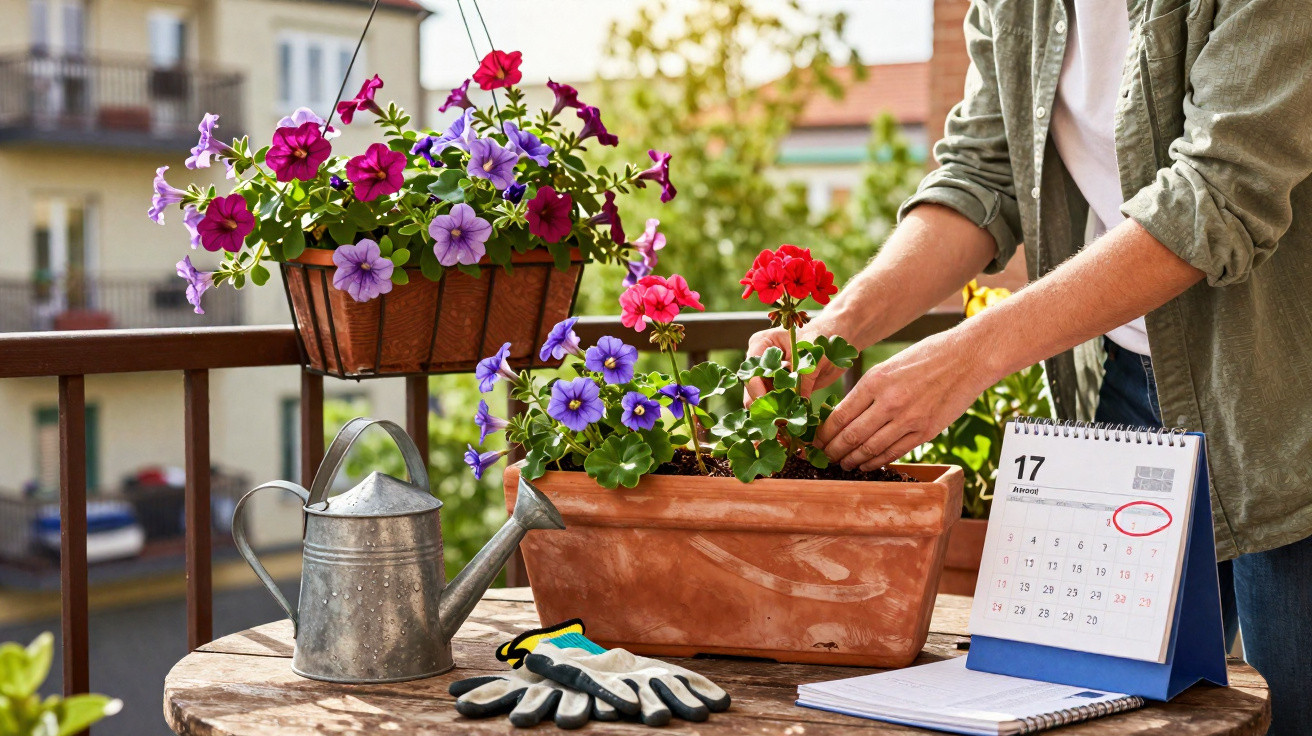
Many amateur gardeners give up in frustration during summer because their beds fade quickly or the balcony is looking tired by August. Yet a straightforward approach based on three resilient flowering plants can provide colour from May until late autumn. Timing is crucial: acting by 17 April gives the flowers a head start that pays off all the way into November.
Why mid-April is the key date for long-flowering plants
From early to mid-April, soil temperatures in many areas rise to around 10 to 12 degrees. This is precisely when many summer-flowering plants are happiest to be planted out. Their roots establish more quickly, the plants avoid stress, and they have time to settle in before the intense heat of high summer.
“Planting by around 17 April gives your flowers 60 to 90 days to establish before heatwaves arrive.”
Over this period, plants develop a strong root system. In July and August, this helps them cope better with dry spells and continue flowering for longer. Starting only at the end of May means losing that advantage, as young plants then have to contend with transplanting stress and heat at the same time.
Different regions, slightly different approaches
This broad rule can be applied across most German-speaking regions, with a few adjustments:
- Cooler areas, uplands and the Alpine foothills: Until 17 April, plant mainly into pots, containers and window boxes, positioning them in a sheltered spot against a house wall where possible. For exposed beds, it is better to wait until the risk of late-May frosts has passed.
- Temperate locations and lowland areas: Containers, window boxes and sheltered beds can be planted during the first half of April. More delicate varieties can be covered temporarily with horticultural fleece if required.
- Especially mild regions, wine-growing climates and urban heat islands: It is generally possible to begin much earlier here. Planting at the start of April makes full use of the ideal growing period.
Beginning early also brings further benefits: garden centres offer a wider choice, colour combinations are easier to plan, and plants are often smaller and less expensive.
The dream team: three flowers that last into autumn
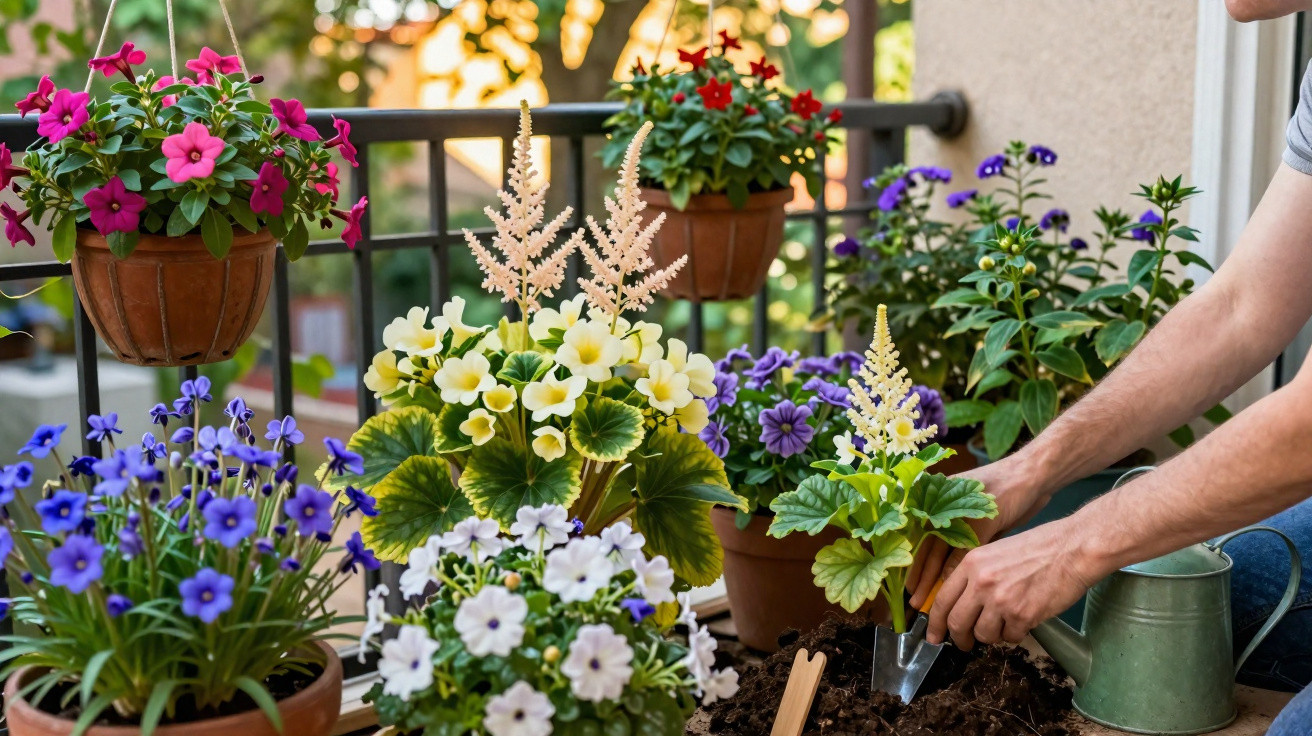
At the heart of this method is a simple but highly effective trio: hanging petunia, fuchsia and Geranium ‘Rozanne’. Each contributes different strengths, and together they cover an exceptionally long flowering season.
Hanging petunia: a cascade of colour for window boxes and hanging baskets
The trailing petunia, often sold as Surfinia, is a classic choice for window boxes and hanging baskets. It grows vigorously, produces long stems and looks at its best when spilling over the edge of its container.
Typical features include:
- Flowering season: roughly May to October, or longer in a mild autumn
- Colours: rich purple, pink, red, white or bicoloured blooms
- Position: sunny and warm, but not permanently in fierce midday sun against bare walls
- Uses: window boxes, hanging baskets, tall containers and wall tops
Adequately sized containers, a high-quality potting-compost mix and regular care are essential. This plant is both hungry and thirsty: feed it with liquid fertiliser every 14 days and remove spent flowers, and it will reward you with a dense curtain of blooms.
Fuchsia: the shade specialist with elegant bells
Fuchsia performs well where many other summer-flowering plants struggle: in partial shade. Its characteristic two-toned bell-shaped flowers resemble tiny lanterns and add elegance to balconies and terraces.
The main points at a glance:
- Flowering season: usually from May to October, and longer in mild locations
- Position: partial shade to shade, with no scorching midday sun
- Soil: loose and well drained, ideally with a little sand added
- Best suited to: shaded balconies, north-facing aspects and areas beneath trees, when grown in containers
Fuchsias prefer consistently moist compost, but dislike waterlogging. Mulching during summer or using saucers prevents the compost from drying out completely. A light prune in late summer encourages fresh shoots and, in turn, more flowers.
Geranium ‘Rozanne’: the long-lasting blue-violet ground cover
Among gardening enthusiasts, Geranium ‘Rozanne’ is regarded as one of the most dependable long-flowering perennials. It spreads widely to form a carpet-like display and provides a subtle but exceptionally persistent splash of colour in both beds and containers.
Its characteristics are:
- Flowering season: from May well into autumn, often until the first frost
- Colour: blue-violet flowers with pale centres
- Position: sun to partial shade
- Winter hardiness: robust and usually needs no winter protection in a bed
A container around 30 centimetres in diameter is enough to keep this plant happy. Slow-release fertiliser in spring, followed by one or two liquid feeds over summer, will normally meet its nutritional needs.
How to arrange the trio for months of flowers
A simple planting plan helps these three plants work together harmoniously. It is just as effective on a balcony as it is on a terrace.
“Place a geranium in the centre, surround it with hanging petunias and add fuchsias in partial shade – and you have a floral display that lasts from spring until late autumn.”
The ideal layout in a window box or container
Before 17 April, proceed step by step:
- Prepare the container: check the drainage holes and add a layer of expanded clay or broken terracotta to the base.
- Fill with good-quality potting compost, mixing in a little compost if desired.
- Plant Geranium ‘Rozanne’ in the centre or slightly towards the back; it provides the background “carpet”.
- Set hanging petunias around the edge so they can eventually trail downwards.
- Keep shadier corners or the north-facing side of the container for fuchsias.
- Water everything thoroughly to remove air pockets around the roots.
With several window boxes placed side by side, you can also create colour gradients: for example, white and pink near the house wall, moving towards strong purple and red at the outside edge of the balcony.
Care plan until November: little effort, great impact
Once everything is planted, the only requirement is a simple routine. There is no need for complicated professional tricks.
| Task | Frequency | Special consideration |
|---|---|---|
| Watering | Daily in hot weather; otherwise as needed | Compost should never dry out completely, but must not remain soaking wet |
| Liquid fertiliser for hanging petunia | About every 14 days | Encourages dense growth and abundant flowers |
| Liquid fertiliser for fuchsia and geranium | Every 3–4 weeks | Usually sufficient if slow-release fertiliser was applied in spring |
| Removing spent flowers | 1–2 times per week | Promotes new bud formation and keeps plants growing strongly |
When the first serious cold spell is forecast, move exposed containers closer to the house or cover them temporarily with horticultural fleece. In many years, flowering simply continues afterwards, provided temperatures rise above zero again.
Common mistakes – and simple ways to avoid them
Many issues with summer flowers are not caused by “difficult” plants, but by small misunderstandings in their care. Three problems occur particularly often:
- Containers that are too small: Compost dries out too quickly and roots lack room to grow. A few large containers are better than numerous tiny pots.
- Saucers that stay wet: Water left permanently in the saucer soon causes root rot. Pour away excess water after watering.
- Ignoring dead flowers: Failing to remove spent blooms diverts the plant’s energy away from new buds. A quick job while enjoying an evening drink can work wonders.
What makes this long-lasting floral display work
Why does this particular trio provide such dependable colour? The answer lies in the combination: hanging petunia supplies volume and bold colour, fuchsias fill shaded gaps, and Geranium ‘Rozanne’ creates an almost continuous base layer. If one species temporarily slows down in hot weather, the others balance the display visually.
All three species also respond well to regular pruning and care. Cutting back a few overly long stems in July produces fresh flowering shoots in August and September. As a result, the balcony can often look even fuller in autumn than it did in June.
Anyone wanting greater variety can extend the trio carefully: low ornamental grasses add structure, fragrant herbs such as thyme bring scent, and compact ornamental chillies contribute colourful fruit accents. The important thing is to match positions and watering needs; then one decision in April can keep the flowers coming well into November.


Comments
No comments yet. Be the first to comment!
Leave a Comment