
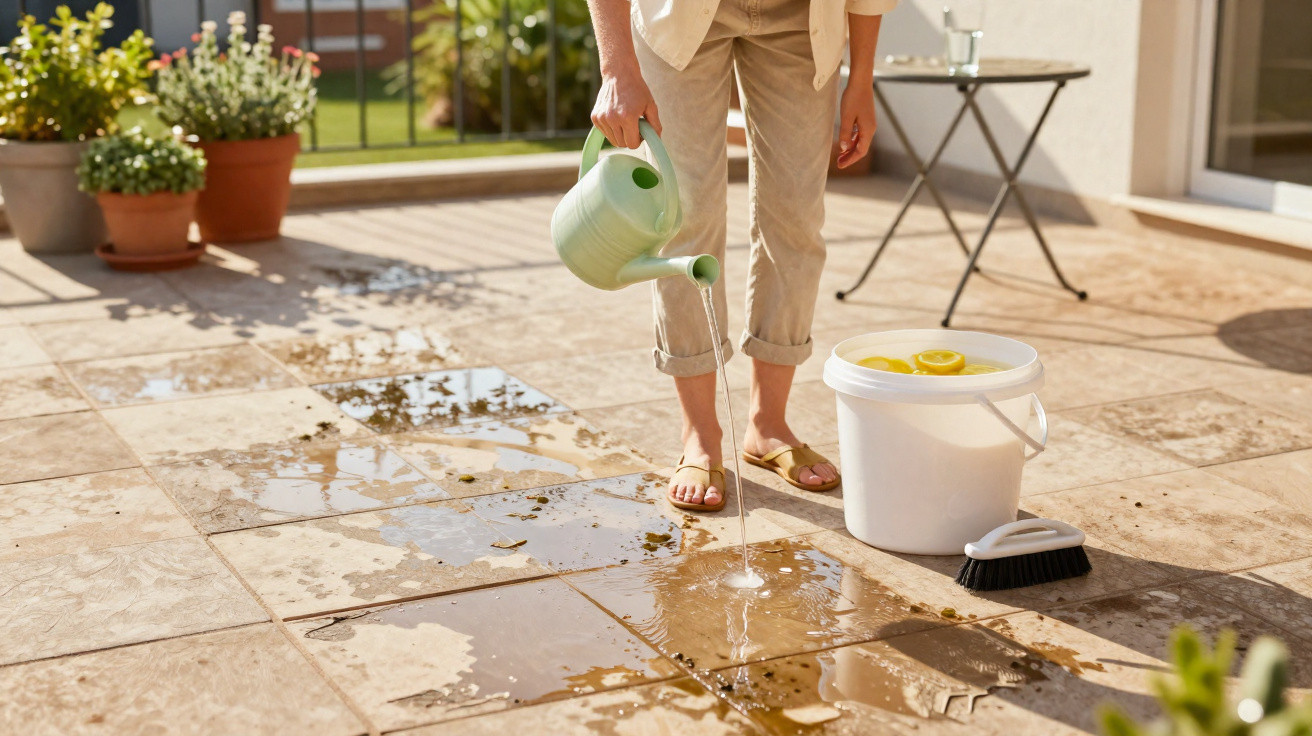
A cheap kitchen cupboard staple can transform a patio in just one hour.
The moment you step onto the patio for the first time in spring, it is often obvious: the surface feels slimy, has turned green and is dangerously slippery. Many people immediately think of a pressure washer or expensive specialist chemicals. Yet a straightforward real-life example from abroad shows that an ordinary household product costing just pennies can achieve a surprising amount – without a Kärcher and without hours of scrubbing.
Why patios become so dangerously slippery after winter
Patios are exposed to rain and wind, and often receive little sunlight. This combination creates ideal conditions for moss, algae and films of dirt to develop. These fine deposits settle into joints and across paving slabs, where they can remain damp for weeks.
The result is not only a neglected-looking surface but, above all, a slip hazard. Many homeowners stop using their outdoor tables and chairs because they are worried about falls, particularly where children or older people live in the household.
Until now, most people have relied on two standard options:
- A pressure washer, which is expensive to buy, takes up storage space and can damage joints or delicate stone.
- Chemical anti-moss products, which often contain biocides and may be problematic for the environment, pets and plants.
This is where a surprisingly simple alternative comes in, one that cleaning experts are recommending increasingly often: ordinary household vinegar – specifically clear table vinegar, commonly known as white vinegar or household vinegar.
“In many cases, all you need instead of heavy equipment is a bucket, a bottle of inexpensive household vinegar and some time for it to work.”
The vinegar method: a clean patio in around an hour
In a widely cited account, a patio owner explained how she made her completely moss-covered patio usable again with a simple vinegar-and-water solution. Very little preparation was needed, while the outcome was striking.
Step 1: Clear away loose debris
She began by sweeping the area thoroughly. Leaves, soil, small stones and twigs were removed using a broom. This stage matters because it allows the vinegar to reach the actual deposits rather than being wasted on loose dirt.
Step 2: Prepare a bucket of vinegar solution
She then filled a bucket with a roughly 1:1 mixture of lukewarm water and household vinegar. The vinegar used was a very inexpensive supermarket product, costing well under £1 per bottle.
Rather than applying the mixture only to isolated spots, she poured it generously over the slabs most affected. Dark, green and patchy areas in particular were given a thorough coating.
Step 3: Leave it to work rather than scrubbing
The key to this approach is allowing enough contact time. The owner left the solution on the surface for around an hour. During that period, the vinegar was able to loosen the deposits and penetrate the joints.
There was barely any strenuous scrubbing involved. Only after the waiting period did she use a stiff-bristled brush and a little warm washing-up water. Even then, moderate brushing was generally enough rather than a major physical effort.
Step 4: Rinse with clean water
Finally, she rinsed everything with clean water, using either a garden hose or a watering can. The slabs, which had previously looked green and blotchy, appeared considerably brighter and cleaner. She said that she used only part of the vinegar bottle yet felt as though she was standing on an almost new patio.
“One or two bottles of household vinegar often cost less than a filled roll, yet they can visibly improve an entire patio.”
Which patios are suitable for vinegar – and which are not
Vinegar is a mild but effective acidic product. While this can make it useful against algae and moss, it also creates risks for certain materials. Professionals therefore advise checking the type of surface carefully.
Suitable surfaces for vinegar cleaning
- Concrete slabs and exposed aggregate concrete
- Traditional concrete block paving
- Non-porous outdoor porcelain tiles
- Balcony floors made of concrete or glazed tiles
On these surfaces, vinegar generally works well without causing visible damage, provided the concentration is not excessively high and the solution is not left in place for days.
Take care with natural stone and delicate materials
The following surfaces are much more sensitive:
- Marble
- Granite
- Limestone and slate
- Polished natural stone
- Oiled or waxed timber decking
On these materials, the acid can attack the surface, dull its finish or leave marks. Where there is any uncertainty about the surface, experts strongly recommend testing a very inconspicuous area first. A larger application should only be considered if no change is visible there after one or two days.
Important safety and environmental considerations
Although household vinegar may seem less harmful than a bottle of specialist cleaner, several points still need attention:
- Protect plants: Vinegar can harm roots and leaves. It is best to cover beds and container plants at the edges, or rinse them thoroughly with water afterwards.
- Never mix it with chlorine products: Combining vinegar with bleach or chlorine-based cleaners can release toxic gases.
- Protect your hands and footwear: If you have sensitive skin, gloves are worthwhile to help prevent irritation.
- Consider drainage: On small balconies, the liquid should not run unchecked into gutters made from zinc or other sensitive metals.
“Vinegar may be simple, but it is still an acidic cleaning product – using it thoughtfully protects the material, the environment and your own health.”
Alternative household cleaners for delicate patios
Milder options are available for natural stone or timber patios. Traditional soap-based products are particularly popular because they dissolve grease while being less aggressive on the surface.
Gentle alternatives at a glance
- Black soap: Liquid vegetable-oil soap, heavily diluted with warm water, is well suited to stone surfaces with a delicate structure.
- Marseille soap: Grated soap flakes dissolved in a bucket are mildly alkaline but better tolerated by many natural stones than acid.
- Specialist timber deck shampoo: For wooden boards on balconies or patios, manufacturers offer tailored cleaners that do not dry out the timber.
These alternatives usually require more brushing than the vinegar method, but they leave the surface in better condition where high-quality stone or hardwood is involved.
How often you should clean a patio this way
Many owners wait until the surface has already become dangerously slippery. It is more sensible to tackle the build-up earlier. Planning a thorough clean once or twice a year – once in spring and possibly again in autumn – can greatly reduce moss growth.
A shorter cleaning cycle may be worthwhile in heavily shaded or permanently damp areas. Small spaces, such as urban balconies, can be dealt with using the vinegar trick in the course of a morning, without having to haul a pressure washer out of the shed.
Practical tips: how to make everyday patio cleaning genuinely stress-free
A few simple routines help ensure that the method works not just as a one-off, but in everyday life too:
- Do not leave leaves and soil lying for weeks after strong autumn storms; sweep them away early.
- Keep a broom, brush and bucket within easy reach for the spring clean rather than having to hunt for everything each time.
- Keep vinegar and, where needed, soap in the cleaning cupboard – the cost is low, while the effect outdoors can be quite noticeable.
- Clean on a dry day so that rain does not immediately dilute the vinegar.
Following these points usually makes it possible to achieve a much safer, cleaner patio with very little effort – so you can enjoy that first coffee outdoors again without worrying about falls or costly equipment.


Comments
No comments yet. Be the first to comment!
Leave a Comment