
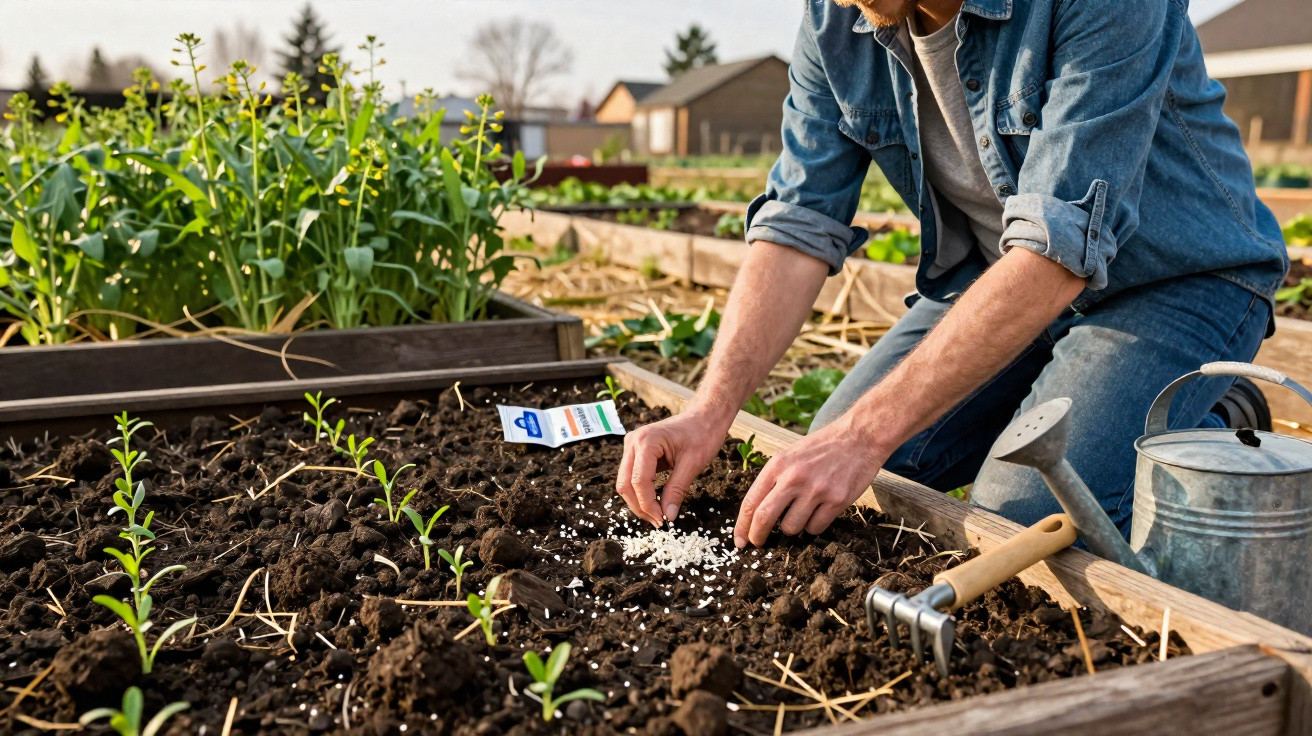
While many amateur gardeners are still waiting for spring, the soil is already preparing for the next growing season. Anyone who takes action from mid-February can use a simple sowing to loosen the ground, suppress weeds and significantly build up nutrient reserves – without chemicals or heavy machinery.
Why this particular cover crop makes a difference now
As temperatures gradually rise above freezing, beds can look bleak: bare soil, scattered weeds and the occasional patch that is still frozen. This is precisely the right time to sow green manure – a plant grown not for harvesting, but to be returned to the soil.
White mustard (Sinapis alba) is especially useful at this stage. It begins growing at a soil temperature of around 5°C. While it is still too early to consider sowing many other crops, this plant is already ready to get started.
White mustard uses the apparent winter lull to quietly upgrade your soil – from its nutrient content to its structure.
Within a few days, it forms a green cover that delivers several benefits at once:
- Shading the soil: Weed seeds receive less light, making them less likely to germinate.
- Protection against erosion: Rain and wind cannot wash away the upper soil layer as easily.
- Natural soil cultivation: Deep roots break up even compacted patches and create channels for air and water.
Over time, this produces a loose, crumbly structure in which later vegetable sowings have much better starting conditions.
The right time: when sowing is genuinely worthwhile
The ideal window is late winter, from around mid-February, once the ground is no longer permanently frozen and has started to warm slightly. There is no need to wait for T-shirt weather – the first faint signs of spring are enough.
You can begin as soon as the soil can be walked on. If in doubt, simply feel it with your hand: when the surface no longer feels icy and can be loosened easily, the timing is usually right.
How much seed does a typical home garden need?
The required quantities are modest, making this suitable for small urban gardens and shared plots as well.
| Area | Recommended seed quantity | Note |
|---|---|---|
| 1 m² | 1–2 g | Scatter thinly but evenly |
| 10 m² | 10–20 g | Typical size of a small vegetable garden |
The seeds should remain close to the surface. A depth of 1 to 2 centimetres is entirely sufficient, allowing them to make the best use of residual winter moisture.
Preparing the soil: little work, considerable impact
There is no need to get out a spade for this cover crop. Lightly loosening the top layer is enough:
- Use a rake or hoe to just scratch the surface.
- Gently break up any crusted areas.
- Split larger clods a little so that the seeds make better contact with the soil.
If the ground is heavily compacted, briefly use a garden fork or hoe. The important thing is not to turn the soil over completely, but simply to aerate it. This largely preserves both its structure and soil life.
How to sow quickly and easily
The method is straightforward and takes very little time:
- Spread the seed evenly across the bed by hand using the broadcast sowing method.
- Lightly rake it in, or simply distribute it across the surface.
- Finally, firm the area gently, using the back of a rake or carefully treading it with boards under your feet.
In damp weather, the first green rows should appear after roughly ten days. Sowing on a mild, rainy day often gives the crop the best possible start.
Care, cutting back and incorporating: the crucial moment
The success of this method depends greatly on cutting at the right time. Around six weeks after sowing, the plants reach a stage when their leaves and stems are full of nutrients.
Cutting too early means losing biomass – leaving it too late results in tough stems and more work when incorporating it.
The best time to cut is just before or at the start of flowering. At this point, the plants are still soft and succulent, easy to cut and quick to break down.
- Cutting back: Shortly before full flowering, while the stems are still tender.
- Incorporation: Work it in only shallowly, to a depth of around 3 to 5 cm.
A scythe, sickle or, if necessary, a sharp knife is enough for cutting. Those who prefer machinery can also use a light brushcutter. Leave the cut material directly on the bed, then mix it lightly into the surface with a rake or garden fork.
As it decomposes, the plant material gradually releases organic nitrogen – exactly when many vegetable crops are starting vigorous spring growth. It acts like a gentle, carefully measured natural fertiliser.
What gardeners can realistically expect
Practical assessments show clear results: where this green manure was incorporated before flowering, yields from the following crops were on average around 18 per cent higher. That is unsurprising, as several factors work together:
- Improved soil structure created by a fine network of roots.
- Additional nitrogen released slowly over time.
- Less competition from weeds.
Put simply, tomatoes, lettuce, carrots and beans establish more strongly, develop sturdier roots and are less susceptible to stress when soil conditions are right.
What gardeners should watch out for
Useful as this cover crop is, it does require some attention. A few rules will prevent the benefits from turning into the opposite.
- Do not let it set seed: If plants are left standing for too long, they can become a troublesome source of weeds themselves.
- Do not sow into waterlogged ground: Seed can easily rot in completely saturated beds. Choose soil that is lightly moist and well drained instead.
- Keep an eye on pests: Anyone dealing with certain soil-borne diseases affecting brassicas, such as cabbage, should cut the green manure in good time and incorporate it carefully or compost it.
If you intend to plant brassicas directly after this cover crop, check local risks such as clubroot beforehand. It is not a major issue in many home gardens, but a cautious approach never does any harm.
Practical examples and clever combinations in the bed
This technique becomes especially effective when it is included in an annual plan. One possible schedule is:
- February: Sow green manure in vacant beds.
- Late March / early April: Cut it back and incorporate it shallowly.
- From late April: Sow carrots or beetroot, or plant early lettuces.
Thanks to the green manure, vegetables begin in loose, well-supplied soil. This reduces the pressure to add extra fertiliser immediately.
Gardeners with several beds can use them in rotation: one section carries green manure in late winter, while another is reserved for very early crops such as spinach or radishes. This makes efficient use of the available space and keeps the soil bare as rarely as possible.
Why bare soil is always a problem in the garden
Completely cleared beds are still common in home gardens, especially during winter. Although they may look tidy, they harm soil life. Without plant cover, the ground loses humus, dries out faster and becomes hotter in summer.
A cover crop such as the white mustard described here acts as a living protective layer. It feeds earthworms, microorganisms and fungi – the unseen helpers responsible for crumbly soil and stable nutrient cycles later on.
Once gardeners have experienced this process in their own garden, sowing green manure often becomes as routine as growing tomatoes or courgettes. Ultimately, one argument matters most: the effort is minimal, while the effect on soil and yields is surprisingly substantial.




Comments
No comments yet. Be the first to comment!
Leave a Comment