
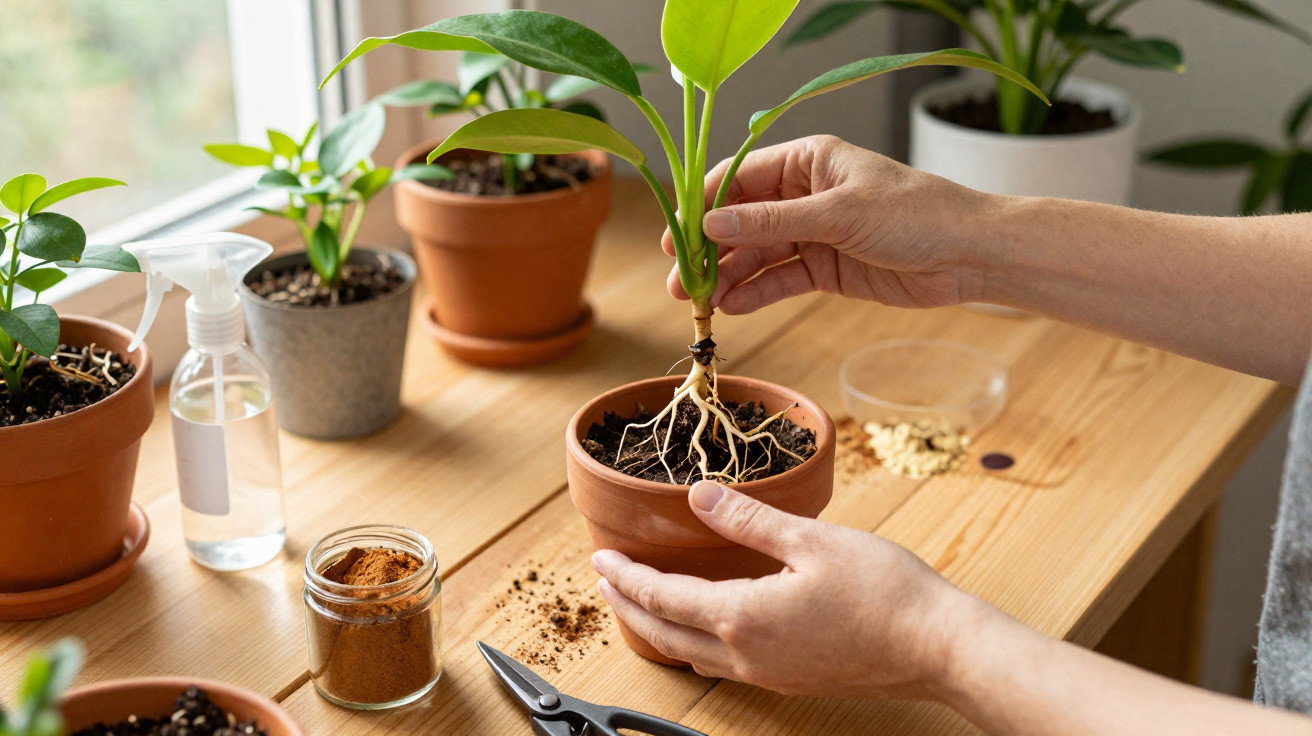
Some people insisted the spice had “saved” their plants overnight. Others called it a hoax, citing brittle stems and dead foliage as evidence that this household fix can do more harm than good. Amid blurry screenshots and excitable captions, the same question surfaced repeatedly in the comments: is cinnamon on dying roots a subtle breakthrough… or sweet-smelling gardening sabotage?
The jar on your kitchen shelf seems innocuous and familiar. You add it to porridge or coffee without thinking twice. Then, while looking at a wilting monstera, you come across a TikTok video claiming that a teaspoon of cinnamon on the roots can halt rot, destroy fungus and prompt fresh growth. It sounds almost implausibly easy, cheap and effective.
You take the plant from its pot, your pulse quickening slightly, and sprinkle the brown powder over its pale, sparse roots. Suddenly, the compost smells like a pudding. For a brief moment, hope outweighs uncertainty.
Then you begin questioning what you have actually done.
Cinnamon, dying roots and the stubborn myth
Visit any gardening forum and search for “cinnamon roots”. You will see a battle between enthusiastic success posts and understated tales of regret. People share photographs of orchids, monsteras and even tomato seedlings, each carrying a noticeable coating of cinnamon, much like icing sugar on a cake. The reasoning is appealingly straightforward: cinnamon is antifungal, dying roots indicate fungus, therefore the spice must provide the answer.
That logic appears neat on a screen. Inside a pot of damp compost, however, the reality is more complicated.
A UK houseplant collector I spoke with used the cinnamon method on a rare philodendron after chronic overwatering had caused root rot. She removed the soft roots, generously coated the sound ones with ground cinnamon, repotted it in fresh growing medium and posted hopeful photographs. Three weeks afterwards, she shared another update. The plant had collapsed, while its roots were shrivelled and completely dry. She acknowledged that she had avoided watering “to let the cinnamon work.” That line was more painful than the before-and-after images.
Most of us have reached the point where a plant is declining and we are searching late at night for a quick rescue. A spoonful of spice can feel gentler than pruning scissors or the compost bin. Yet the overlooked basics in her case – watering, humidity and light – were far more important than the powder. Her experience circulates in private groups as a discreet cautionary tale that many people never encounter.
What, then, really occurs when cinnamon touches dying roots? Scientists describe cinnamon as having mild antifungal and antibacterial qualities. Under laboratory conditions, its extracts can inhibit certain fungi. A pot at home is much less predictable. Used heavily, the same powder may irritate sensitive root tips. It can also alter the immediate micro-environment by drying delicate tissues and the fine beneficial fungi and bacteria on which plants rely.
Distressed roots are already damaged or short of moisture. Covering them with a drying spice may complete the damage that rot began. The apparent “miracle” successes commonly involve unmentioned changes: improved drainage, reduced watering or a chunkier compost mix. Those measures are what restore the plant. Cinnamon is often merely the photogenic feature people remember.
How to use cinnamon on dying roots without damaging plants
If you decide to use cinnamon, regard it as a supporting measure rather than the main treatment. Begin by removing the plant from its pot and carefully rinsing its roots in lukewarm water. Using clean, sharp scissors, remove every soft, dark or unpleasant-smelling root. Take your time. Each cut should reach firm, pale tissue rather than slime.
Leave the roots to dry on kitchen paper for 20–30 minutes. Only afterwards should you take a pinch of ground cinnamon. Gently tap it over cut ends and small wounds, with the same restraint you would use when seasoning food rather than coating it for breadcrumbs. Roots should appear only faintly dusted, never heavily covered. Repot the plant in a fresh, open mix suited to its needs: extra bark for orchids, more perlite for tropical plants, and a grittier soil for succulents.
The next stage is the difficult one: watering again after you have just dealt with rot. Give the plant a modest drink to settle the mix, then allow the surface layer to dry before watering next. Cinnamon cannot replace this balance between moisture and air. At most, it may slightly improve the odds after root surgery.
The greatest risk with cinnamon is magical thinking. People often turn to it while panicking, making them more likely to overlook the less glamorous essentials. They dust the compost surface, leave decaying roots underneath and keep the mix wet “so the cinnamon can spread.” Things deteriorate quickly from there. Others make the opposite mistake: they create a thick spice crust and scarcely water for weeks because they are frightened that rot will return.
Both approaches damage the plant more than cinnamon alone. Root systems need consistency, not extremes. If you have previously killed plants through over-care, you are not alone. Let’s be honest: nobody really follows every watering schedule recorded in an app to the exact letter every day. The aim is not perfection but a change in habits. Keep the roots less constantly wet. Give them more air. Choose a better pot with a genuine drainage hole rather than a decorative compromise.
Cinnamon may occasionally help pause a minor fungal problem, but it cannot undo the consequences of poor conditions. Once you understand that, you can use it more sensibly – or decide not to use it at all. Oddly, that is when genuine control returns to you.
“Cinnamon isn’t a miracle cure for dying roots,” says a horticulture lecturer I interviewed. “At best, it’s like dabbing a bit of antiseptic on a cut. If you keep walking barefoot on broken glass, the wound will reopen no matter what you put on it.”
There is a more understated perspective on this trend that does not suit a viral reel, but can genuinely transform the way your plants live.
- Use cinnamon only once every infected root has been removed and the compost has been replaced.
- Apply only a very light dusting to fresh cuts, never a thick layer across the whole root system.
- Prioritise drainage, pot size and watering routine; these are what truly determine root health.
- If 80–90% of a plant has rotted, think about taking a cutting and beginning again rather than trying to bring its roots back from the dead.
Real-world checkpoints: when cinnamon helps and when it harms
| Key point | Details | Why it matters to readers |
|---|---|---|
| Best way to apply cinnamon on roots | After removing all brown, soft tissue and allowing the plant to dry briefly, lightly dust only freshly cut, healthy root ends with a small pinch. | This prevents cinnamon being treated as a universal remedy and keeps attention on the essential work: removing rot and giving roots air. |
| Plants that tolerate cinnamon better | Houseplants with thicker roots, including snake plants, ZZ plants and philodendrons, usually handle a little cinnamon better than fine-rooted plants such as ferns or young seedlings. | It helps prevent excessive cinnamon use on delicate plants, which may dry out or suffer burn more quickly, protecting your most vulnerable pots from well-intended harm. |
| Warning signs you’re overdoing it | Roots appear powdery or coated, the compost surface develops a dry crust, and new growth stops despite adequate light and moderate watering. | These clear warning signs let you stop, repot and change approach before improper cinnamon use quietly kills an already stressed plant. |
There is something surprisingly revealing in our fixation on cinnamon on dying roots. It reflects how we want gardening to feel: inexpensive, straightforward, with one cupboard ingredient turning failure into lush “after” photographs with hardly any effort. Reality is more complex, though the wish is understandable. Sharing online advice can become a way of disguising the sadness of losing a plant behind charming hacks and warm brown powder.
If cinnamon deserves a place in your toolkit, it is likely to be a modest one – a quiet jar beside the pruning scissors and bag of perlite. The real change, rarely shown on camera, lies in lifting pots to judge their weight, noticing how quickly they dry and gradually understanding your home’s unusual microclimate. At that point, cinnamon is no longer a miracle; it is what it really is: a spice with a secondary role, not a superhero cape.
Perhaps the meaningful change begins when we share our “failed” photographs as readily as the polished rescues. When a plant does not survive and you still share what you attempted, cinnamon or otherwise. That is when others can exhale and think, “So it’s not just me.” The myth may lose its glow, but something else can grow instead: a community that exchanges nuance rather than miracles. Quietly, that may be the most life-giving thing in the room.
FAQ
- Does cinnamon really stop root rot? Cinnamon may slow certain fungi on contact, but it cannot resolve the underlying causes of rot: poorly draining compost, oversized pots and persistent overwatering. At most, it can help disinfect minor cuts once every rotten root has been removed and the growing conditions have changed.
- Can sprinkling cinnamon on the soil surface save a dying plant? Dusting the top of the compost alone rarely helps roots rotting deeper in the pot. You need to remove the plant, trim affected roots and repot it in fresh mix; cinnamon on the surface is largely cosmetic.
- Is cinnamon safe for all types of plants? Most houseplants can tolerate a light dusting on cut roots, but plants with very fine roots, seedlings and moisture-loving ferns may react badly when too much is applied. For these plants, careful watering and improved airflow are often more beneficial than any spice treatment.
- How often should I use cinnamon on my plants? Cinnamon is not a regular treatment. Use it only when addressing active damage, such as after cutting away rot, dividing a plant or tidying a minor fungal patch. Frequent repeated applications provide no extra protection and may dry out roots.
- What’s a better alternative to cinnamon for root problems? For serious rot or valuable plants, many growers focus on improving drainage and trimming roots and, where legal and suitable, use a targeted fungicide. In most homes, correcting watering habits and the compost mix achieves far more than any additive, including cinnamon.



Comments
No comments yet. Be the first to comment!
Leave a Comment