
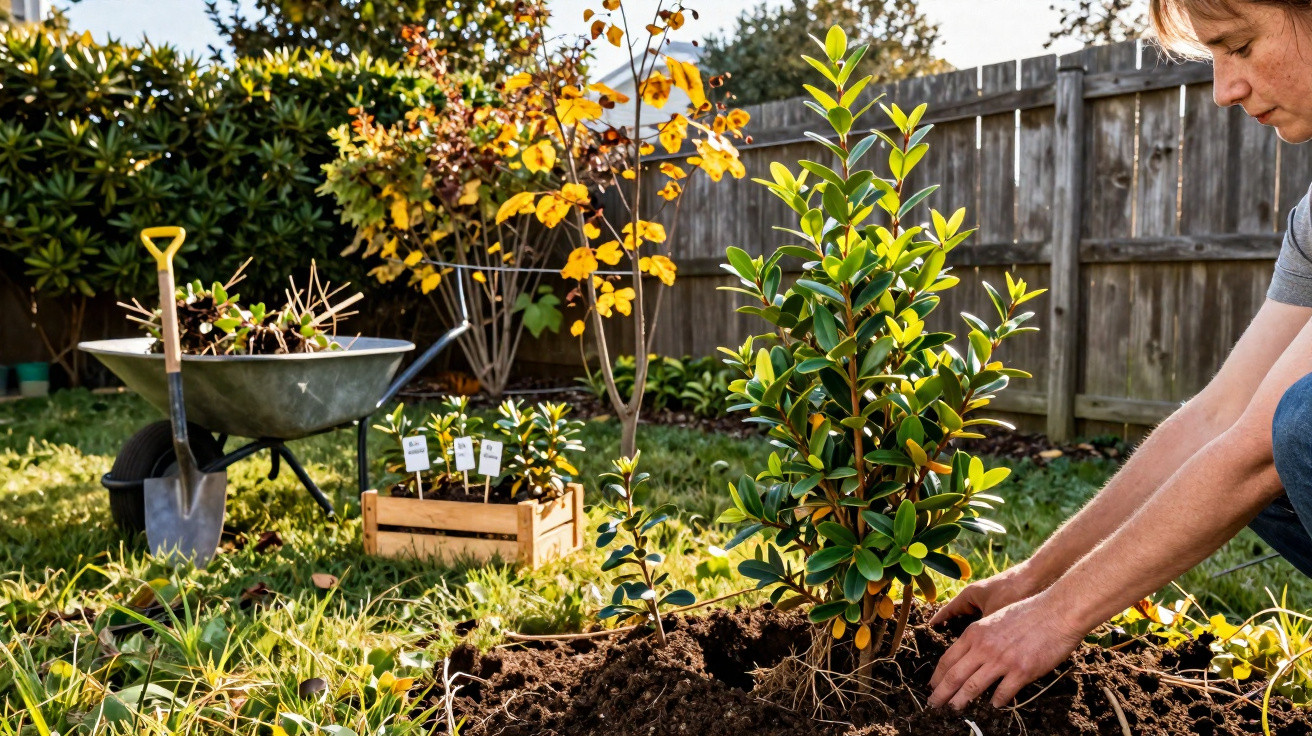
Anyone who has relied on Photinia hedges for years will recognise the familiar frustration: bare patches, brown spotting and a carpet of fallen leaves beneath the plants. Rather than facing the same disappointing hedge every spring, it may be worth starting again completely - with a shrub that is considerably tougher, easier to maintain and more visually interesting.
Why Photinia hedges are failing more often
For a long time, Photinia was regarded as the ideal hedge: it grows rapidly, produces vivid red new growth and quickly creates privacy. Yet these very hedges are now declining in many gardens. The pattern is widely familiar: leaves first become blotchy, gaps then appear, and eventually the whole hedge looks thin and exhausted.
A fungus is often responsible, known technically as entomosporium leaf spot. It initially causes red or brown marks on the foliage. Later, leaves dry out and drop in large numbers. Mild winters and damp springs create ideal conditions for this pathogen - a pattern that climate change is more likely to intensify.
Planting a hedge too tightly also makes life easier for the fungus. In closely spaced rows, foliage takes longer to dry after rain, air circulation is poor and moisture remains trapped among the leaves. If dead foliage and pruning waste are left on the ground as well, a persistent source of infection can develop.
“Many Photinia hedges do not suffer from a one-off problem, but from a system failure: too little spacing, too little ventilation and too much disease pressure.”
Replanting Photinia in this situation without improving the soil and reconsidering spacing risks another setback. This is precisely why more resilient alternatives are worth considering.
Pittosporum: the understated successor with year-round colour
The shrub emerging as a leading choice for 2026 is Pittosporum. It is increasingly appearing in German garden centres and nurseries, especially where customers are looking for lasting privacy-screening options.
Its greatest advantage is that it keeps its foliage throughout the year, so it does not look bleak in winter. Depending on the variety, its leaves may be deep green, silvery in appearance or attractively variegated. Rather than producing flashes of bright new growth, Pittosporum offers a calm, refined look that suits modern homes just as well as older properties.
Growth is steady rather than explosive. This means it takes time to form a hedge, but is then very easy to keep in shape. In many gardens, one trim a year is enough; at most, two cuts are needed if a particularly precise outline is desired. Delaying pruning by a few weeks will not immediately spoil the hedge.
It also has comparatively strong resistance to common hedge diseases. Pittosporum is less sensitive to wet springs and develops leaf-spot problems far less often than Photinia. For gardeners, that can noticeably reduce the level of stress involved.
Greater variety, lower risk: the value of mixed hedges
Instead of planting a single species from one end to the other, increasing numbers of garden professionals are choosing mixed hedges. The principle is straightforward: when every plant does not share the same weakness, one disease cannot disable the entire planting.
A mixed hedge based around Pittosporum works well in many gardens. Additional hardy species can be included where they complement the planting both visually and ecologically. Particularly successful combinations include:
- Oleaster (Elaeagnus): exceptionally wind-resistant, highly tolerant of pruning and a silvery-leaved contrast.
- Cornus species (dogwood): colourful stems in winter, bringing structure during the leafless season.
- Hazel shrubs: a native species that produces nuts and provides habitat for numerous animals.
This combination creates a less uniform appearance while also increasing the garden’s ecological value. Birds, insects and small mammals find more food and shelter than they would in a single-species hedge front.
“Replacing Photinia with a mixed hedge led by Pittosporum creates not only privacy, but a small ecosystem along the edge of the property.”
Step by step: replacing an old hedge successfully
Assessing the existing hedge and clearing it
Before any new shrubs go into the ground, the condition of the old hedge needs to be assessed. Where only individual plants are damaged, partial replacement may sometimes be sufficient. However, if bare and diseased sections extend over several metres, removing the hedge entirely is often the more sensible approach.
- Remove diseased plants completely, including their root balls.
- Collect fallen leaves, branches and old mulch layers thoroughly.
- Do not put diseased material on the compost heap; instead, take it to a recycling centre or burn it where this is permitted locally.
This removes the fungus’s foundation. Dead leaves left in cracks and crevices can later become a new source of infection.
Preparing and improving the soil
Once the hedge has been cleared, the soil often proves to be compacted and depleted. A hedge that has occupied the same strip for years places heavy demands on the ground. Loose, free-draining soil is essential for Pittosporum and its companion plants.
- Loosen the soil to at least spade depth, or aerate it deeply using a digging fork.
- Work around 10 litres of well-rotted compost into each planting hole.
- In heavy clay soils, add coarse sand or install a gravel drainage layer to prevent waterlogging.
Choosing the right planting distances
One major mistake in many older hedges is excessively close planting. For Pittosporum, a spacing of 80 to 100 centimetres is a useful guideline. This allows the hedge to fill out within a few years while still receiving enough airflow.
For example, along 10 metres of hedge:
- Pittosporum only: 10 to 12 plants.
- Mixed hedge: for instance, 6 Pittosporum, 2 oleasters, 2 dogwoods.
After planting, firm the soil carefully to eliminate air pockets. A mulch ring 5 centimetres thick around each shrub reduces water loss and suppresses weeds. In exposed, windy locations, a planting stake will support each shrub during its first year.
Low-maintenance rather than high-maintenance: keeping the new hedge healthy
Pittosporum hedges require far less work than a Photinia planting affected by ongoing disease. For many sites, a single annual trim is sufficient. Those who prefer a particularly crisp line can schedule a second cut from mid to late summer.
Water is especially important while the shrubs establish. During dry spells in the first year, each plant needs about 10 litres of water per week, once or twice depending on the soil and weather conditions. Once roots have reached further down, much less watering is required.
A light feed in spring will support growth: approximately 50 grams of a balanced garden fertiliser per linear metre encourages fresh growth without “pumping up” the plants. Mulch should be renewed every two years so that the soil remains loose and biologically active.
Common mistakes that weaken a new hedge from the outset
- Replanting the same species in the same disease hotspot.
- Setting plants closer together to make the hedge “fill in faster” - fungal problems will be the consequence.
- Leaving piles of fallen leaves beneath the hedge, where pathogens can breed.
- Persistent wetness caused by a lack of drainage, particularly in hollows and at the foot of slopes.
Avoiding these issues greatly improves the likelihood that the new hedge will not merely establish well, but remain stable over the long term.
What garden owners should also know about Pittosporum
Pittosporum originally comes from warmer regions, but has proved successful in many central European gardens. In exceptionally severe winters, more sensitive varieties need light winter protection, such as a thick mulch layer or horticultural fleece in particularly exposed positions.
The shrub is also appealing beyond hedge planting: as a specimen in a front garden, in large containers on the patio, or as a backdrop to perennial borders, it creates distinct evergreen features. Those who favour colourful foliage can specifically choose variegated varieties, which bring light to a border even on grey days.
Combined with native shrubs, it offers a good balance between a contemporary appearance and ecological responsibility. Hazel, dogwood and Cornelian cherry attract birds, while Pittosporum provides structure and winter greenery. In this way, the frustrating Photinia hedge can become a future-proof green strip that not only screens the property, but enhances it.

Comments
No comments yet. Be the first to comment!
Leave a Comment