
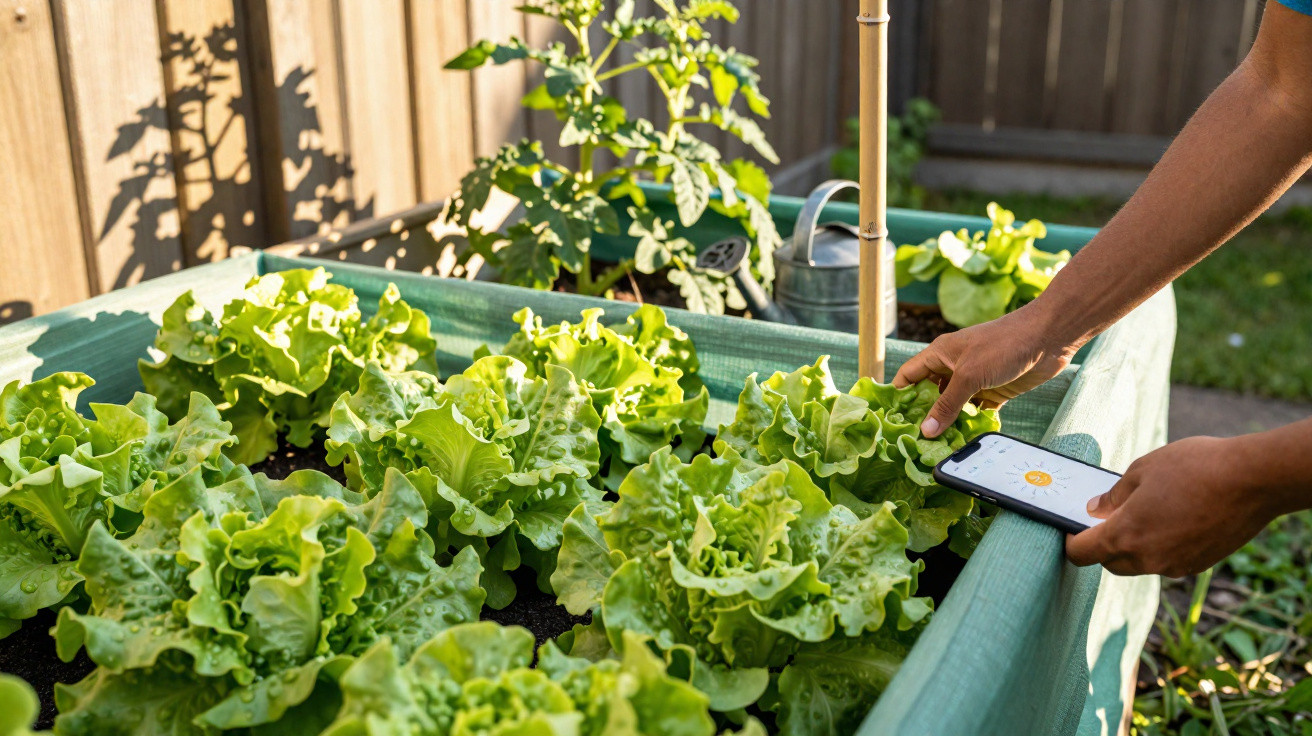
Many home gardeners grow Buttercrunch as they would any other leaf lettuce, then wonder why the leaves turn bitter or the heads remain disappointingly small. Usually, poor soil is not to blame; the issue is simply the wrong amount of light. Get the balance of sun, shade and temperature right, and you will be rewarded with remarkably flavoursome heads.
How much sun Buttercrunch really needs
Buttercrunch is a variety that enjoys light but does not cope well with heat. The basic rule of thumb is straightforward:
“Four to six hours of direct sun each day puts Buttercrunch in its ideal range; it tolerates more sun only when temperatures are cool.”
This places Buttercrunch between the usual shade-loving crops and sun-hungry vegetables such as tomatoes. An ideal site offers:
- direct morning sun
- partial shade to shade from midday onwards
- free-draining soil that stays evenly moist
During cool spells, it can receive considerably more sunshine. As long as the thermometer remains within moderate ranges, the plants cope easily with longer sun exposure and may even grow more vigorously.
Seasonal sunlight needs: when each level of light makes sense
The best mix of sunshine changes throughout the year. Taking this into account can produce a far better harvest from the same growing space.
| Season | Daily sun exposure | Best position | Temperature range |
|---|---|---|---|
| Spring (early) | 6–8 hours | Full sun is well tolerated | approx. 7–18 °C |
| Spring (late) | 5–6 hours | Morning sun is ideal | approx. 13–24 °C |
| Summer | 4–5 hours | Morning sun, afternoon shade | from around 24 °C |
| Autumn | 6–7 hours | Full sun is well tolerated | approx. 10–21 °C |
In cool spring weather and autumn, Buttercrunch can therefore spend plenty of time in full sun. Once temperatures approach midsummer levels, every hour of shade matters, particularly during the heat of midday.
How to spot unsuitable light conditions
Plants “communicate” through their leaves. Look closely and you can identify very early whether the amount of sunshine is right.
Common signs of insufficient light
- Long, thin stems: Rather than forming compact rosettes, the plants stretch towards the light.
- Pale green or yellowish leaves: Photosynthesis is slowed, leaving the lettuce looking weak.
- Slow growth: Heads stay small and the yield from each plant falls noticeably.
- Greater susceptibility to fungal disease: Overcrowded, stretched plants dry more slowly, so moisture lingers for longer.
“With fewer than four hours of direct sunlight a day, Buttercrunch suffers noticeably: less flavour, smaller heads and a greater risk of disease.”
How Buttercrunch shows it has had too much sun
Excessive light combined with heat also leaves unmistakable signs:
- Dried leaf edges: Classic “tip burn” - brown, crisp tips, especially on the outer leaves.
- Premature bolting: The plant sends up a flowering stem too soon, causing the head to loosen.
- Bitter flavour: Heat stress makes the leaves tough and distinctly more bitter.
- Wilting at midday despite wet soil: The leaves droop even though the plant has been watered sufficiently.
If this pattern occurs mainly on very sunny days, too much direct sunlight, rather than too little water, is usually the underlying problem.
Choosing the right garden position: east beats a south-facing balcony
A well-chosen position avoids a great deal of stress for the plants. Anyone planning a new bed or repotting should make purposeful use of the compass direction.
East-facing sites: the understated premium position
East-facing beds or planters often provide the optimum setting for Buttercrunch. Plants receive:
- gentle morning sunshine to start photosynthesis
- increasingly deep shade from midday as temperatures rise
- consistent conditions, even in hot summers
In particular, an east-facing bed pays off for leaf lettuces in areas where summer temperatures regularly exceed 25 °C.
North, south and west: which works best and when?
In cooler areas with short summers, a south-facing position is also suitable during spring and autumn. Plants can capture as much light as possible while the sun is not yet scorching. For high summer, however, it is worth moving them into a partially shaded spot.
West-facing sites can be difficult: the hottest afternoon sun often hits soil that has already warmed up. For Buttercrunch, these conditions are comfortable over the long term only in very mild locations without extreme heat.
“In summer, rows of Buttercrunch do surprisingly well on the north side of fences, walls or tall perennials - they receive plenty of light, but far less direct midday sun.”
Greater flexibility in pots: manage the light yourself
Growing in pots or window boxes provides a major advantage: the position can be adjusted at short notice.
A practical everyday approach is to place the container on a sunny patio in the morning, then move it beneath a table or behind a railing around midday, where the plants remain shaded. This keeps the heads tender, even during a brief hot spell.
Moveable planters are equally useful for gardeners whose plots are heavily shaded by trees or buildings. Buttercrunch can be placed wherever a gap in the light opens up, then wheeled back later.
Simple ways to regulate the amount of sun
When the perfect position is unavailable, useful measures can compensate for a great deal.
Shade netting: a parasol for lettuce
Purpose-made shade cloth providing 30 to 50 percent shade substantially reduces light intensity without leaving beds in near-darkness. Gardeners generally stretch it over simple frames made from bamboo or PVC pipes.
The benefit is that the netting stays in place during the day, plants receive diffused light, and soil temperatures rise more slowly. In many gardens, this measure alone prevents the feared bolting in July.
Tall neighbours as a natural screen
A reliable companion-planting technique is to set Buttercrunch between taller vegetables that cast shade as the season progresses. Suitable choices include:
- tomatoes on canes or at the edge of a greenhouse
- climbing beans and peas on trellis panels
- loosely spaced rows of sweetcorn
- cucumbers trained on trellises
The lettuce benefits from the shifting shade cast by these taller plants, while still receiving enough direct light early in the season, when its neighbours are small.
Reflective and living mulches
Light-coloured mulches, such as straw or specialist reflective sheeting, can help direct more light towards the lower leaves during cool periods. At the same time, they keep the soil cooler and prevent it from drying out as quickly.
Living ground covers, in contrast, cushion temperature peaks. They keep lettuce roots within their comfort range even when air temperatures briefly spike. The reward is consistently tender leaves.
Better Buttercrunch quality through targeted light management
Anyone who keeps an eye on daily sun exposure will notice the difference with the first bite. Optimally lit Buttercrunch develops:
- loosely closed yet sturdy heads
- exceptionally tender, almost buttery heart leaves
- crisp outer leaves without tough ribs
- a mild, slightly sweet flavour without bitter notes
“Four to six hours of direct sun, together with moderate temperatures - within this range, Buttercrunch delivers lettuce quality that can easily match restaurant standard.”
Harvest timing is another useful lever. Cutting in the morning, when plants are full of water after the night and have not yet been stressed by daytime heat, produces noticeably crisper leaves. They keep longer in the fridge and retain their flavour.
Practical examples for common garden situations
Many home gardeners face similar challenges: a scorching south-facing balcony with no tree in sight, a small terraced-house garden beside a tall garage, or an allotment with a patchwork of light conditions. Here are two brief scenarios showing how Buttercrunch can be saved in these settings:
- Swelteringly hot south-facing balcony: Grow Buttercrunch only in spring and autumn, switching to more heat-tolerant varieties in summer. Position containers further back on the balcony, ideally behind a railing, and use a parasol for shade on hot days.
- Small garden with a tall neighbouring house to the west: Create beds on the east side and plant Buttercrunch in the front rows. For the summer months, put up lightweight shade netting that blocks part of the radiation from midday onwards.
Once these adjustments become second nature, even more sensitive leaf lettuces can be grown without difficulty. Many potential problems, from bitter leaves to limp plants prone to disease, can be reduced simply by managing the hours of sunshine.
Ultimately, paying attention to light and shade is worthwhile for more than Buttercrunch alone. The underlying principles - favouring morning sun, softening midday heat and reading leaves as an early-warning system - help with almost all leafy vegetables. Put them into practice and your salad bowl will be filled throughout the season with crisp, flavoursome leaves rather than disappointments.
Comments
No comments yet. Be the first to comment!
Leave a Comment