
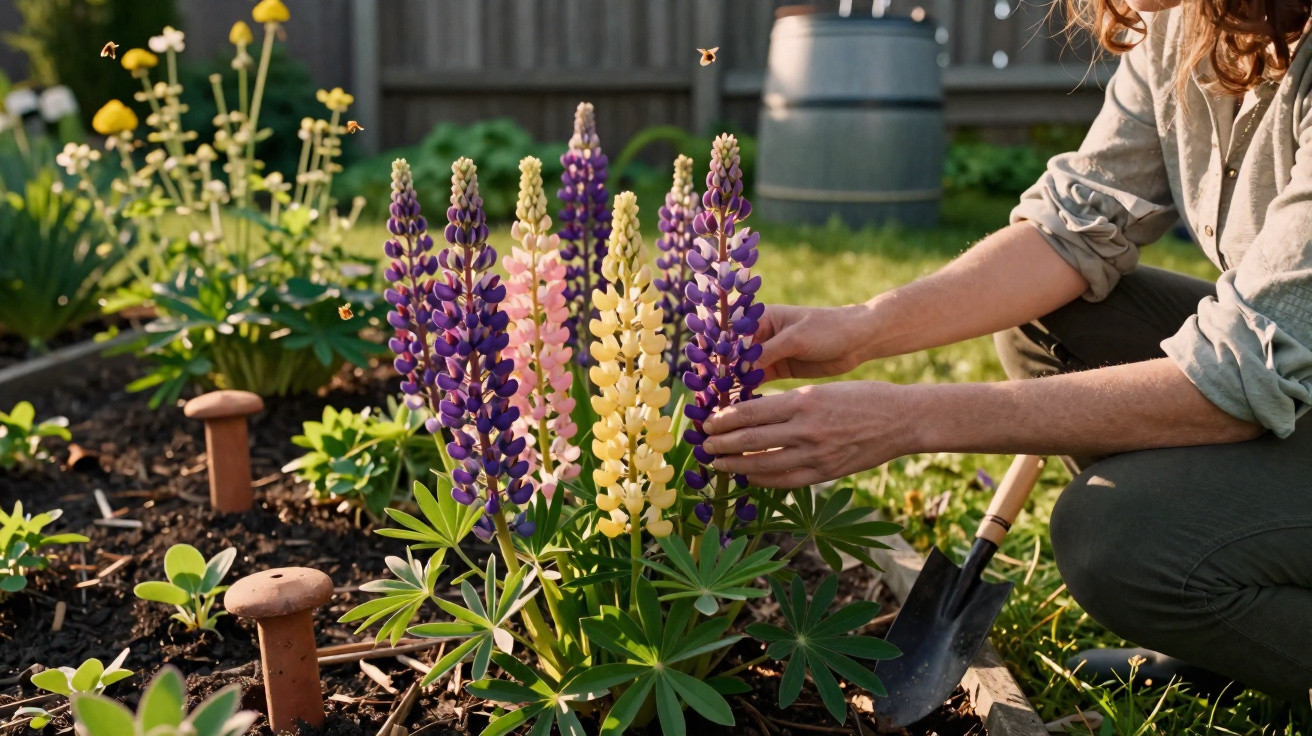
Among the many species suited to home gardens, the lupin is increasingly being chosen by people seeking a colourful, more sustainable setting with less reliance on chemical products. It combines good resilience, striking blooms, appeal for pollinators and a role in gradually improving the soil.
What is the lupin and what are its main characteristics?
The lupin (Lupinus polyphyllus) is a long-lived legume from the same plant family as beans and peas. It grows in clumps, producing leaves split into narrow sections that resemble an open hand. Its most distinctive feature is its long, upright flower spikes, which can exceed 1 metre in height and are produced abundantly.
Its flowers occur in blue, purple, pink, red and white, as well as two-colour combinations, creating particularly eye-catching focal points in a garden. In areas with a mild climate, a lupin may stay in the same position for several years, provided it receives basic care and grows in suitable soil.
Why is the lupin considered resilient and sustainable in the garden?
The lupin is regarded as resilient because it contains alkaloids such as lupanine, which provide natural protection against certain sap-sucking insects and can reduce the need for synthetic pesticides. The plant also copes with relatively poor soils, as long as they drain freely, and performs well in sunny borders.
Another significant quality is nitrogen fixation by bacteria associated with its roots. This enriches the surrounding ground and can support the restoration of exhausted areas. Its plentiful flowers attract bees, butterflies and other pollinators, supporting biodiversity and ecological balance in domestic gardens and landscaped spaces.
What basic care does a lupin need to grow well?
For a lupin in the garden to fulfil its ornamental potential while retaining its natural resilience, it is important to get the soil, light and watering right. The species favours acidic or slightly acidic growing media that are well drained and rich in organic matter; very alkaline ground may require pH adjustment.
The following practical measures help keep lupins growing healthily through the seasons:
- Watering: Keep the soil moderately moist, allowing it to dry slightly between waterings and avoiding waterlogging.
- Soil: Choose an acidic, loose and free-draining growing medium, improved with compost or humus.
- Light: Give the plant full sun; in exceptionally hot regions, provide partial shade during the strongest hours of sunlight.
- Ventilation: Select an open, airy position to limit fungal issues.
- Deadheading: Remove faded flower spikes to encourage further flowering during the same season.
How can lupins be included in a more sustainable and attractive garden?
Using a pest-resistant lupin strategically in mixed borders can help reduce chemical intervention. When paired with other hardy plants, it contributes to combinations that are more tolerant of insects and diseases. In naturalistic-style gardens, planting lupins in uneven groups produces sweeps of colour reminiscent of wildflower meadows, while supporting strong ecological dynamics.
A practical layout is to place lupins at the back or centre of a border because of their height, then use shorter flowers around the edges and weave in species that bloom at different times. This approach can extend the display of colour, benefit pollinators and keep an outdoor area more balanced, functional and visually striking over the years.
Comments
No comments yet. Be the first to comment!
Leave a Comment