
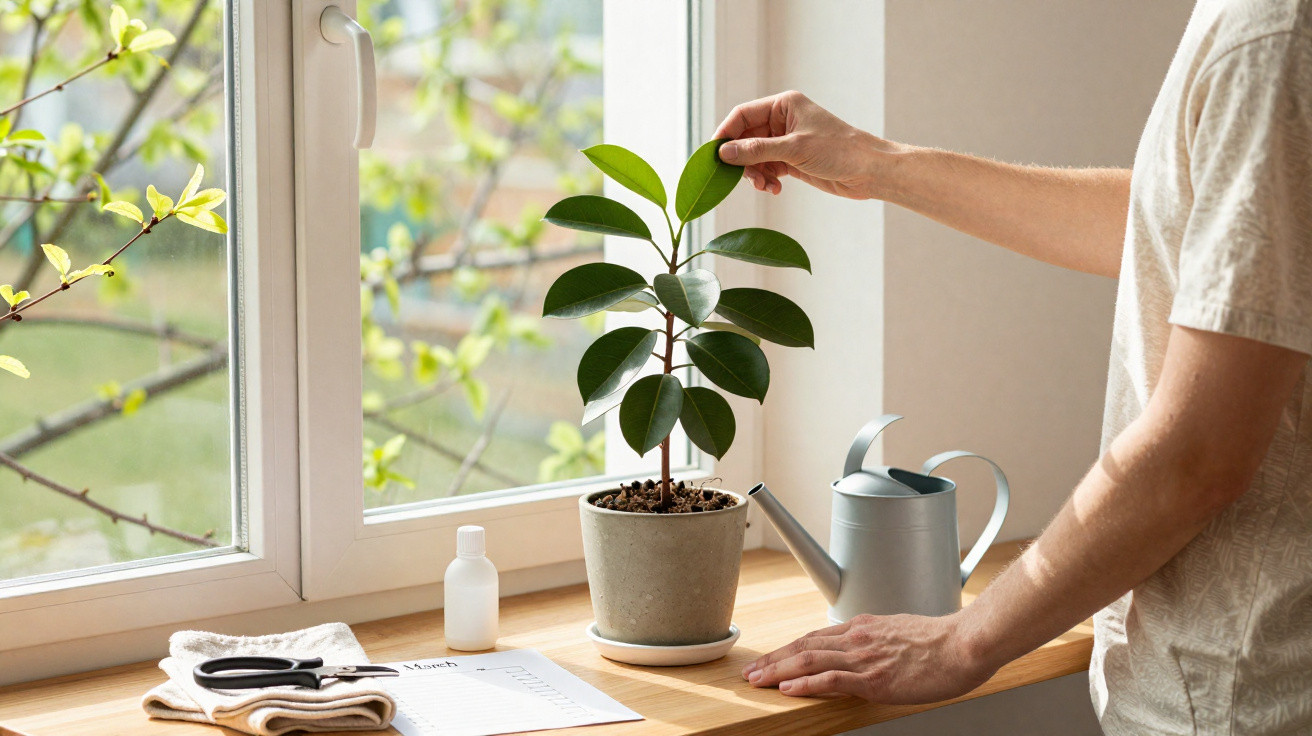
Many people leave their money tree on the windowsill for months, giving it a little water and plenty of good intentions. By March, that is no longer enough. This thick-leaved plant is gradually starting up again, needing more light, a different watering routine and, in some cases, a new pot. Those who make targeted adjustments now will be rewarded with a compact, glossy plant; those who continue as they did in January will hold back its growth.
Why the money tree suddenly needs different care in March
During autumn and winter, the money tree enters something of an energy-saving mode. It barely grows, requires little water and manages perfectly well without fertiliser. Many people then water it only around once a month – and that is generally suitable during this darker period.
The situation changes gradually but noticeably in March: daylight hours increase, the sun becomes stronger and the pot dries out more quickly. At the same time, the plant develops tiny new buds at the tips. This marks the beginning of the spring growing season.
“In March, one thing is particularly important: if you stick to the winter routine, the money tree will stagnate. If you adjust its care wisely now, it will begin vigorous spring growth.”
The crucial point is to adapt the care routine without switching fully into summer mode. This is about fine-tuning, not a radical restart.
The right position: more light without sun scorch
Light is the first, and often the most important, factor to address in March. A money tree enjoys bright conditions, but after winter it cannot yet cope with relentless midday sunshine.
Where to place a money tree in spring
- East-facing window: Morning sun followed by bright light – ideal for the start of spring.
- West-facing window: Afternoon and evening sun, which is usually well tolerated.
- South-facing window: Only with a light curtain or some distance from the glass.
If the plant is kept too dark, it will become leggy: shoots grow long and thin, eventually leaning over. If it is exposed to overly intense sun, its leaves will fade and brown patches may develop around the edges.
A simple approach is to move the pot a little closer to the window week by week throughout March, turning it slightly once a week. This helps the money tree grow evenly, creating a rounded, dense shape rather than a lopsided plant.
Watering in March: leave winter mode behind without drowning it
After light, water is the issue that causes most money trees to struggle. In March, the plant needs more than it did in December, but the compost must still never become waterlogged.
How to tell when it is time to water
- Push a finger roughly two centimetres into the compost.
- If it feels dry, water it thoroughly.
- If it still feels slightly damp, wait a few more days.
When you do water, do it properly: continue until water runs from the drainage hole. Then make sure you empty the saucer. In a bright room during spring, this will usually mean watering every 10 to 15 days, or slightly more often for very small pots.
Typical warning signs:
| Symptom | Likely cause |
|---|---|
| Soft, yellowish leaves; the stem darkens at the base | Too much water; rot may develop |
| Wrinkled, slightly sunken leaves | Too little water; the plant is drawing on its reserves |
Never respond with extremes. If you realise you have watered too infrequently, shorten the intervals by a few days. If you have overwatered, allow the compost to dry out for considerably longer first. Drastic changes are more likely to unsettle the money tree.
Fertilising: March begins the feeding season
After several lean winter months, the money tree is ready for a little extra nutrition again in March. This supports strong, thick shoots and keeps the leaves pleasingly plump.
The right fertiliser and timing
A liquid specialist fertiliser for cacti and succulents is a good choice. Add it to the watering water at half the recommended strength rather than using the full dose. Applying it approximately every four to six weeks is sufficient, from March through to autumn.
“Less fertiliser, applied regularly – this prevents salt damage and encourages compact, healthy growth.”
There are three situations in which you should avoid fertiliser:
- during the depths of winter, when the money tree is barely growing;
- when the plant is visibly weakened;
- immediately after repotting.
Never apply fertiliser to bone-dry or soaking-wet compost. Ideally, water as normal first, wait a few days, then feed the plant. This distributes the nutrients more evenly and is gentler on the roots.
Shaping care: pruning for denser growth
In early spring, as the first fresh leaves emerge, you can deliberately guide the structure of your money tree. Long, drooping shoots can be shortened so that the plant does not become top-heavy.
How to prune correctly
- Trim only shoot tips and excessively long branches.
- Always cut just above a leaf node – this is where new growth will emerge.
- Never remove more than 20 to 30 percent of the entire plant at once.
Use sharp scissors or small pruning shears for the job. Briefly wiping the blades with alcohol between different plants reduces the risk of spreading disease.
The cut pieces can also be used to grow cuttings with ease. Simply allow the cut ends to dry for one to two days, then insert them into slightly moist, sandy compost. Over time, this will produce a small “money tree offspring”.
Repotting: when the old pot restricts growth
March and the following weeks of spring are also the right time to repot. You do not need to do this every year, but it is worth checking the roots roughly every two to four years.
Signs that a money tree needs a new pot
- Roots are growing out through the drainage hole at the bottom.
- The compost stays wet for a long time and appears heavy and compacted.
- The plant tips over easily because the root ball has become too large for the pot.
Choose a pot that is only slightly larger than the existing one, and make sure it has a drainage hole. Fill it with a highly free-draining compost, such as a blend of cactus compost, fine gravel and a little sand. Do not water immediately after repotting; instead, wait a few days so that any root damage can dry slightly. Pause fertilising for several weeks after repotting.
A short March checklist for a vigorous money tree
- Check its position: Move it somewhere brighter and introduce more light gradually.
- Adjust the watering schedule: Use the finger test and water only when the top centimetres are dry.
- Start fertilising: Use specialist succulent fertiliser at half strength.
- Prune for shape: Shorten overlong shoots and use them as cuttings.
- Inspect the pot: Repot if the roots no longer have enough room.
Common spring mistakes – and how to avoid them
Many problems appear just as the plant is preparing to get going. Three common examples are:
- Moving it straight from winter dormancy into midday sun: This causes leaf scorch. Better: introduce stronger light gradually.
- Keeping the compost constantly wet out of excessive care: The money tree stores water in its leaves and tolerates dry spells better than waterlogging.
- Using a full fertiliser dose all at once: Overfeeding damages roots and leaves; in this case, less is usually more.
Anyone who pays close attention to their plant’s signals in March does not need to be an expert. A little more light, controlled watering and cautious fertilising are generally enough to turn a tired winter plant into a thriving spring bush.
Another often underestimated factor is indoor air. If the money tree stands close to a radiator or in a very warm south-facing room, the compost dries out much faster and the leaf tips may become slightly wrinkled. In these circumstances, a slightly larger pot with free-draining compost can help, along with a watering plan based on how dry the compost actually is rather than calendar dates.
Those who enjoy arranging plants can also place several smaller specimens in a wide bowl during spring. Adding some gravel or decorative stones between them not only looks modern but also creates a more stable root environment. One point remains important in every case: the money tree is a succulent. It prefers bright, relatively dry conditions, and in March it does not benefit from dramatic measures, but from one considered change: moving from winter care to a moderate spring routine.



Comments
No comments yet. Be the first to comment!
Leave a Comment