
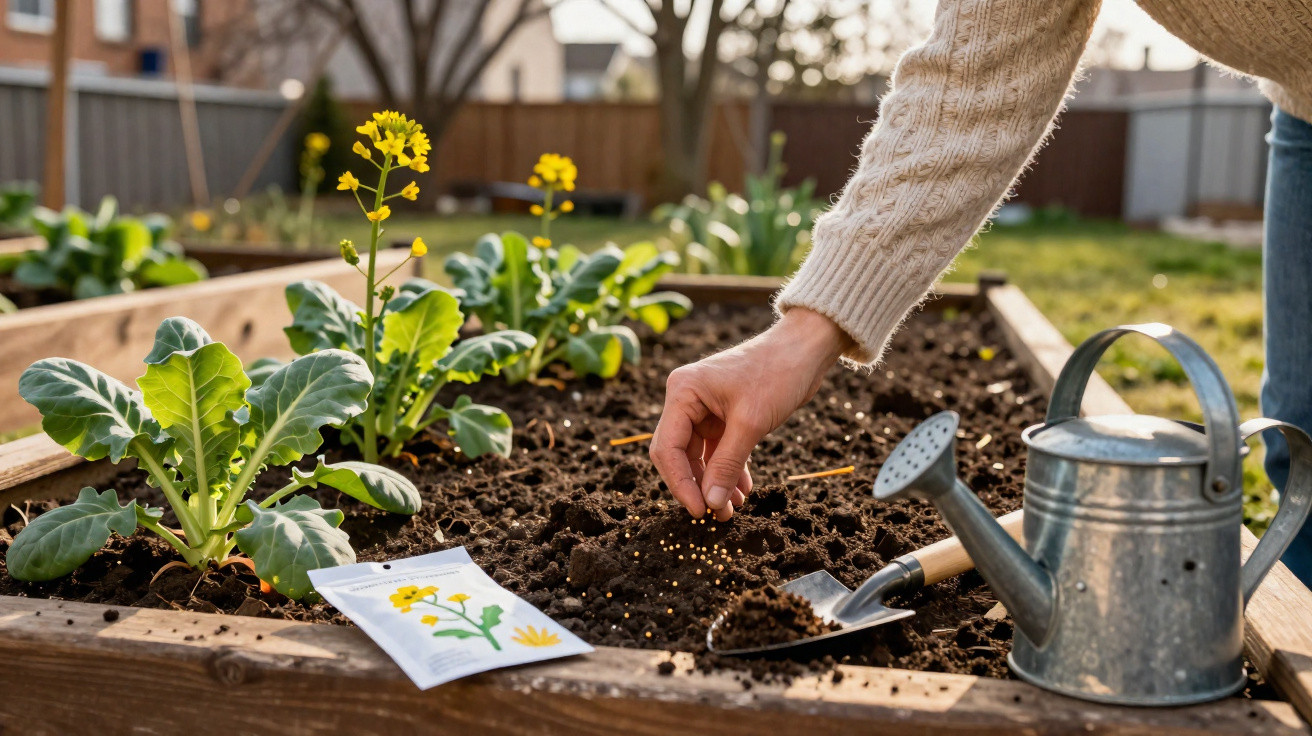
Many amateur gardeners wait until the weather is properly warm before thinking about sowing. Yet late winter is the ideal time to begin a kind of pre-season: not with vegetables, but with an unobtrusive plant that loosens, nourishes and protects the soil without being harvested itself. The results become apparent weeks later, when the first carrots, lettuces and tomatoes begin growing.
Soil that keeps working through winter instead of lying bare
A familiar February sight is bare, slightly compacted soil, a puddle here and there, and scattered weeds. This stage often determines how well the vegetable garden gets going in spring. Rather than leaving the ground entirely to its own devices, sowing it with a so-called green manure now quietly lays the foundations for a more productive season.
“An inconspicuous green manure keeps the soil working during winter rather than simply letting it cool down and dry out.”
Instead of digging deeply or applying artificial fertiliser, this method relies on living plants. They germinate at low temperatures, send roots down deeply, retain nutrients and stop rain from washing valuable soil away. An old kitchen favourite is particularly suitable for this task, revealing very different strengths when grown in a bed.
Why mustard-family plants are especially valuable now
Among traditional green manures, a species from the mustard family has proved particularly effective, starting into growth while other plants are still hesitant. It begins growing once the soil reaches about 5°C. In many places, this happens from mid-February onwards, even when conditions still feel chilly.
As soon as the seedlings emerge, a process begins that continues for several weeks. It is barely visible from above, but noticeably changes the soil:
- The young plants quickly form a green cover, depriving weeds of light.
- Rain no longer hits bare soil directly, so its structure remains stable and less earth is washed away.
- Deep roots penetrate compacted layers, loosen the ground and create channels for air and water.
This provides a significantly better starting point for the next vegetable crop, especially in heavy soils prone to waterlogging or beds that were heavily used the previous year.
The right timing: start earlier than many people expect
Waiting until the end of March means losing valuable weeks. The best window begins in mid-February, as soon as the top few centimetres of soil are no longer permanently frozen. A simple test with a spade is enough: if the ground can be loosened slightly without much effort, it is ready.
How to prepare the bed with minimal effort
There is no need to turn over the entire garden. Green manure requires only very shallow cultivation:
- Lightly roughen the surface with a rake or cultivator.
- Break up large clods and roughly remove plant debris.
- Loosen compacted areas once with a garden fork, without turning the soil over.
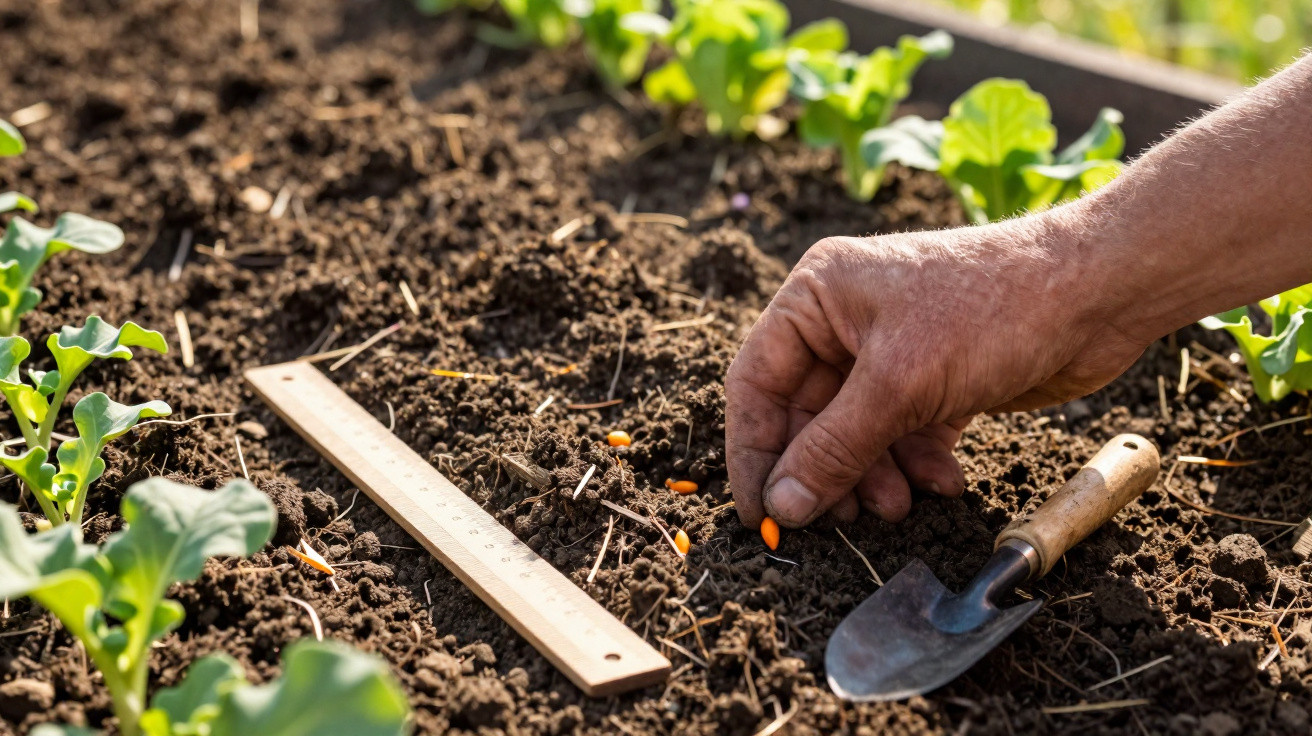
What matters most is good contact between seed and soil. Preparing the bed as finely as for carrot seed is usually more than necessary; a lightly raked surface is sufficient.
Practical sowing rate and depth
A simple rule of thumb helps to create a dense green cover without overcrowding the plants:
| Area | Recommended seed quantity | Sowing depth |
|---|---|---|
| 1 m² | 1–2 g of seed | 0–2 cm, covered only very lightly |
| 10 m² | 10–20 g of seed | as above |
The seeds can simply be scattered broadly by hand. Then press them down briefly using the back of a rake - and that is all. In moist late-winter soil, the first green haze usually appears within ten days.
Maintenance is hardly needed - but mowing at the right time matters
Once the green manure is established, it grows without further assistance. Watering is normally unnecessary, as winter provides sufficient moisture. The key intervention comes later: cutting it at the right time.
Around six weeks after sowing, the plants reach the stage at which their leaves and stems are full of retained nutrients. If they are left in the bed and incorporated lightly at this point, they release these reserves to the crops that follow.
- The ideal time to mow is shortly before flowering or just as flowering begins.
- At this stage, the stems are still soft and break down quickly.
- Incorporate the cut material only 3–5 cm deep; do not bury it deeply.
“Anyone who delays cutting for too long risks woody stems and unwanted self-seeding in the vegetable bed.”
Ideally, cut the crop two to three weeks before sowing the vegetables themselves. This gives the soil time to absorb the organic material, without freshly germinated vegetables becoming “smothered” by densely decomposing matter.
How yields and soil structure can improve
Agricultural trials in recent years show that using green manure can deliver noticeable benefits. In studies using mustard-family plants as a preceding crop, yields of vegetable and field crops were on average almost one fifth higher than without this intermediate step.
Several factors work together to produce this effect:
- More fine roots in the soil improve its crumb structure.
- Organic nitrogen compounds are released just as young vegetable plants begin growing.
- Dense plant cover suppresses weeds, reducing competition for light and nutrients.
For amateur gardeners, this often means sturdier tomatoes with thicker stems, lettuces that fill out more quickly, and beds that do not become compacted and sealed after heavy rain.
Where the risks lie and how to avoid them
Useful as green manure is, a few points need attention. Ignoring them can create problems.
- Mowing too late: If plants are allowed to flower and set seed, they may spread like weeds in subsequent years.
- Waterlogged soil: In completely saturated ground, seeds can easily rot. Moist but well-drained soil is entirely sufficient.
- Close succession with brassicas: Anyone planting cabbage crops in spring should avoid using a green manure from the same plant family nearby, in order to reduce disease pressure.
If in doubt, the cut material can be added to the compost heap rather than incorporated directly. The nutrients will then return to the garden later, once the compost has matured.
Practical examples for different garden types
Small urban garden or raised bed
Where there are only a few square metres, every spadeful counts twice. Here, green manure helps loosen the soil without heavy equipment. In a raised bed, one or two handfuls of seed are often enough for complete coverage. After cutting, rake the material in very lightly - particularly useful if the soil has already settled somewhat.
Large vegetable garden at home
Gardeners with several beds can rotate their use: one section remains actively covered through winter, while another is planted directly with early crops such as spinach or radishes. This spreads the workload, while each bed receives a regular “treatment” of roots and foliage.
Why this “hidden” February step makes such a difference
Its real appeal lies in its simplicity. A small amount of seed, ten minutes of work, and then the plant does the rest. No engine noise, no expensive fertiliser and no complicated equipment. Once gardeners become used to the sight of a green winter cover instead of brown earth, most do not want to go back.
Many gardeners report that, after one or two years of regular cover planting, their beds feel distinctly different: easier to work, less crusted over and home to more earthworms. Above all, the bare, washed-out patches that once characterised winter disappear. That is precisely where a good spring harvest begins.


Comments
No comments yet. Be the first to comment!
Leave a Comment