
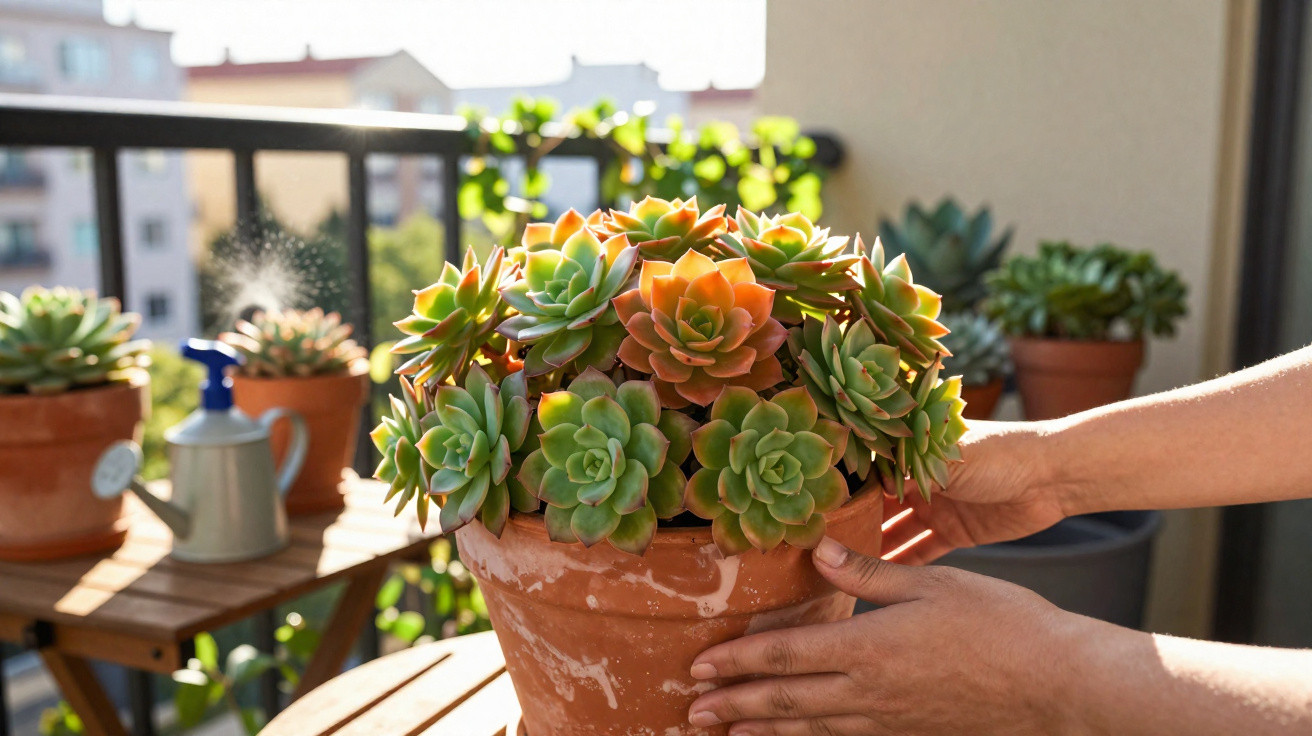
A succulent that changes shade according to sunlight has become popular in gardening schemes for small, bright balconies. Its colour shifts from green to golden yellow and even orange, making it one of the most sought-after plants in the current natural décor trend. Among the most discussed species is Sedum nussbaumerianum, which is known precisely for its strong response to light.
Interest in this succulent has grown because it suits compact spaces while retaining a striking appearance with little maintenance. Regular exposure to sunlight has a direct effect on its colouring, creating visual changes throughout the seasons and strengthening its place as a trend in urban gardens.
Why does the succulent change colour in sunlight?
The succulent’s changing shades are a direct response to the intensity of sunlight. With Sedum nussbaumerianum, extended exposure activates natural pigments that alter the leaf colour from soft green to golden yellow and orange.
This is an adaptation that helps the plant protect its internal structures. On brightly lit balconies, the succulent becomes a visual focal point and supports the trend for species that combine resilience with aesthetic appeal. The balance between shade and sun determines how intense these colour variations become.
How does sunlight affect the plant’s shades?
Sunlight is the main driver of transformation in the succulent’s appearance. The greater its exposure, the stronger the golden-yellow and orange hues become, particularly in Sedum nussbaumerianum, which reacts quickly to changes in light.
In poorly lit settings, the plant generally remains a more understated green, losing some of the visual impact that made it a trend. Its position on the balcony therefore directly affects both its colour and its ornamental behaviour.
How to grow Sedum nussbaumerianum on a balcony
Growing Sedum nussbaumerianum on balconies requires straightforward but consistent care. This succulent needs well-draining substrate and frequent sunlight to develop its most vivid colours, especially its characteristic golden yellow.
This approach has become part of the current trend for compact gardens, where every plant serves a clear aesthetic role. Colour variation also depends on ventilation and watering frequency.
- Use pots with drainage holes to prevent water from collecting;
- Choose a light, sandy substrate;
- Place the succulent where it receives plenty of sunlight;
- Avoid excessive watering, as this may affect its colour;
- Turn the pot regularly to encourage even growth.
Essential care for vibrant colours
Keeping Sedum nussbaumerianum healthy means monitoring how sunlight interacts with the plant throughout the day. Too much sun can deepen its orange tones, while too little reduces the brightness of its golden yellow, changing the succulent’s overall appearance.
These simple measures help retain the visual identity that has made this species a trend on Brazilian balconies. Regularly assessing the colour of its leaves provides a natural indication of the balance between cultivation and surroundings.
Balconies brought to life by natural colours
Using this succulent in balcony designs creates living arrangements that shift with the strength of sunlight. Sedum nussbaumerianum enhances this effect by moving between golden yellow and orange, producing contrasts that make small spaces more appealing.
This relationship between plant and setting keeps colour at the centre of the visual experience. Within this trend, gardening becomes more than cultivation: it becomes an ongoing aesthetic expression, guided by the succulent’s own response to light.
Comments
No comments yet. Be the first to comment!
Leave a Comment