
Many homeowners reach for harsh cleaners in desperation when the patio resembles a carpet of moss after winter and wet weather. Experts warn, however, that these products can cause more harm than good, especially on stone, wood or tiles. A simple kitchen mixture that costs virtually nothing can remove algae and moss with hardly any scrubbing, while being kinder to the garden, pets and the surface material.
Why moss takes over a patio so quickly
After a wet winter, just a few mild days are enough for the first green film to appear. It is caused by a combination of moisture, shade and dirt.
- Persistent damp: Puddles and poorly draining water create ideal conditions for spores.
- Limited sunshine: North-facing areas, covered balconies and dense hedges barely dry out.
- Surface material: Wood, natural stone and some tiles retain water and have slightly rough surfaces, providing perfect grip for moss cushions.
- A layer of dirt: Soil, leaves, pollen and dust provide nutrients for algae and lichens.
This is not merely unattractive. The growth makes the surface slippery, turns steps into a hazard and can cause joints to break apart when roots take hold.
Why bleach is a problem on patios
When people think of a “green patio”, powerful chlorine-based cleaners often come to mind straight away. Experts have advised against them for years, for several reasons.
“Chlorine-based cleaners attack stone, joints and wood, harm plants and animals, and are legally problematic in many outdoor areas.”
These products kill more than algae; they also damage everything around them, including ornamental plants and soil organisms and, in the worst cases, microorganisms in garden soil. If the liquid enters drains or surface water, it puts pressure on streams, ponds and water-treatment works.
They can also damage the patio itself. Porous stone may fade, joints can crumble and timber boards may crack sooner. Regular use of such products significantly reduces the lifespan of the surface.
The kitchen hack: potato water for moss and algae
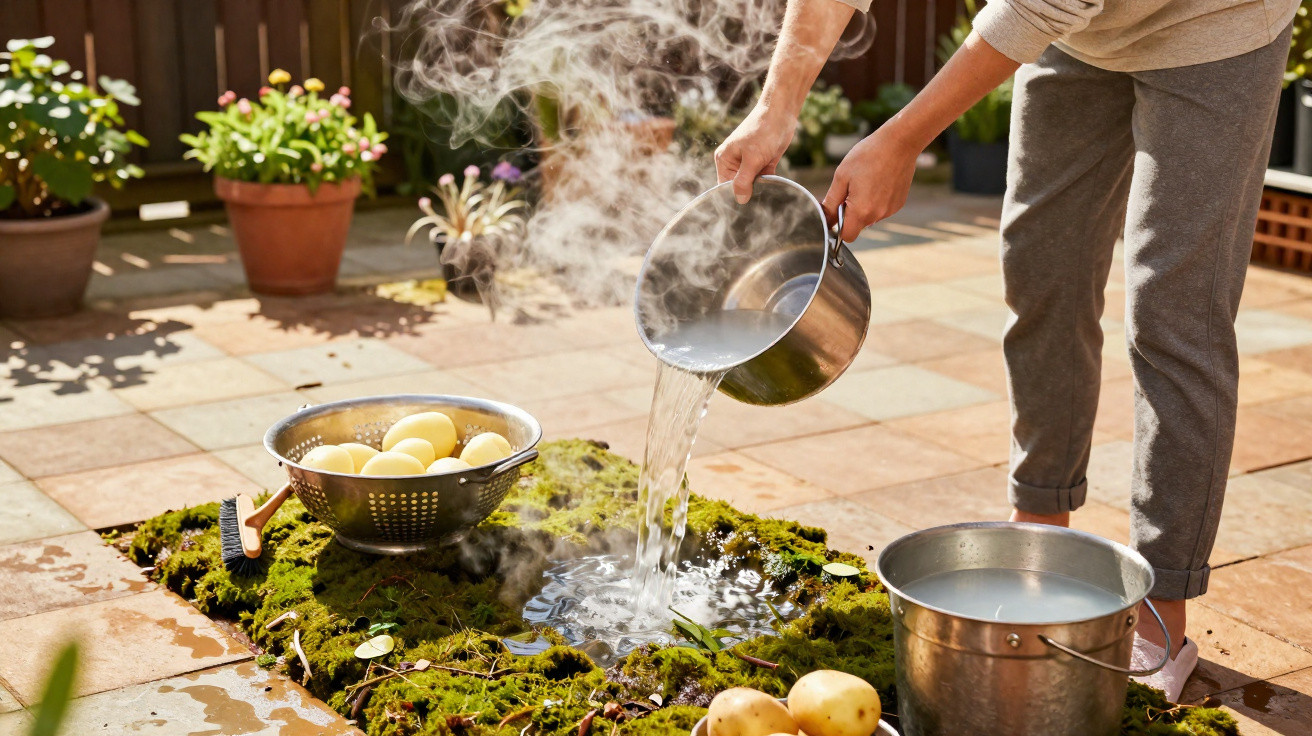
Rather than using specialist chemicals, gardening experts recommend a straightforward household remedy: the water left from boiling potatoes. Instead of going down the sink, it becomes a free patio cleaner.
How potato water works on moss
As potatoes cook, starch is released into the water. This blend of amylose and amylopectin provides the key effect:
- Heat shock: When the water is poured, still boiling, over a dry surface, the sudden change in temperature causes moss and algae cells to burst.
- Starch film: As it cools and dries, a fine layer settles over the remaining plant material.
- Blocked respiration: This film seals openings on the plant surfaces, causing the growth to “suffocate” gradually.
After one or two days, the moss turns dark, becomes brittle and can be swept away with little effort using a broom or brush.
Step-by-step guide to the potato water patio trick
- Prepare the surface: Sweep the patio roughly, removing leaves and thick layers of dirt. The surface should be as dry as possible.
- Boil the potatoes: Cook potatoes as usual in plenty of water, without adding salt.
- Use the water: Immediately after draining, carefully pour the still-boiling water into a heat-resistant watering can or bucket.
- Apply it: Pour it evenly across the affected areas. Puddles in the heaviest moss patches are actually desirable.
- Leave it to work: Leave the patio untouched for 24 to 48 hours. Do not rinse it and, where possible, do not walk on it.
- Sweep it away: Then remove the darkened moss with a stiff outdoor broom or brush.
“The trick works particularly well on smaller patios and areas with moderate growth – where moss mats are metres thick, two applications are needed.”
Other gentle alternatives from the household cupboard
If you are not cooking potatoes at the time, or need to clean a larger area, other gentle household products can help.
Gentle household staples at a glance
| Product | Effect | Suitable for |
|---|---|---|
| Sodium bicarbonate | Changes the conditions and slows algae growth | Light soiling, follow-up treatment |
| Soft soap with washing-up liquid | Breaks down greasy and dirty films, helping with brush cleaning | Greasy deposits, barbecue areas |
| Clear vinegar | Attacks the growth through acidity | Small areas, joints, edge areas |
Vinegar should not be used on calcareous stones, such as marble or certain natural stones, as it attacks their surface. Test it first in an inconspicuous corner before starting.
How to prepare your patio properly for treatment
For moss treatments to work, the right contents in the bucket are not enough. A few simple principles are crucial:
- Work in dry, overcast weather rather than in strong sunshine.
- Choose a day without rain, so the treatment is not washed away immediately.
- Wear gloves and, if necessary, safety glasses; even household remedies can irritate skin and eyes.
- Briefly cover sensitive ornamental plants close by with a cloth or bucket.
Gardening experts recommend applying any solution first to a small spot and allowing it to work for at least 20 minutes before brushing or rinsing. When using potato water, leave it on considerably longer so that the starch film can do its job.
How to slow the return of green growth
Once the growth has been removed, it will begin again if the underlying conditions remain unchanged. A few straightforward steps can significantly delay the next outbreak.
Simple measures for a cleaner patio for longer
- Sweep regularly: Do not leave leaves and soil in place; remove them weekly with a broom.
- Clean the joints: Use a joint scraper or narrow brush so that nutrients cannot build up there.
- Improve drainage: Check drains, assess the fall of the surface and eliminate standing water wherever possible.
- Check sources of shade: Thin out hedges or shrubs where needed to allow more air to circulate.
Investing in a transparent moisture barrier for stone or concrete can further slow moss growth. These sealers penetrate the pores, allowing rain to bead off while still letting the stone “breathe”. The surface therefore dries more quickly, which is a clear disadvantage for mosses.
What to consider with timber patios and sensitive stone
Timber boards are more sensitive than concrete slabs. Boiling water can create further stress in wood that is already cracked. In such cases, it is worth testing slightly cooler potato water on a hidden area and using a shorter contact time.
Similar precautions apply to natural stones such as sandstone, limestone and slate. Cleaners containing vinegar are generally unsuitable here because they can attack the surface. The starch-based approach offers an advantage: it works more through physical action and less through acid or alkali.
When professional help or specialist cleaners are worthwhile
Household remedies have their limits if you have a very large patio, extremely heavy deposits or historic stone. In that case, a specialist company using appropriate pressure and carefully matched cleaners may be worthwhile.
The important consideration remains how the products affect the environment and the material. Reputable providers explain which products they use, how they collect the wastewater and how long the patio should be left unused afterwards.
Regardless of this, the potato water trick remains an appealing option for anyone who wants to make their patio usable again inexpensively, without damaging the material and without harsh chemicals: using leftovers from a saucepan rather than a canister from the chemicals shelf.
Comments
No comments yet. Be the first to comment!
Leave a Comment