
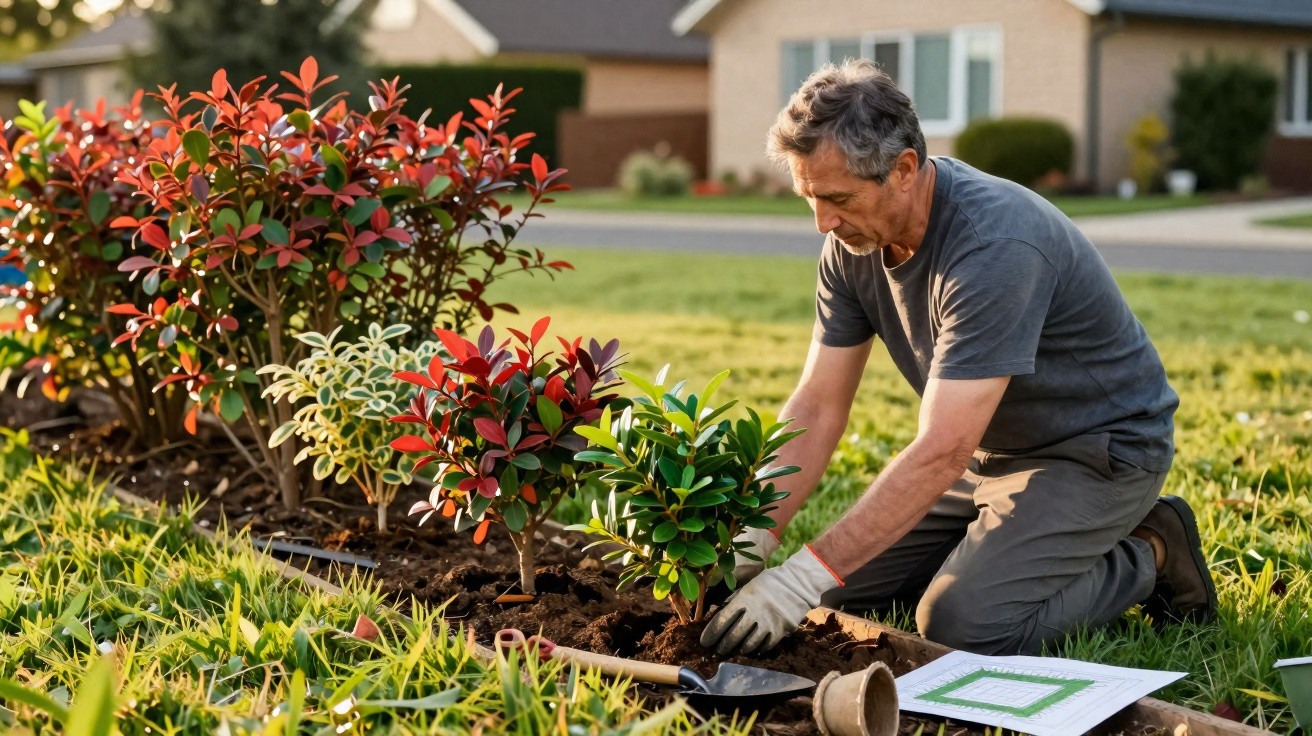
Anyone wanting a fast-growing privacy hedge a few years ago would almost automatically have chosen Photinia, botanically known as Fotinia. Today, countless front gardens present a different picture: gappy rows, brown spots and leaf drop in the middle of summer. More and more amateur gardeners are pulling the plug and choosing a replacement shrub said to be far more resilient – above all, the mock-orange relative Pittosporum, often sold simply as “Pittosporum”.
Why Photinia is losing its reputation as a hedge star
For years, Photinia was regarded as the ideal all-purpose hedging shrub: evergreen, quick growing, with bright-red young shoots and good tolerance of pruning. In new-build developments, plants were often installed metre after metre, packed closely together to create privacy as quickly as possible.
Over time, the same issues began to emerge in many gardens: bare patches, uneven growth and an increasing number of diseased leaves. What initially looked like a minor cosmetic flaw became a permanent condition in many outdoor spaces.
“Anyone who watches their Photinia hedge over several years often notices that it never regains its former glory – despite pruning and care.”
The frustration is considerable, as these hedges were meant to provide peace of mind: little work and plenty of impact. Instead, gardeners are increasingly standing in front of a shrub with their secateurs, only to find that every cut is followed by another leaf disease.
The real stress factors affecting Fotinia
It is not only the plant itself that has changed; growing conditions have changed too. Milder winters and damp springs encourage fungal diseases. There are also the extremely tight planting distances common in front gardens and terraced-house developments.
One name repeatedly comes up in gardening conversations: Entomosporium leaf spot, a persistent leaf-spot disease. Red or brown dots appear first, then the leaves dry out and fall.
- Leaf spots spread rapidly throughout the hedge.
- Affected leaves often fall to the ground and remain there.
- Fungal spores survive in the fallen foliage and infect new shoots.
- Closely planted shrubs dry poorly after rain – ideal conditions for fungi.
Many owners then make the usual mistake: they simply replace diseased plants with new Fotinia in the same position and in the same dense row. The problems begin again, only sooner.
“Anyone wanting to replace Photinia needs more than a new shrub – a different concept for the entire hedge is required.”
Pittosporum: the calm, resilient successor for troublesome hedges
Pittosporum is increasingly coming into focus as an alternative. This evergreen shrub has long ceased to be an exotic choice in German nurseries. Varieties with compact growth and decorative foliage are especially popular.
Typical benefits that appeal to many garden owners include:
- evergreen foliage with a clean, fresh appearance;
- varieties with dark-green, variegated or silvery-shimmering colouring;
- moderately fast growth – the hedge does not race away;
- lasting density, even without constant correction;
- good tolerance of trimming, without depending on it.
Its measured rate of growth is particularly reassuring in everyday gardening. Pittosporum does not shoot wildly upwards, can be kept neatly at one height and even forgives the occasional imperfect trim.
“In many gardens, one shaping cut a year is enough to keep a Pittosporum hedge tidy, dense and presentable.”
For anyone irritated by continually cutting back Photinia, the change often feels like a genuine relief. There is also the visual effect: depending on the variety, the garden can appear brighter, more elegant or more clearly structured.
From a monoculture to a mixed hedge
A major horticultural trend is developing alongside this change: away from the rigid “wall made from one species” and towards livelier mixed hedges. The reason is obvious: if one species fails because of disease, an uniform hedge is affected throughout.
Many landscape designers now use Pittosporum as a foundation and combine it with robust companions. Suitable partners include:
- Elaeagnus: extremely hardy and well suited to exposed, windy sites;
- Cornus sanguinea (common dogwood): vivid red stems in winter;
- hazel: a local character and early flowers for insects;
- other evergreen species suited to the local climate.
The result is less formal but more natural and varied. Each season gives a different feature its moment: new growth, flowers, leaf colour or ornamental bark.
“Anyone replacing an old Photinia hedge can use the opportunity to create a lively, more species-rich garden boundary – rather than simply putting up another green wall.”
What must be considered before removal and replanting
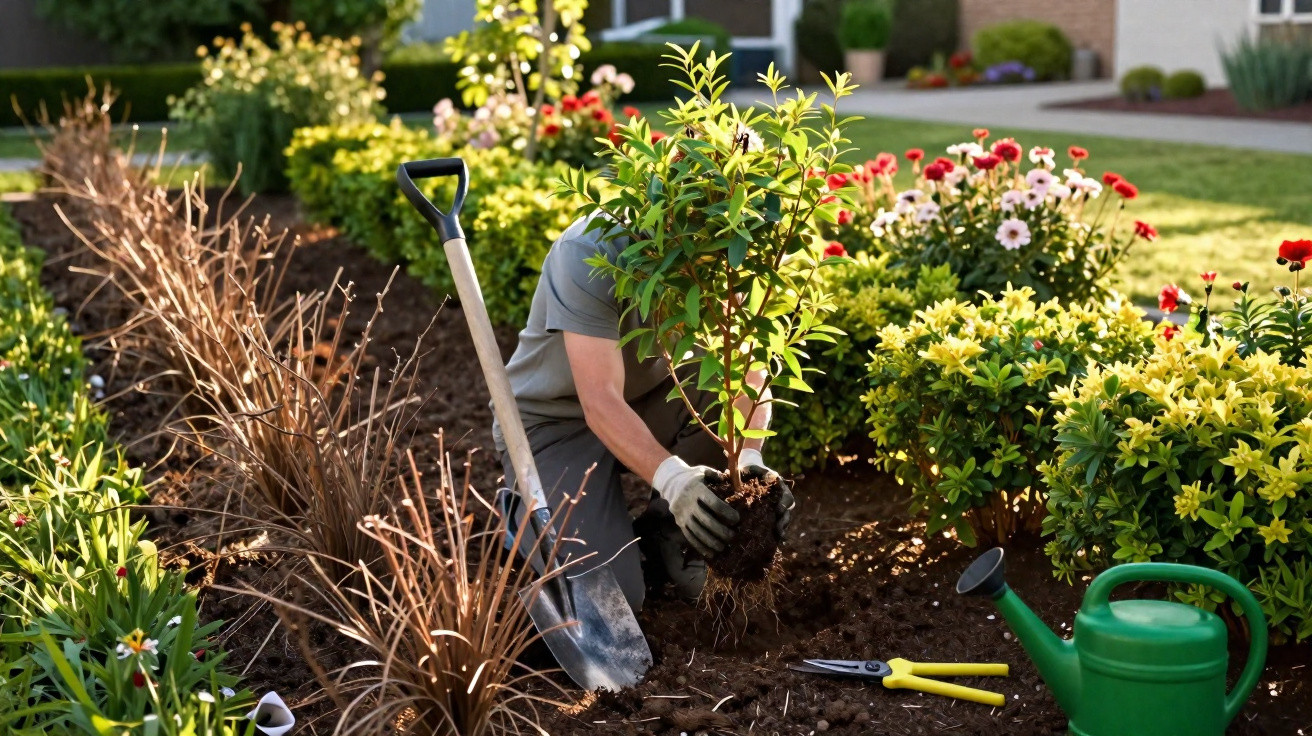
Changing a hedge does not begin with a spade, but with a critical assessment. Are there only a few weaker plants within a row? In that case, an attempt at restoration may still make sense. If whole sections are bare, heavily spotted or effectively see-through, a complete restart is usually worthwhile.
Hygiene is particularly important when removing the old hedge:
- Carefully remove every diseased part of the plants.
- Do not compost leaves and roots in the garden.
- Loosen the soil around the root area and clear away residues.
- Work in mature, well-rotted organic matter.
Heavy, waterlogged soils put young shrubs under significant pressure. Straightforward measures such as drainage gravel, raised planting areas or more generously prepared planting trenches will help them establish. Site factors including wind, sunlight and the available width must also be considered.
Spacing, care and establishment: how the new hedge succeeds
The main mistake many people should avoid repeating is planting too closely. A tightly closed hedge is certainly tempting. Over the long term, however, overcrowding encourages fungal problems and weak root growth.
| Shrub | Recommended planting distance | Pruning requirement |
|---|---|---|
| Pittosporum (compact varieties) | 60–90 cm | 1–2 cuts per year |
| Elaeagnus | 80–100 cm | 1 cut back per year |
| Dogwood | 100–150 cm | hard cut back every 2–3 years |
Particularly on wind-exposed sites, a temporary support stake can help during the first few years, until the plants have formed a stable root system. A strip of organic mulch retains moisture, suppresses weeds and creates better conditions for soil life and roots.
What garden owners should also know about the new trend shrub
Pittosporum is not a miracle cure, but it is markedly more stress-resistant than Fotinia in many gardens. A few points still need attention:
- it performs especially well in sheltered locations that are not too frosty;
- once established, it usually copes well with brief dry spells;
- in harsher regions, hardier varieties or alternative shrubs may be more suitable;
- like any plant, it is sensitive to standing water.
Those who value insect-friendly planting should deliberately plan mixed hedges. Pittosporum provides structure and evergreen cover, while flowering companions supply nectar and pollen. This creates living garden boundaries that provide not only privacy but also ecological benefits.
The trend becomes particularly interesting when looking ahead to spring 2026: many Fotinia rows removed in 2023 and 2024 will then be visible as young Pittosporum hedges. Those who plan and plant now will see a considerably more stable, calmer garden setting in two to three years – with fewer concerns about leaf spots and plant losses.
Ultimately, the decision against Photinia is not about fashion but everyday practicality. A hedge should provide shelter, create structure and enhance the garden. Pittosporum and mixed hedges bring precisely this practical requirement back into sharper focus – and many garden owners’ nerves will be grateful for it.
Comments
No comments yet. Be the first to comment!
Leave a Comment