
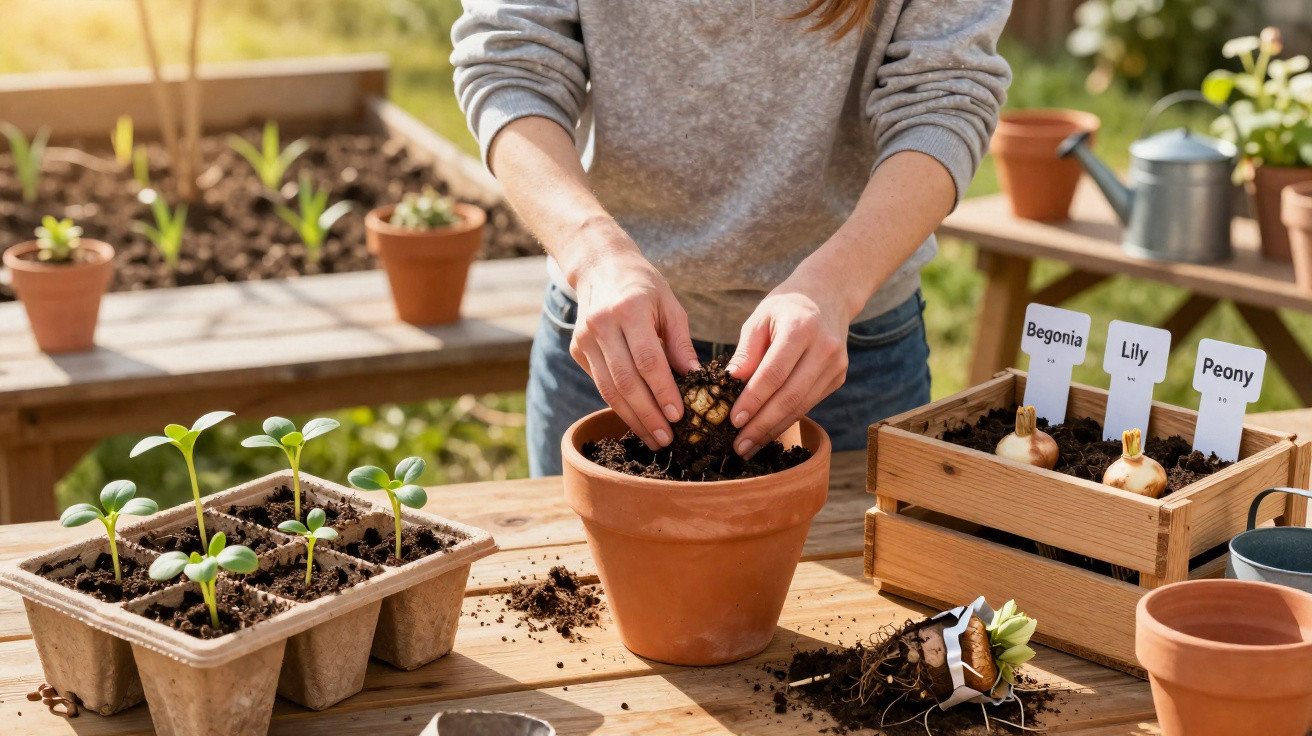
Anyone who fails to act in March could be looking at empty beds for weeks.
As the final tulip petals drop, many amateur gardeners notice the same thing every year: the garden suddenly looks bare, even though summer is just around the corner. The cause is rarely a “bad year”; it is almost always down to planting at the wrong time. Putting certain bulbs and tubers into the ground now, in March, fills precisely this gap and creates an unbroken sequence of flowers from early summer through to autumn.
Why March determines the summer display
For many summer-flowering plants, the crucial period begins in March. Soil temperatures gradually rise, hard frosts have generally passed, and plants have enough time to develop roots and shoots. Those who wait until late April or even May can easily delay flowering until July, leaving beds and containers looking bleak throughout June.
“Plant in March and you bridge the flowering gap between spring bulbs and roses – wait too long and you risk weeks of garden stagnation.”
This matters particularly in gardens filled with tulips, daffodils and crocuses. Once flowering has finished, these heralds of spring retreat quickly. Without summer-flowering plants ready to take over, there is usually nothing but foliage. Four plants stand out here: dahlias, begonias, lilies and peonies. Combined properly, they can turn several dull weeks into a flower-filled marathon.
Dahlias: a blaze of colour from early summer to autumn
For many garden enthusiasts, dahlias are the undisputed hidden stars of summer. Their tubers enjoy warmth, but they should be started early to ensure they are ready for the season.
Starting dahlias indoors correctly in March
In March, take the tubers out of winter storage and begin growing them in pots protected from frost. A bright but cool position is ideal, such as an unheated conservatory, a bright cellar window or a greenhouse. Keep the compost slightly moist, never waterlogged, as excessive moisture can cause rot.
- Place dahlia tubers shallowly in loose compost, with the growth points facing upwards.
- Choose a pot that leaves some room around the tuber.
- Position: bright and frost-free, away from intense heat from radiators.
- From mid-May, once the risk of frost has passed, plant them into beds or large containers.
This early start rewards you with dahlia flowers from around June, often continuing into October. Flower forms range from compact pompons to enormous dinner-plate dahlias, while colours extend from soft pastels to vivid neon shades. This makes it possible to plan beds very deliberately: tall varieties at the back, with shorter types along borders or in pots on the patio.
Begonias: tireless bloomers for shady balconies and north-facing spaces
Anyone with a shaded balcony or a darker part of the garden should choose begonia tubers in March. These plants cope well with limited sunshine while still providing colour for months.
How to start begonia tubers
The tubers often have one slightly hollowed side, which should face upwards. In March, set them on loose, lightly damp compost and cover them only very sparingly. They need a bright, frost-free location, such as a windowsill or a cool room.
Common care mistakes are easy to prevent:
- Avoid waterlogging, as tubers quickly rot when left standing in water.
- Acclimatise plants to sunshine gradually to prevent scorched leaves.
- Water regularly but moderately, especially in balcony planters.
- Remove faded flowers so fresh buds can follow.
“Begonias are perfect for turning otherwise dreary north-facing balconies into flowering ribbons – provided they begin the season in March.”
If you lift the tubers from their planters in good time during autumn and store them frost-free, you can enjoy them for several years. That makes them considerably better value than one-season plants bought from a garden centre.
Lilies: elegant summer highlights that add structure to borders
Lilies provide vertical interest in herbaceous borders. Their elegant, often highly scented flower spikes add height and an almost exotic character.
Planting lily bulbs in March
Plant lily bulbs in March as soon as the soil is workable and prolonged hard frosts are no longer expected. The rule of thumb is a planting depth of two to three times the bulb’s height. Choose a free-draining position, because standing water is the most common reason lilies fail to thrive.
Suitable conditions include:
- free-draining, humus-rich soil;
- positions with morning sun and light afternoon shade;
- borders where low-growing perennials shade the soil around the lilies.
Some varieties flower as early as May or June, while others do not bloom until high summer. A carefully chosen mix can therefore create several waves of flowers. Lilies can fill the gap and make the garden feel more vibrant again just when many perennials are taking a break.
Peonies: March planting for years to come
Peonies belong in a different category: planting in March is not simply about this summer, but about many seasons ahead. These perennial classics are long-lived and can remain in the right position for decades.
What matters when planting peonies
Peonies are sensitive to being planted too deeply. Their so-called eyes, or budding growth points, should be covered by only a few centimetres of soil. A sunny site that does not become overly wet is ideal. Once established, these plants are remarkably hardy and easy to maintain.
“Peonies often reveal their full splendour only after two to three years – planting in March is an investment in the spring scenes of tomorrow.”
Many gardeners become impatient when a newly planted peony produces few, if any, flowers in its first year. This is entirely normal. At first, the plant channels its energy into roots and strong shoots. From the second or third year onwards, flowering increases noticeably and, with good care, remains reliable for many years.
How these four March gardening projects work together
Combining dahlias, begonias, lilies and peonies thoughtfully creates a kind of flowering relay with hardly any gaps. One possible plan is:
| Plant | Planting time | Expected flowering | Suitable position |
|---|---|---|---|
| Dahlia | In a pot in March, planted into beds from May | June to October | Sun to partial shade |
| Begonia | Indoors in March, outdoors from May | June to September |
Hollywood stylist swears by ÖWC: how damaged hair becomes visibly smoother in 4 weeks
The continuous bloomer for lazy gardeners: why lantana belongs in every garden now
Breast cancer shock: why young women are affected far more often today
Preference for blue, clever mind? What your favourite colour reveals about your intelligence
Authority advises keeping a supply of ice: how to save your food during a blackout
4 turbo vegetables for March: ready to harvest in just 30 days
Brilliant DIY ideas: everything you can sew from IKEA bags in 2026
Clever 1p frying-pan trick: no more oil splatters when frying
Copyright © 2026 Koester-kuechen
Scroll to top
Comments
No comments yet. Be the first to comment!
Leave a Comment