
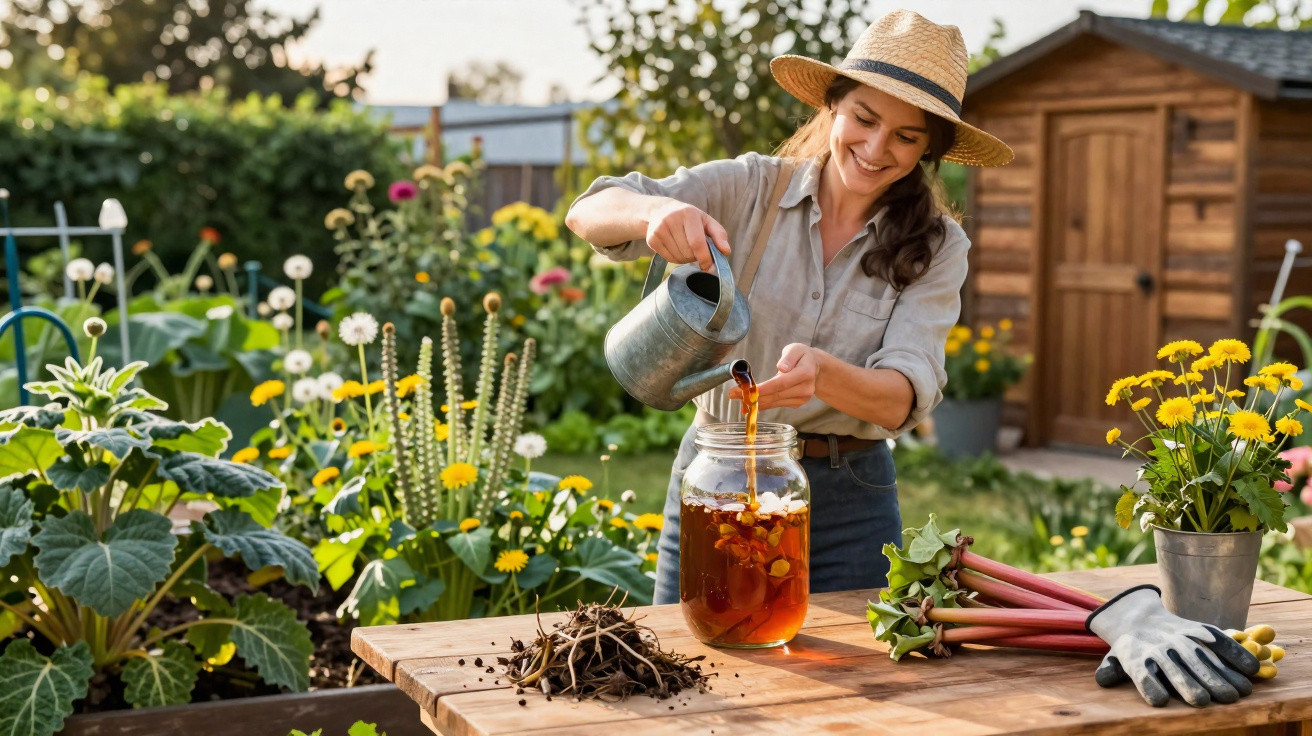
But there is also a radically different way.
Anyone buying fertiliser, pesticides and weedkillers every year is gradually turning their green haven into a laboratory. The soil loses its vitality, beneficial creatures disappear, and plants become ever more dependent on supplies from a bottle. Yet there are free-growing helpers right on our doorstep: native wild and garden plants that feed, protect and strengthen – without any warning label on the packet.
Why a garden without chemicals becomes stronger
Mineral fertilisers, pesticides and conventional weedkillers interfere deeply with natural cycles. They may provide readily available nutrients or kill pests quickly, but they also damage the fungi, bacteria and insects that make up a healthy garden.
- the soil becomes depleted and humus develops more slowly
- earthworms and other soil-dwelling helpers retreat
- plants become “addicted” to readily soluble nutrients
- resistance among fungi and insects increases
“Anyone who treats their garden bed as a living system rather than a sterile surface needs considerably less fertiliser and spraying.”
Agroecology and permaculture therefore favour diversity over uniform greenery: numerous different species, suitable planting companions, mulch, compost and careful cultivation of the soil. Plant-based liquid feeds and extracts are not a “miracle cure”, but one component within a stable overall system.
Seven plants that replace chemicals in the garden
1. Comfrey – the nutrient powerhouse for vigorous plants
Comfrey is one of the overlooked stars of the natural garden. This robust perennial sends roots deep into the ground, drawing minerals up from below and storing them in its leaves.
- particularly rich in potassium, nitrogen, silicon, calcium, magnesium and iron
- ideal for tomatoes, peppers, squash and berry bushes
- highly attractive to bees and bumblebees
Practical tip: Roughly chop the leaves, place them in a bucket of water and allow them to ferment for two to three weeks. Dilute the finished liquid 1:10 with water, then apply it as a liquid fertiliser. Fresh leaves can also be spread directly around the root area as mulch.
2. Stinging nettle – irritating in the lawn, brilliant in the bed
Few plants have such a poor reputation, yet stinging nettle is a free, high-performance fertiliser. It contains plenty of nitrogen, abundant minerals and valuable secondary plant compounds.
Diluted nettle liquid gives young plants a strong boost in growth and supports their natural defences. At the same time, its pungent smell deters aphids and other sap-sucking pests – at least to some extent.
“Use nettle liquid only at the start of the season and not at excessive strength – otherwise you will get lots of leaves but few flowers and fruits.”
As a rough guide, use one kilogram of fresh nettles for ten litres of water, leave the mixture to steep for two weeks, then dilute it by at least 1:10.
3. Dandelion – more than just a “weed” in the lawn
Dandelions grow almost everywhere and often end up in the compost bin or garden-waste collection. Yet they make an excellent gentle all-purpose fertiliser for vegetables and fruit.
- provides phosphorus and potassium for flower and fruit development
- encourages root growth
- comes up automatically during weeding – with no extra work required
Dandelions can also be made into a liquid feed, which has a gentler effect than nettle feed. This is especially beneficial for potted plants or sensitive crops in the vegetable bed.
4. Field horsetail – a natural shield against fungal diseases
The unassuming field horsetail thrives in damp locations and often appears where the ground is compacted. Even so, it is valuable to gardeners because it contains particularly high levels of silica, which reinforces plant tissue.
Prepared as a tea or liquid feed, horsetail can help with:
- powdery mildew on roses, courgettes and cucumbers
- rust fungi on ornamental and edible plants
- late blight on tomatoes and potatoes, as a preventative measure
Boil dried or fresh horsetail in water, allow it to cool, and spray it after diluting it at a ratio of 1:5 to 1:10. Repeat the treatment regularly, particularly during damp spells.
5. Garlic – a pungent all-rounder against pests
Garlic is powerful not only in the kitchen but also in the garden. Its sulphur-containing compounds deter many sap-sucking and chewing insects, while also inhibiting fungal spores.
A simple garlic brew can be made as follows:
- crush or chop several cloves
- pour over water and bring briefly to the boil
- allow to cool, strain and dilute with water
- spray onto leaves preventatively every three to four days
In the case of a severe infestation, such as aphids, the brew can be applied daily for a week. Garlic is particularly suitable for peppers, roses, cucumbers and strawberries.
6. Rhubarb – leaf power against aphids and more
Most people know rhubarb as a compote or pie filling. Its leaves should not be eaten because of their oxalic acid content, but they are valuable in the garden. A homemade brew from the leaves has a deterrent effect on several pests.
Experience from natural gardens indicates that it works against:
- aphids on vegetables and ornamental plants
- leek leaf miner on leeks
- slugs near the edges of beds, as the smell can partly reduce their appetite
As a perennial, rhubarb is hardy, returns every year and does not spread excessively. Planting a few specimens along the edge of a bed provides a lasting supply of material for brews, as well as produce for the kitchen.
7. Tansy – powerful scent, strong effect
Tansy can be recognised by its yellow, button-like flowers and intense, spicy scent. The plant contains bitter compounds and essential oils that deter many insects.
Tansy brew is particularly suitable:
- on fruit trees against sap-sucking insects
- on ornamental perennials against rust fungi and powdery mildew
- in the vegetable garden as a preventative treatment before high-risk periods
“Do not allow tansy to self-seed unchecked – it is easier to manage in one fixed spot in the garden or in a container.”
How to use plant liquid feeds without regrets
The biggest mistake with garden “home remedies” is using too much of a good thing. Natural products can also stress plants if the concentration is unsuitable or they are sprayed too frequently.
- always dilute liquid feeds and brews, and test them on one plant first
- do not spray in blazing sunshine; apply in the morning or evening instead
- preferably use them preventatively, rather than waiting for complete failure
- observe plants after treatment and adjust the dosage
The basic rule is that living soil remains the most important foundation. Compost, well-rotted manure, leaves and grass clippings used as mulch provide long-term nourishment and prevent drying out. Plant liquid feeds are only a supplement.
How a natural garden develops step by step
Anyone switching from chemicals to plant power does not need to overhaul everything at once. A practical approach is to convert only one section of the garden at first and gain experience there.
| Step | Measure |
|---|---|
| 1 | use up or dispose of chemical fertilisers and sprays, and do not buy any replacements |
| 2 | create or improve a compost area and collect mulching materials |
| 3 | try one or two liquid feeds, for example nettle and comfrey |
| 4 | plan beds using mixed planting and include more flowering plants for beneficial insects |
| 5 | keep notes: what works, and which crops tolerate what well? |
With every season, knowledge of your own garden grows. Many problems are simply resolved through greater diversity and improved soil care – without the need for constant intervention.
What to consider when making garden remedies yourself
Not every wild plant is suitable for every site. Some spread vigorously, while others are protected. Anyone gathering horsetail should preferably do so in the open countryside, rather than in a protected habitat. Tansy should be kept in one controlled location where it cannot spread unintentionally.
Liquid feeds have an intense smell. Preparing them in a more secluded spot helps to avoid disputes with neighbours. Open containers attract insects, so always cover them with mesh, a wooden board or a loosely placed lid to stop anything falling in.
For children and pets, the rule is clear: place buckets of plant liquid feeds and concentrated brews out of reach. Even though these products come from nature, they are not harmless in concentrated form.
Getting more value from “weeds”
Many of the plants mentioned would normally be thrown away. Using them deliberately saves money and reduces your garden’s chemical footprint. Rather than angrily levering dandelions from the lawn with a weeding tool, you can leave them deliberately in the vegetable bed and harvest them. Nettles growing along the property boundary provide fertiliser, tea and an alternative to spinach.
Combinations are also worth considering: nettle for the start of growth, comfrey shortly before flowering, horsetail during wet periods, and garlic at the first signs of aphids. Over the year, this creates a kind of natural “treatment plan” based on the weather and the condition of the plants, rather than the back label of a spray bottle.

Comments
No comments yet. Be the first to comment!
Leave a Comment