
Experts warn that this can create problems in the first place.
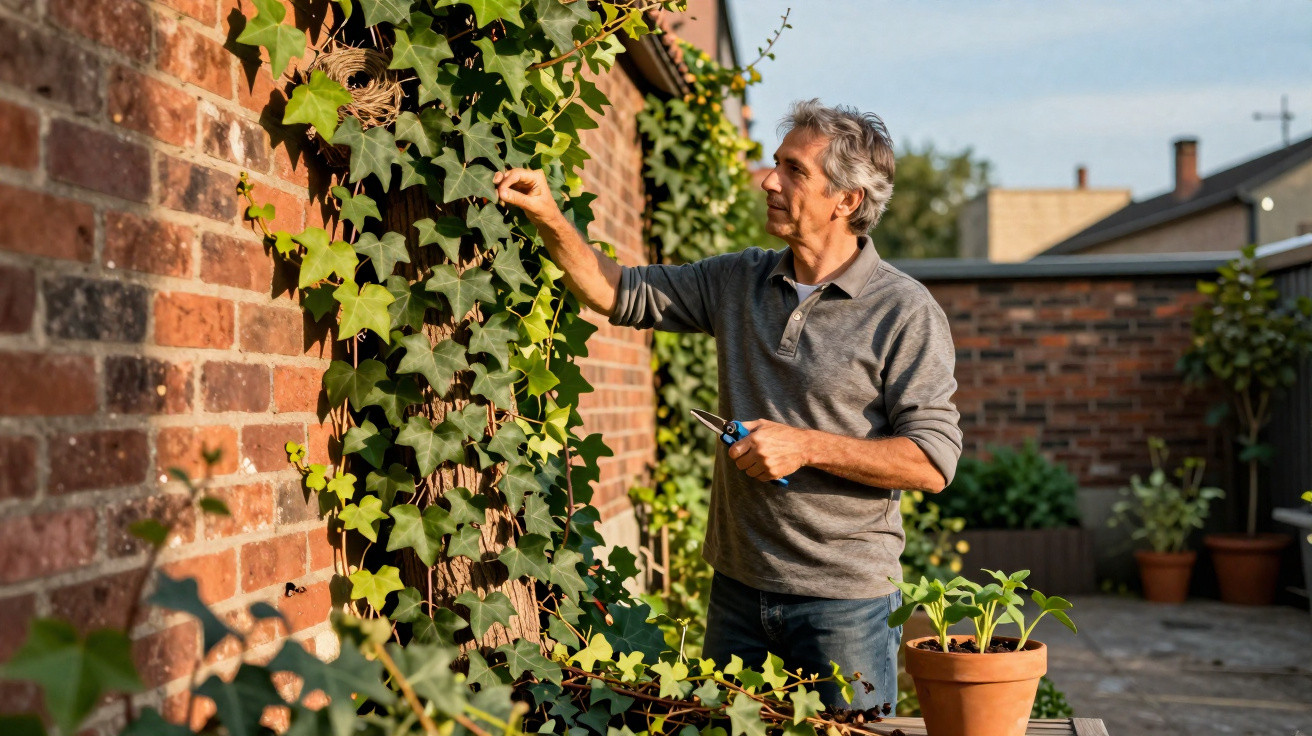
Anyone who sees a tree trunk covered in growth or a façade clad in green often reaches for the secateurs straight away. Ivy is widely considered aggressive, harmful to trees and responsible for crumbling walls. A closer look, however, reveals that this dense greenery can actually provide protection in many cases – and removing it radically deprives both garden and home of an important ally.
Why ivy is not a parasite
Climbing ivy (Hedera helix) is often confused with parasitic plants. This is mistaken. Unlike species of mistletoe, ivy does not draw sap from a tree. Its roots remain in the ground, where the plant obtains its water and nutrients.
The tiny aerial roots on a trunk or wall serve solely as anchors. They secure the shoots without growing into the wood or stone. Experts are clear on this point: healthy, vigorous trees lose neither vitality nor stability because of ivy.
“Ivy is not the garden’s vampire, but more of a bodyguard – provided the tree and wall are in good condition.”
When ivy benefits trees – and when it becomes a burden
On a sturdy trunk, ivy acts much like a protective coat. Its foliage softens the effects of heat, frost and hail. The layer of air between the leaves and bark retains moisture for slightly longer and prevents extreme temperature fluctuations at the bark.
At the same time, this thick network creates habitat: birds nest in ivy, small mammals find cover, and around 200 insect species use the plant for food or shelter. Ivy also has advantages as ground cover: its leafy carpet slows erosion and keeps the soil moist for longer.
It becomes critical with weak or very young trees
Difficulties arise when the tree itself is already weakened. Typical high-risk cases include:
- very old trees with decayed branches
- young trees and fruit trees with sparse crowns
- trees with visible damage, fungal infestations or breaks
In these situations, ivy can cast considerable shade over the crown and deprive branches of light. It can also conceal cracks and diseases, meaning they may not be noticed in time. As the growth becomes denser, the weight in the upper part of the tree increases too.
When strong winds are added to the equation, the mass of foliage enlarges the area exposed to the wind. This raises the likelihood of branches breaking or the tree toppling over. In such cases, experts advise cutting ivy back substantially and preventing it from completely enveloping the crown.
Ivy on house façades: a protective layer rather than building damage
Many homeowners worry that ivy will tear apart their façade. On sound, solid brickwork, the opposite is true: the aerial roots attach only to the surface and form a natural protective skin.
This green layer functions like living render:
- Rain is deflected by the leaves, so less water reaches the wall directly.
- Severe temperature changes are softened, which can reduce stress cracks.
- The wall heats up less in summer, while slightly less heat escapes in winter.
- Dust and fine particulate matter from the air are trapped by the leaves.
Particularly on sun-exposed sides of a home, ivy can reduce heat build-up. Air conditioning may then need to run less often or at a lower output.
When ivy genuinely damages walls
It becomes hazardous if the façade is already damaged. Crumbling mortar joints, cracked render and tiny gaps provide the aerial roots with purchase, allowing them to widen these areas mechanically. Wind and moisture intensify the effect.
On old homes that have never been renovated, water may penetrate more easily, masonry can become loose, and gutters and downpipes may become overgrown. Before allowing ivy to grow on a façade, the condition of the brickwork and render should be carefully inspected.
“Inspect the façade first, then allow the ivy to grow – not the other way round.”
How homeowners and gardeners can assess their ivy correctly
Whether ivy can remain in place or should be partly removed always depends on what it is climbing. A quick inspection helps determine the right approach.
Checklist: ivy on a tree
Signs that ivy can stay and only needs moderate pruning:
- a thick, stable trunk
- a crown that looks healthy and carries plenty of leaves
- no large rotten areas, fungal fruiting bodies or cracks visible
- ivy has not yet reached the outer crown, or has reached only part of it
In this case, it is often enough to shorten the shoots slightly every two to three years and keep them away from the upper crown.
Warning signs indicating that gardeners should intervene:
- the tree is leaning noticeably
- large dead branches or visible fungal infestation
- young or slender fruit trees covered by a dense layer of ivy
- ivy has enclosed the entire crown
A much heavier cutback is then advisable, with professional assistance if in doubt. The shoots should be removed gradually, giving the tree time to adjust to increased light and wind.
Checklist: ivy on walls
A façade can be assessed broadly as follows:
| Condition of the façade | Ivy recommendation |
|---|---|
| smooth, firm render with no cracks | Ivy can remain; inspect it regularly |
| isolated hairline cracks, slightly aged render | Repair vulnerable areas, then restrict growth |
| crumbling mortar joints, flaking render, visible moisture damage | Remove ivy, renovate the façade, then add greenery again afterwards |
How to keep ivy under control carefully and selectively
Completely tearing ivy away is rarely necessary and often leaves unsightly scars on trees and walls. Controlled management is usually the more sensible option.
Take a gentle approach on trees
Anyone wishing to reduce ivy should not pull at the aerial roots. Instead, cut through the shoots close to ground level. The upper sections will then die back slowly and can be removed more easily after some time.
Many experts advise exposing only part of the trunk. A narrow ivy-free strip makes it easier to inspect for damage, while the remaining growth continues to provide protection and habitat.
Work cleanly on façades
The same principle applies to walls: cut the main shoots first, then allow them to dry out. Dry attachment remnants come away more easily. Pulling immediately often tears off pieces of render as well.
Anyone concerned about the roof, windows or gutters can keep ivy trimmed to a particular height. This retains its cooling and protective qualities without allowing it to overgrow sensitive parts of the building.
Why a “wild” garden is often more resilient
Ivy represents a fundamental question in gardening: does every area have to look tidy? Many supposedly “neat” gardens lose valuable structures that support wildlife and the microclimate.
A controlled area of growing ivy provides:
- nesting sites for songbirds
- shelter for hedgehogs and other small animals
- late flowers as a food source for insects when other plants have already finished flowering
- evergreen winter foliage that provides cover for wildlife
Especially in densely built-up residential areas, such green islands can help make hot spells more bearable and support biodiversity.
What many people still do not know about ivy
Ivy establishes itself slowly, but it can then persist for a remarkably long time. The plant can live to a great age and, over the years, form a kind of small ecosystem of its own. Removing it without need abruptly destroys that structure.
At the same time, ivy remains easy to shape: with a clearly positioned climbing support on the house or a trellis on the garage, its growth can be directed. This allows the greenery to protect the wall without reaching the roof or windows. Gardeners can also prevent ivy on trees from becoming problematic later by cutting back individual shoots in good time.
In practice, ivy itself is not the main problem; rather, it is either allowed to grow without thought or fought too ruthlessly. Those who assess their trees and walls realistically and carry out regular checks can benefit from a robust, versatile garden companion instead of battling it needlessly.




Comments
No comments yet. Be the first to comment!
Leave a Comment