
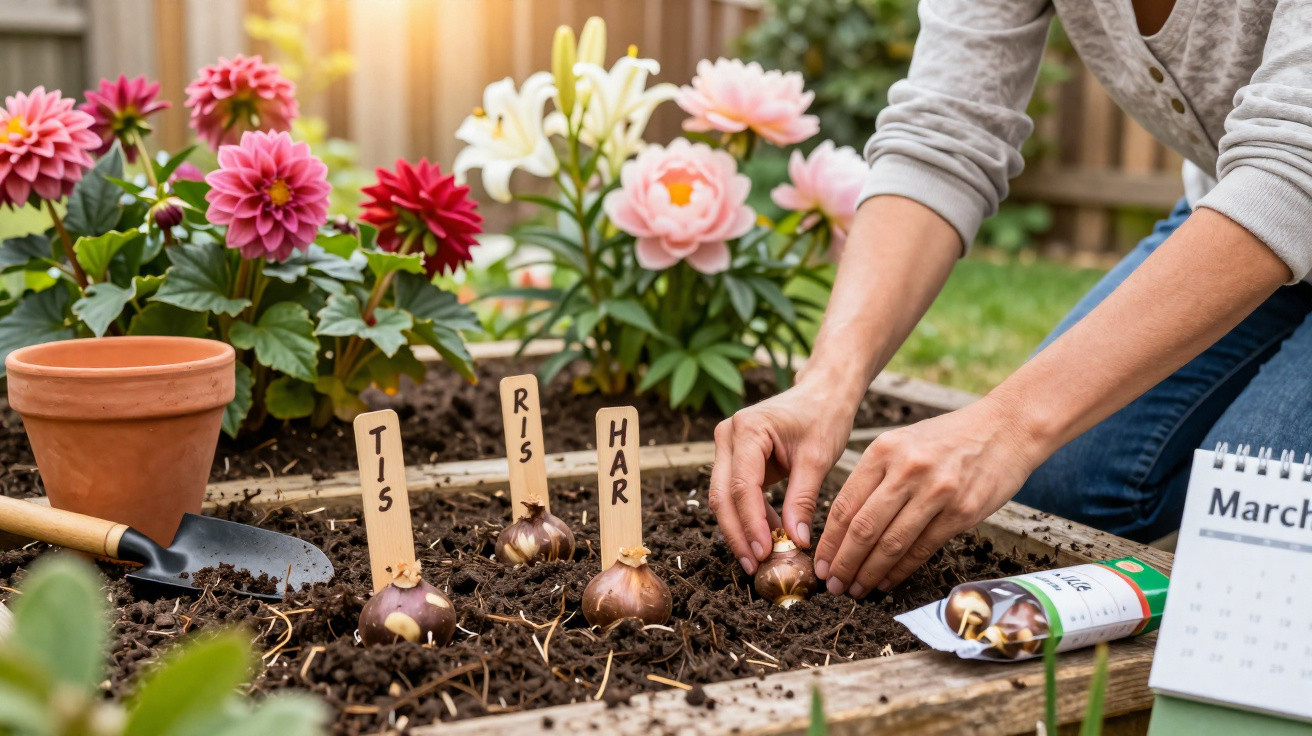
If you do not add more in March, you will be looking at bare soil for a long time.
The changeover from a spring to a summer garden is often a let-down: colour first erupts, then seemingly nothing happens. Yet this drab spell is easy enough to prevent, with a few carefully chosen flower bulbs and tubers that need to go into the ground now, in March.
Why March determines summer flowering weeks
For many summer-flowering plants, the period from early March to around mid-May is the crucial starting window. During this time, the soil is generally frost-free but has not yet dried out. Anyone who waits until late April or even May will often push flowering into high summer - and then wonder why their beds are bare in June.
“Plant your tubers and bulbs in March and you secure flowers from June well into autumn. Leave it too late and you lose weeks of colour.”
The basic rule is this: planting can begin once severe frosts are no longer expected and the soil feels pleasantly cool, rather than icy cold, to the touch. In exposed locations, this can still work beneath a light horticultural fleece or in pots under glass until conditions become reliably milder.
Dahlias: colour explosions with a flying start
Dahlias are among the most rewarding summer-flowering plants of all. They are considered classic cottage-garden flowers, yet they work just as well in crisp, contemporary borders or large containers.
How to get dahlias growing strongly in March
- Inspect the tubers: Cut away any shrivelled or soft sections, using only firm pieces.
- Start them in pots: From March, place them in large containers filled with loose potting compost, around five centimetres deep.
- Keep them somewhere bright and frost-free: An unheated greenhouse, conservatory or bright cellar room is ideal.
- Water sparingly: The compost should remain slightly moist but never wet, otherwise the tubers may rot.
Starting dahlias indoors or under cover in pots means they can go into the garden with their first shoots already formed, as soon as frost is no longer a risk. This gives them a lead of several weeks: the first flowers may open as early as June, and the plants will often bloom almost continuously through to October.
It is worth mixing varieties: small pompon types at the front, large cactus or decorative dahlias in the middle of the border, and tall varieties with sturdy stems for cutting. The more varied the flower shapes, the more lively the planting will appear.
Begonias: a solution for shady balconies and north-facing aspects
Not every garden receives full sun. Shade is especially common in rented homes with north-facing balconies or in enclosed back yards. This is where begonias come in. They flower dependably even in low light and bring colour to grey corners.
Planting begonias in March
Tuberous varieties should be started in trays or pots in March:
- Fill shallow containers with loose, humus-rich growing medium.
- Lay the tubers with the hollow facing upwards, pressing them in only lightly.
- Keep the growing medium moist but not wet, and strictly avoid waterlogging.
- Position them somewhere bright and frost-free, away from direct midday sun.
Begonias tolerate gentle sunshine, but are happiest in bright partial shade. They flower tirelessly as long as they are watered regularly and spent blooms are removed. Before the first frost, bring the tubers back indoors; once properly dried, they will survive the winter and can be started again the following March.
Lilies: fragrant vertical accents that shape the border
Lilies provide not only spectacular flowers, but also height and structure in a planting scheme. They suit spaces among herbaceous perennials, in front of hedges, or containers on the patio. Many varieties have an intense fragrance and appeal equally to the eye and the nose.
Planting lilies correctly: depth and soil matter most
Plant lily bulbs in March in deep, well-drained soil. They do not tolerate standing water at all, as this can cause them to rot easily, particularly in winter. This rule of thumb works well:
- Planting depth: two to three times the height of the bulb
- Position: sunny to partially shaded
- Soil: loose and humus-rich, ideally opened up with a little sand
By combining varieties thoughtfully, flowering can be extended over many weeks. Some early lilies begin in May or June, while others do not appear until high summer. This makes them ideal for filling the gap after spring flowers have faded and while some perennials are still slow to get going.
“Lilies act like natural beacons in a border - especially against a dark backdrop, with their flowers hovering just below eye level.”
Peonies: plant now, marvel in a few years
Peonies, often called Paeonies in everyday gardening language, are among the longest-lived perennials in the garden. Planting in March is a promise for springs to come. These plants require patience: it often takes two to three years before they flower really lavishly.
Choosing the right place for peonies
Peonies like stability: once planted, they should be left undisturbed for as many years as possible. When planting in March, choosing the location is therefore the main priority:
- A bright position with at least half a day of sunshine
- Well-drained, relatively heavy and nutrient-rich soil
- No continual competition from shallow-rooted shrubs or trees
Herbaceous peonies should sit more shallowly, while tree and intersectional peonies are planted slightly deeper, but the same principle applies to all: plant them too deeply and they may flower very little, or not at all. The dormant buds should sit only just beneath the soil surface.
The four March stars at a glance
| Plant | Start of the year | First flowering | Ideal for |
|---|---|---|---|
| Dahlia | Tubers into pots in March | from June | Borders, large containers, cut flowers |
| Begonia | Lay tubers shallowly in March | late spring to summer | Shady balconies, north-facing aspects |
| Lily | Bulbs into the ground in March | May to high summer | Structure in borders, fragrant accents |
| Peony | Plant root divisions in March | after 2–3 years, then in spring | Permanent borders, cottage gardens |
Common mistakes that delay the start of flowering by weeks
Many amateur gardeners lose valuable time without realising it. The most frequent pitfalls are:
- Planting too late: Anyone who starts only in May will get either a short flowering season or one that begins much later.
- Incorrect depth: Peonies planted too deeply and lilies planted too shallowly often fail to meet expectations.
- Waterlogging: Dahlia tubers and lily bulbs in particular are sensitive to soil that stays wet for long periods.
- Impatience: Peonies especially need time - repeatedly moving them only holds them back further.
Practical examples for different garden types
In a sunny terraced-house garden, dahlias and lilies can make an ideal pairing: compact dahlias in warm colours at the front, with taller lilies behind them, their flowers rising above. A few individual peonies between them create a spring highlight before the summer flowers take over.
A shady urban balcony calls for a different combination: several window boxes planted with white, pink and red begonias, complemented by a low-growing dahlia in a large pot in the brightest available spot. This creates an almost unbroken carpet of colour from June until the first frost, without plants needing to be replaced constantly.
Risks, benefits and clever combinations
One residual risk remains: late frosts can catch out tubers planted early. Those living in a cool region should therefore begin sensitive varieties in pots, moving them briefly indoors or into a garage when frost is forecast. A simple horticultural fleece protects outdoor beds while blocking hardly any light.
The benefits clearly outweigh this effort. A well-planned mix of dahlias, begonias, lilies and peonies creates a garden with hardly any “gaps” left in it. As spring flowers fade, the summer stars gradually take over. There is also a benefit for insects: many varieties offer plentiful nectar and pollen, while the longer flowering period helps bees and bumblebees in their search for food.
Adding a few more tubers and bulbs each year gradually builds a ribbon of flowers that lasts for months. The most important part of that plan comes surprisingly early in the year: a free Saturday in March, a box full of flower bulbs - and the firm intention not to leave the garden looking bare for weeks again.
Comments
No comments yet. Be the first to comment!
Leave a Comment