
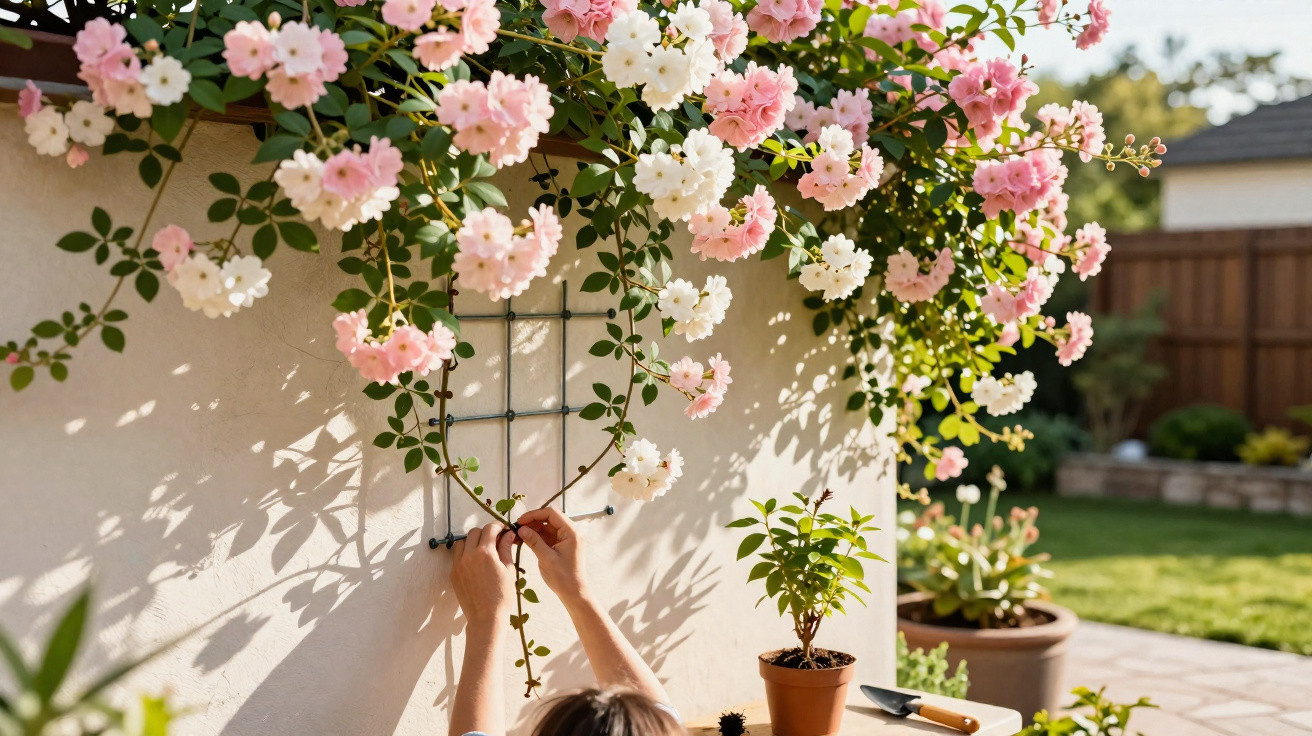
Covering walls with climbing plants often raises the same concern: whether aggressive roots or stems working their way into gaps could damage the structure. Among the available choices are climbers with non-invasive roots and continuous flowering, suited to anyone wanting a flower-covered wall without putting render, brickwork or waterproofing at risk, provided planting and pruning are managed correctly and with proper planning.
Why choose a climbing plant with non-invasive roots for a wall?
The key advantage of these climbers is their shallow root system, which spreads in a controlled way and places no substantial pressure on foundations, paving or concrete structures. Because they draw nutrients from the upper soil layers, they are far safer for narrow beds beside the walls of houses and buildings.
Their method of support is another important feature. Rather than using clinging roots attached directly to the wall, they are generally trained over supports such as trellises, wires or metal frames. The wall therefore acts as a backdrop while the plant develops in front of it, creating a green, flowering screen with less risk of cracking, damp penetration and moisture build-up.
How can flowering climbing plants be grown safely and easily?
For strong growth, these climbers require direct sunlight for several hours each day. Too much shade limits flowering and encourages long, untidy shoots. The soil should drain freely and contain organic matter, while remaining lightly and consistently moist without becoming waterlogged. A mulch made from bark or dry leaves can be useful.
Preparing the planting area and structural supports involves a short sequence of steps that helps protect the wall and ensures balanced growth from the outset:
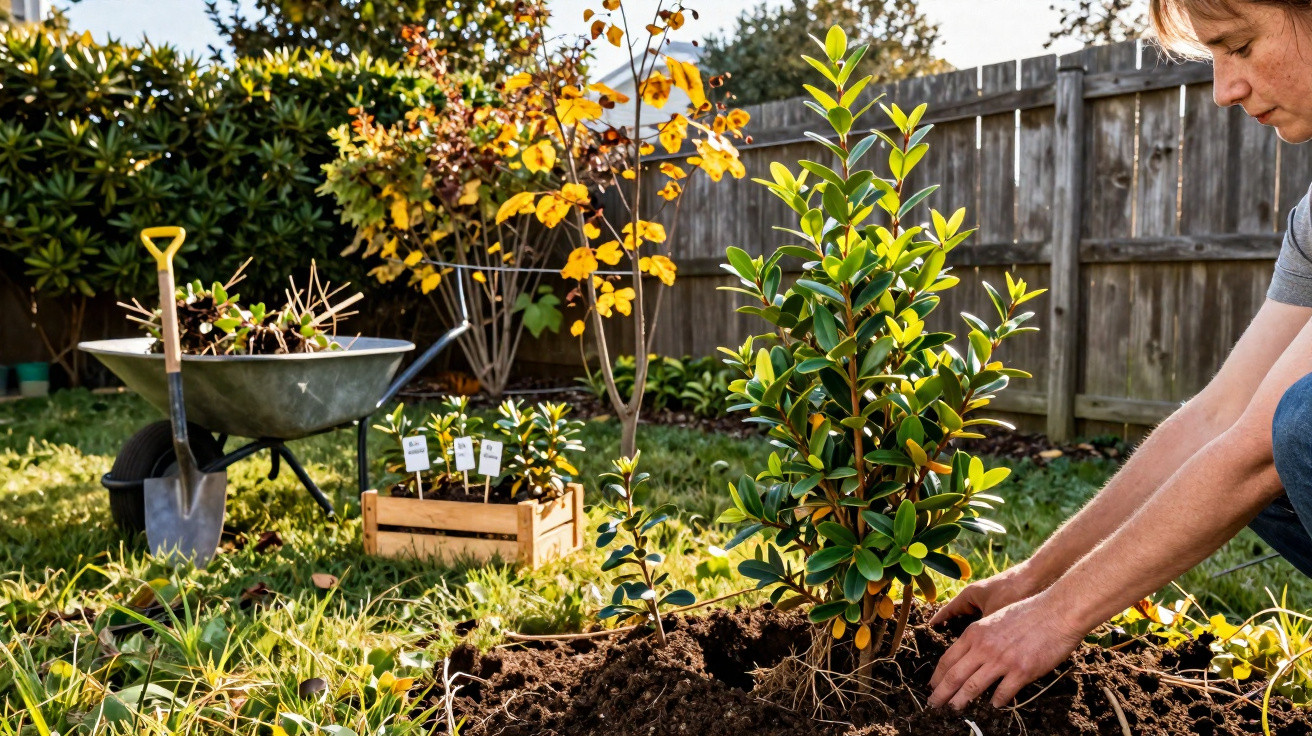
- Dig a planting hole slightly larger than the root ball of the young plant;
- Improve the soil with well-rotted organic compost;
- Place the young plant 20–40 cm away from the wall;
- Fit wires, a trellis or mesh before more vigorous growth begins;
- Water regularly during the first few weeks, then gradually reduce watering.
How should climbing plant branches be trained and secured without harming the wall?
Careful training of the shoots is vital if the wall is to become an orderly “green curtain”, rather than a tangle that is difficult to manage. Discreet supports are best, including tensioned wires, hooks, or wooden or metal trellises, secured at a small number of well-spaced points.
As the climber grows, its main shoots should be directed and loosely tied using strips of flexible material, preventing them from being constricted. Stems should also be kept away from pipes, gutters and windows. Spreading the weight evenly and maintaining good airflow between the foliage and the brickwork surface are equally important.
How can pruning keep growth balanced over time?
Regular pruning controls vigorous growth, refreshes the foliage and may encourage further flowering throughout the year. Light trimming is usually carried out frequently, while more severe pruning is best saved for immediately after a heavy flowering cycle. This helps retain both the plant’s appearance and its health.
Useful maintenance tasks include removing dry or diseased shoots, shortening excessively long tips approaching roofs or electrical wiring, and opening “windows” in the vegetation to let in light and air. Periodically inspecting both the base of the plant and the wall surface makes it possible to spot dampness or older cracks, helping to maintain a long-lasting, attractive flowering screen that complements the architecture without causing structural damage.

Comments
No comments yet. Be the first to comment!
Leave a Comment