
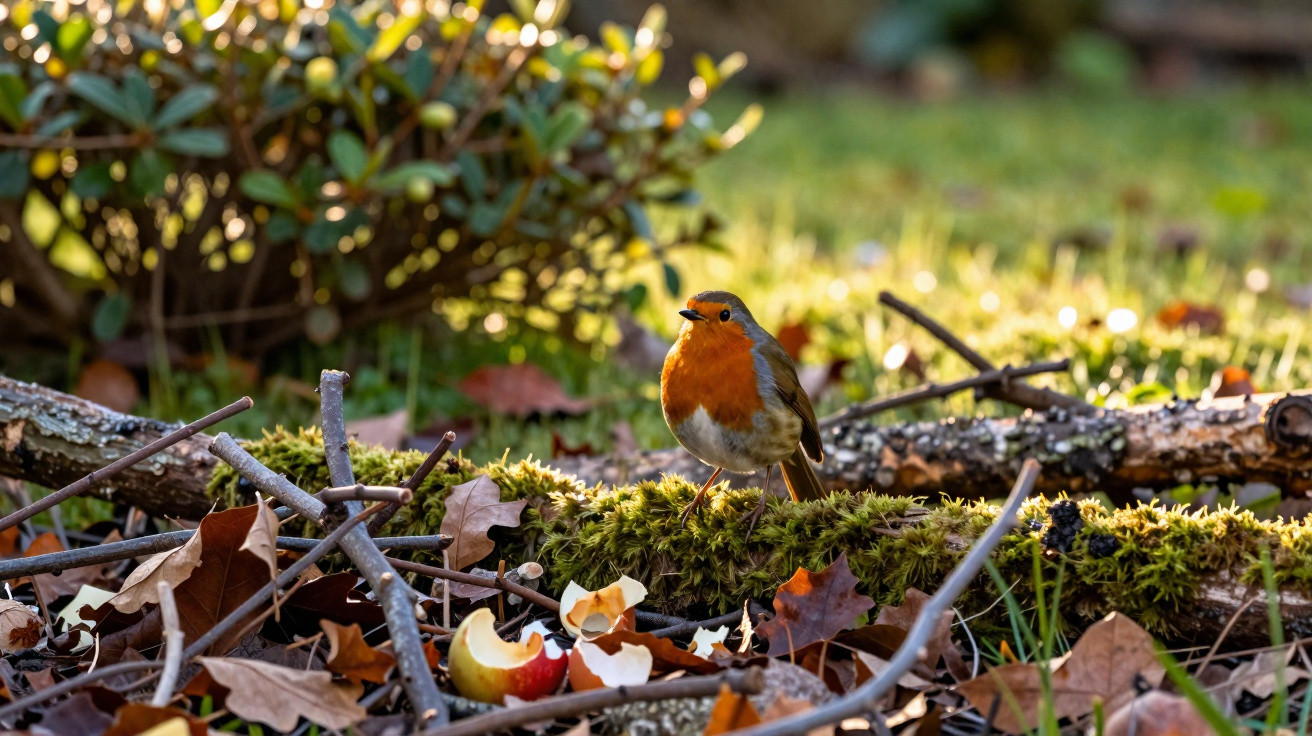
Many amateur gardeners put up bird feeders, buy costly seed mixes and wait for the first visitor. Yet the robin still does not appear. The answer is not on the feeder perch but down on the ground – precisely where most people tidy far too thoroughly.
Why robins do not come to your bird feeder
Robins seem confiding, sometimes perching only a few metres from people and following gardeners as they dig. Even so, they are not as easy to encourage into a garden as many assume.
The main reason is simple: this delicate bird is not a typical seed-eater. It forages chiefly on the ground, and its diet consists almost entirely of small creatures.
“Around ninety per cent of a robin’s food is found directly on the ground – not in a bird feeder.”
Its usual prey includes:
- Earthworms and larvae in loose soil
- Woodlice, millipedes and other small creatures living in leaf litter
- Spiders, ants and small beetles
- Slugs and their eggs
- Caterpillars and other insect larvae
Especially in spring, when there are young in the nest, robins feed almost exclusively on animal-based food. Seeds barely matter at this time. A garden with only neat lawns and carefully raked beds may look smart, but it offers little hunting ground.
The overlooked hotspot: what needs to happen beneath shrubs
The robin’s real stage lies in partial shade, beneath hedges, shrubs and dense bushes. It feels protected there and can find food – provided you allow the area to do its work undisturbed.
The key is to create a small woodland-like zone on the ground beneath woody plants. This is exactly what is missing from many gardens because fallen leaves and dead twigs are removed so relentlessly.
“A loose layer of leaves and dead wood roughly ten to fifteen centimetres deep turns the base of a shrub into a natural buffet.”
A great deal takes place within this layer:
- Fungi and bacteria break down the organic matter.
- Moisture remains in the soil for longer, even after dry days.
- Tiny organisms settle and multiply.
- Worms, spiders and larvae follow – precisely the prey robins seek.
A partly shaded, sheltered spot near dense branches is ideal, as the bird can retreat into them when threatened. It avoids exposed, bare areas, where it is too visible to predators, particularly cats.
How to create a robin strip in your garden
Step 1: Move leaves purposefully instead of disposing of them
Do not strip your garden bare in autumn and winter. Rake leaves from lawns and paths towards the base of shrubs and hedges, creating a light, airy bank there. Footprints do not matter, but avoid compacting the layer completely.
Air must be able to reach the leaves. Only then can decomposition work properly and the tiny organisms remain active. A slightly untidy appearance is part of the approach – it may look wilder, but that is exactly the structure a robin is looking for.
Step 2: Add dead wood as extra habitat
Place a few thin branches, old twigs or small pieces of wood in this area. They do not need to be arranged decoratively. It is enough for the wood to lie partly on the ground and decay slowly.
Moisture and micro-organisms gather in the crevices and where the wood touches the soil. Woodlice, spiders and worms will later hide there, making perfect prey. Pale wood that has not yet become fully rotten works just as well as pieces that are already partly decayed.
Step 3: Attract microfauna with kitchen scraps
Anyone wishing to speed up the process can work a small amount of untreated fruit and vegetable waste lightly into the leaf layer. Suitable examples include:
- Apple cores
- Pear peel
- Vegetable peelings without salt or seasoning
These scraps quickly attract bacteria and fungi, which in turn draw in insects and other small animals. Use only small quantities, however, so that nothing smells unpleasant or attracts rats.
What you should stop doing from spring onwards
Many well-meant garden-maintenance tasks destroy the very structures a robin needs. Three common mistakes recur repeatedly:
- Blowing away leaves: Leaf blowers remove the entire protective layer, including its small creatures. The bird is left with empty ground.
- Cutting hedges too sparsely: Hedges trimmed too short and hollowed out provide no visual cover. Robins feel unsafe there.
- Raking soil completely bare: Uncovered soil dries out quickly, causing tiny organisms to move away or die.
Leave the prepared area undisturbed at least until midsummer. Do not weed aggressively or dig deeply into the leaf layer. If you dig or tend beds elsewhere in the garden, always leave one corner untouched – ideally close to shrubs.
Extra support: water, winter food and safe refuges
Although the ground habitat plays the leading role, a few additions can make the garden even more appealing.
- Shallow water dish: Put a dish directly on the ground near a bush or wall. The bird can drink there and fly away quickly if danger arises.
- Targeted winter food: During the cold season, fat balls and hulled sunflower seeds can help it survive. In spring, natural hunting can take over again.
- Nest box: A simple box with a wide opening, positioned two to three metres high in a quiet place, may be used – especially where the ground below is already rich in prey.
Make sure cats cannot easily reach these areas. Thorny shrubs, dense vegetation or a gap from fences can help reduce the risk.
Why the robin is a valuable garden helper
Providing a suitable environment for a robin brings more than a pleasant sight. The bird controls numerous creatures that may damage plants, including caterpillars, slugs and certain beetle larvae.
“A single robin household consumes thousands of insects and larvae while raising its young.”
In wildlife-friendly gardens, it can partly replace chemical pest-control products. Its song in the early morning and evening also gives many people a sense of calm. Robins react sensitively to disturbance, noise and constant intervention. Anyone who wants to keep one visiting regularly therefore needs not only food, but also a more relaxed approach to garden care.
What terms such as “wild mulch” really mean
The unfamiliar sight of a shrub base covered with leaves may lead some visitors to think the garden has been neglected. In reality, it is a functioning natural cycle.
The leaves act as natural mulch: they protect the soil from drying out, feed soil life and make fertiliser largely unnecessary. Shrubs repay this with steadier growth and greater resilience during hot spells. The robin merely makes use of this structure – it is created first and foremost for the soil.
If you wish, you can mark out this area deliberately, perhaps with a small wooden edging or a row of stones. What may seem like chaos then becomes a recognisable, intentional zone for wildlife – and for the small red-breasted bird that may be singing regularly in your garden as soon as next spring.
Comments
No comments yet. Be the first to comment!
Leave a Comment