
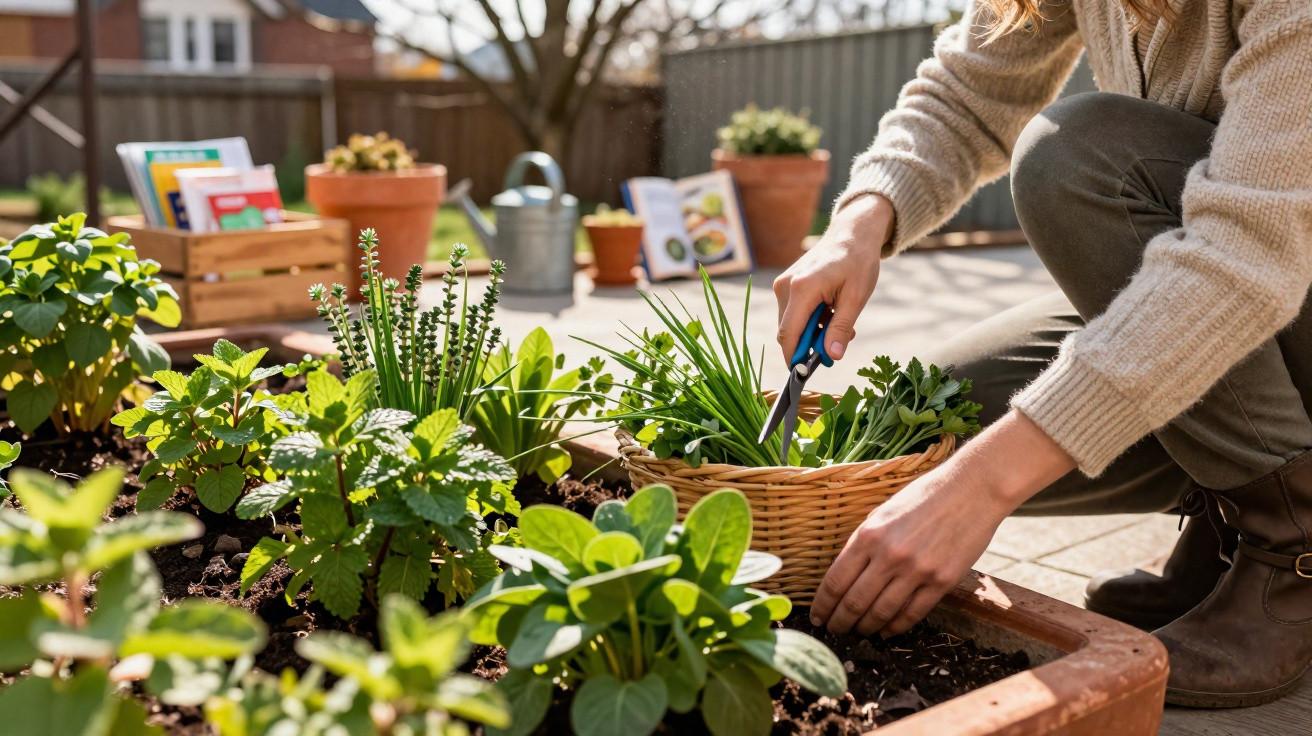
While many amateur gardeners are impatiently looking ahead to spring and sitting at the kitchen table with seed catalogues, nature is already at work behind the scenes. Choosing the right herbs now means you can avoid the tiresome task of raising plants on the windowsill – while still having fresh flavours on your plate early in the year.
Why now is the ideal time for perennial herbs
Most people associate herbs with summer: basil in a pot, parsley in a window box, mint for iced tea. Hardly anyone considers new planting projects in January or February. Yet perennial and long-lived herbs offer a major advantage: they begin the season on their own, well before annual vegetables have even germinated.
“Those who rely on perennial herbs save time, money and hassle every year – yet still harvest earlier than their neighbours.”
These plants have strong roots or rhizomes where they store energy. Although their visible growth often disappears completely in winter, life beneath the ground remains active. As soon as the days become noticeably longer and temperatures rise a few degrees above freezing, they send new shoots upwards.
The seven herbs that return almost by themselves
The focus is on seven hardy classics that are already established in many gardens – but are often underestimated. Plan for them deliberately and you will have a green foundation of fresh produce on your doorstep from late winter onwards.
Chives: one of the earliest signs of colour
Chives are among the first splashes of colour in the year. Their slender, hollow leaves often push through the last remnants of snow. They prefer a bright spot that does not dry out too much, and retain their flavour for longest when cut regularly.
- Position: full sun to partial shade
- Soil: loose, humus-rich and evenly moist
- Uses: on bread, in scrambled eggs, with potatoes or in soft cheese
Once well established, chives form dense clumps that can be divided every few years. This makes it easy to move them from a bed to a herb planter, the balcony or the edge of a vegetable patch.
Sorrel: the secret weapon for freshness in winter meals
Sorrel adds a delicate, lemony sharpness. Its young leaves in February or March taste considerably milder than the larger leaves of summer, and work particularly well in omelettes, creamy soups or alongside fish.
Plant it in partial shade and you can harvest for many years. In a spot that is too sunny, the leaves soon become tough and intensely tart. Important: do not eat it in huge quantities because of the oxalic acid it contains – it is ideal as a seasoning herb.
Parsley: biennial, but with an extra advantage
Parsley is considered a biennial, but after mild winters it often starts growing again very early in the year if it was planted out the previous year. Curly-leaved varieties in particular cope well with cold conditions.
During its second year, parsley eventually flowers and loses flavour. Until then, however, it produces plenty of leaves while supermarkets are still relying on imported produce. With careful planning, add new plants every year and bridge this “gap” without difficulty.
Mint: the expert at spreading
Above ground, mint almost disappears entirely in autumn. Beneath the soil, though, it leaves behind a dense network of rhizomes. It shoots vigorously during the first mild spells – sometimes so vigorously that it crowds out other plants.
This is why many gardeners grow mint in a large pot or within a buried root barrier. There, it reliably provides flavour for tea, desserts, salads or Middle Eastern dishes – from early spring until late autumn.
Thyme: a miniature Mediterranean powerhouse
Thyme is a small but remarkable survivor. It often keeps its foliage through winter and can add flavour to stews or roasted vegetables even in January. The essential condition is free-draining, relatively poor soil that does not allow waterlogging.
Thyme loves sunshine and warmth, yet handles frost well provided its roots are not sitting in water. In wildlife-friendly gardens, bees and solitary bees also value it when it flowers abundantly in spring and summer.
Oregano: pizza flavour straight from the bed
Oregano, sometimes known as wild marjoram, is one of the herbs that springs back with full vigour after a hard cutback in autumn or late winter. Its leaves are rich in essential oils and suit anything intended to taste Mediterranean: tomato sauces, baked potatoes and grilled meat.
Like thyme, oregano prefers a fairly dry, sunny position. In soil that is too rich in nutrients, it may grow lushly but often loses flavour.
Tarragon: delicate in winter, bold in flavour
Tarragon retreats substantially in winter and may appear to have vanished completely above ground. In spring, it regrows from the base of the roots, producing subtle aniseed-like notes – perfect for sauces, chicken and fish dishes.
French tarragon has more flavour but is more sensitive to cold, while Russian tarragon is tougher but somewhat milder. To keep it in a bed for years, choose a sheltered, slightly warm site and apply a light mulch in late autumn.
How these herbs work with very little effort from you
The real magic of these plants lies in their growth cycle. While annual herbs must be sown and pricked out afresh every year, perennial types simply switch into energy-saving mode.
“The plants store nutrients in roots and rhizomes, recharge throughout summer and draw on those reserves in winter – entirely without human help.”
As daylight increases, an internal signal prompts them to begin again. Within only a few weeks, what seemed to be a dead root clump becomes a vigorous bush. The most important task for gardeners is to clear away old leaves, cut back dead stems and allow light and air to reach the centre of the plant.
A brief garden walk on frost-free days in January or February can provide targeted support for this process. A clean cut and a little compost around the plant are often all that is needed.
Planting tips: turn one season into a lasting supply
If you do not yet have the seven herbs in your garden, there is no need to wait until high summer. Many garden centres stock small pots early in the year, and these can be planted on frost-free days.
| Herb | Recommended planting time | Special tip |
|---|---|---|
| Chives | Spring to autumn | Divide every 3–4 years to keep them vigorous |
| Sorrel | Spring | Choose partial shade, otherwise the flavour quickly becomes too strong |
| Parsley | Spring, with replacement planting in summer | Add new plants every year for an uninterrupted harvest |
| Mint | Spring to summer | Plant in a pot or with a root barrier |
| Thyme | Spring | Prefers poor, sandy soil |
| Oregano | Spring | Cut back regularly to keep it bushy |
| Tarragon | Spring | Winter protection is useful in severe frost |
Before planting, it is important to loosen the soil and remove large stones or compacted layers. Work in a little compost, water the plants in, and that is it. Many of these herbs even manage with relatively few nutrients, and overfeeding them can make their flavour rather bland.
How herbs rescue winter cooking
In late winter, tubers, root vegetables and cabbage usually dominate the menu. This is exactly where fresh herbs show their strength: they bring colour, fragrance and lightness to dishes that might otherwise feel heavy.
- Chives over baked potatoes or lentil stew
- Finely sliced sorrel in a creamy potato soup
- Parsley as the final fresh element on stews
- Thyme and oregano in braised dishes or tomato sauces
- Mint in hot tea or as a lift in fruit salad
- Tarragon in mustard sauces, with chicken or fish
Once you become used to stepping into the garden or onto the balcony while cooking, you quickly notice that many dishes need less salt and ready-made seasoning when fresh herbs are involved.
Sustainable benefits: less plastic, less transport, more enjoyment
There is another advantage: every bunch of herbs from your own bed replaces plastic packaging from the supermarket. Transport distances are shorter too – limited to the route from the front door to the garden bed.
Over time, perennial herbs also reduce costs. Once you have planted a hardy thyme plant or a strong clump of chives, you can use it for years and even share divisions with friends. Gradually, this creates a small network of plants that supplies many households with little effort.
Common beginner mistakes – and better ways to avoid them
Typical difficulties in a herb garden are easy to prevent. Many people fail because they plant Mediterranean species such as thyme or oregano in heavy soil that stays constantly wet. The result is rot, weak growth and sudden losses in winter.
A few straightforward rules of thumb will help:
- Avoid wet ground in winter; create slightly raised beds instead.
- Always keep mint under control – otherwise it will spread everywhere.
- Do not fertilise too heavily, or the flavour will be lost.
- Harvest regularly so plants stay dense and young.
Follow these principles and, over time, you will build up a dependable herb supply that withstands even harsh winters.
Why it is worth looking around the winter garden now
A walk through the garden today may reveal only brown stems and soggy beds. Among them, however, there are often small green tips that become apparent on closer inspection. Many belong to precisely the herbs that will remain for years if given the chance.
A short walk around the garden, a list of the plants already there and a few targeted new purchases are all it takes to turn a static winter garden into a system that works almost by itself. The reward arrives on the first mild days: fresh leaves, an intense fragrance and a hint of spring on the plate, long before tomato plants are even ready to be planted out.

Comments
No comments yet. Be the first to comment!
Leave a Comment