
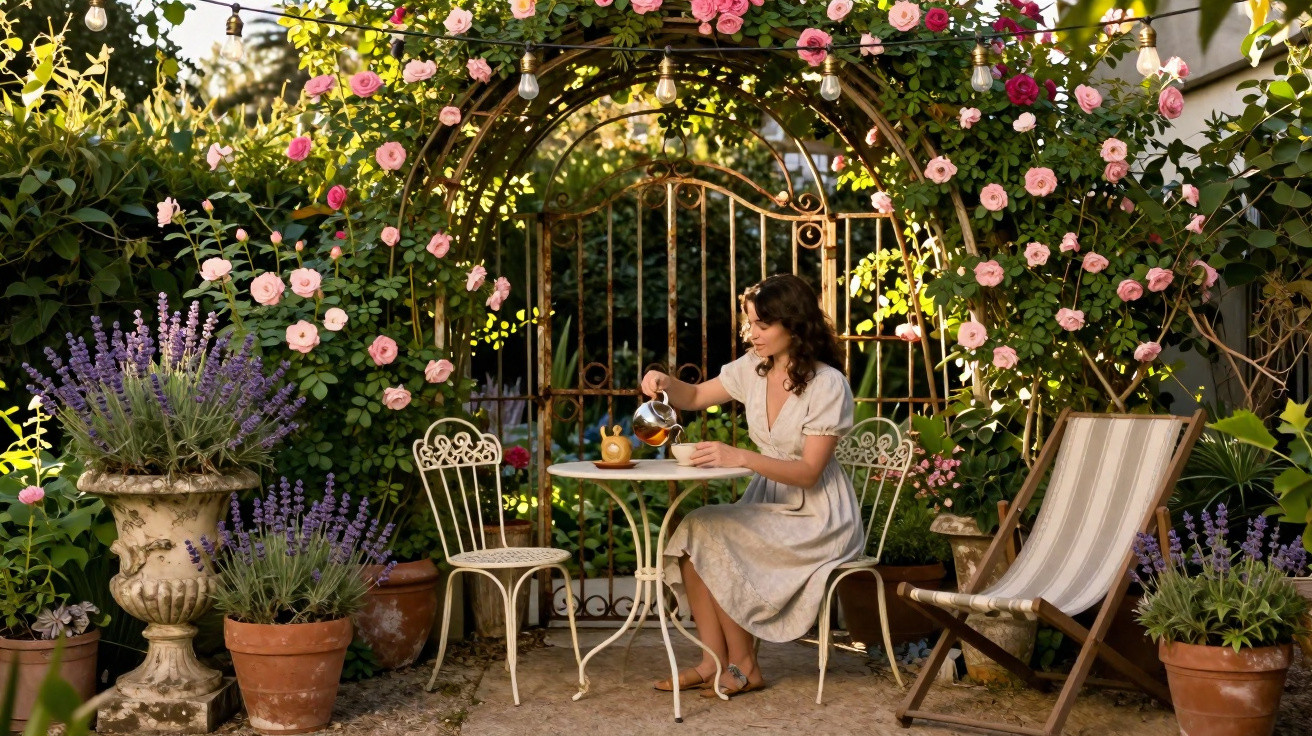
More and more people furnishing a terrace or balcony are turning away from brand-new plastic furniture. Instead, second-hand garden furniture, weathered pots and old metal structures are finding their way into outdoor spaces. They add history, character and, above all, the sense that this garden has always looked exactly this way.
Why the second-hand look is suddenly making gardens so appealing
Many people have long styled their living rooms with care using vintage pieces. Now this approach is moving outdoors. Exterior areas are increasingly viewed as an extension of the home rather than a place to store the barbecue, wheelie bins and folding chairs.
“The trend is moving away from interchangeable sets and towards pieces with visible age, signs of use and a story of their own.”
A used chair with a few marks, a rusty lantern or a terracotta pot edged with moss feels full of life. These items suggest that people genuinely live here, rather than merely displaying a catalogue set. This approach is especially well suited to the garden, where plants grow slowly and become more beautiful over the years.
1. Old outdoor lights: patina instead of plastic lamps
Good lighting determines whether a terrace feels welcoming in the evening or resembles a car park. Rather than choosing uniform modern fittings, people are increasingly looking for pre-owned lights from earlier decades.
Popular choices include:
- brass lanterns from the 1960s and 1970s
- pendant lights with frosted glass above the garden table
- wall lights with visible patina on the house wall or shed
These pieces can be found at flea markets, house-clearance sales and on online platforms. Their advantage is that they do not look sterile; they blend into their surroundings as though they had always been hanging there.
“One distinctive light fitting can visually transform a simple balcony into a small outdoor lounge.”
Checking the electrics is essential. Old lamp holders and wiring should be inspected by professionals or replaced entirely. This retains the historic appearance while bringing the technical elements up to current safety standards.
2. Terracotta pots and old urns: the more weathered, the better
Few objects represent the Brocante garden style as strongly as the simple clay pot. Perfectly smooth surfaces are secondary; scratches, mineral deposits, small chips and moss are what people want.
Large containers create the greatest impact. They give structure to a courtyard or garden, frame entrances and link the terrace to the planted area. Particularly effective options include:
- substantial terracotta urns beside the front door
- several pots of differing heights grouped at the terrace edge
- one especially large planter as a focal point in a garden corner
With a little luck, flea markets offer pieces marked by visible lime deposits or cushions of moss. It is precisely these traces that add depth. New clay pots can be aged visually with mineral-rich water, a shaded position and a little patience.
How to display vintage pots effectively
Thoughtful placement helps the containers make an impact:
- Avoid combining too many different shapes in a small area.
- Instead, create a harmonious group of three to five pieces.
- At least one pot should be noticeably larger than the others.
- Choose plants that suit the aged appearance, such as olive trees, lavender, rosemary or hydrangeas.
3. Wrought iron: from garden gates to pergolas
Wrought-iron garden furniture is familiar, but the trend now extends much further. Old gates, climbing arches and metal pergolas are enjoying a genuine revival.
They are not only decorative; they also create entirely new garden zones. An old arch covered in climbing roses signals the transition from the terrace to the vegetable patch. A metal pergola casts delicate shadows and frames a seating area. A vintage garden gate in the fence separates the ornamental front garden from the productive area behind.
“Many of these pieces were once made using high-quality techniques and last for decades, often far longer than today’s mass-produced goods.”
Light surface rust is part of their character. A wire brush, some rust protection and fresh paint can improve many finds without destroying their charm. Those who prefer a rusty finish should intervene only in selected places and focus primarily on stability.
4. Classic metal garden furniture: retro charm for coffee time
Standard plastic chairs are also losing ground when it comes to tables and seating. Metal sets, often featuring decorative detailing, are taking their place. Round tables with matching bistro-style chairs and curved seating sets in a country-house style are particularly sought after.
Typical advantages of this furniture include:
| Feature | Benefit in the garden |
|---|---|
| High stability | Often withstands wind and weather for decades |
| Delicate patterns | Feels light and elegant, even on a small balcony |
| Patina | Makes the furniture appear established rather than newly placed |
Flea-market finds can look rather worn at first glance. However, a metal brush, sandpaper and a fresh coat of paint can quickly turn them into a new favourite piece. Seat cushions provide extra comfort while adding accents of colour.
5. Vintage seating: from rocking chairs to wooden loungers
Distinctive seating creates perhaps the strongest change of atmosphere in an outdoor area. An old rocking chair on the veranda, a rattan armchair in partial shade or a folding wooden lounger from the 1970s can turn a simple space into a retreat.
“It is the small irregularities in particular – slightly faded fabric, worn armrests – that create this relaxed holiday feeling in everyday life.”
Popular examples include:
- wooden rocking chairs by the entrance, on the veranda or in a conservatory
- rattan armchairs with thick cushions in a sheltered corner
- wooden loungers with striped pads in the style of old seaside resorts
Second-hand, such pieces cost considerably less than new furniture from a designer shop. Anyone who checks for sturdy frames and intact joints can replace upholstery, re-oil the wood and adapt the furniture to their own style with only a few simple steps.
Creating the Brocante look in your own garden
A huge park is not needed to achieve this style. Even a city balcony can be completely transformed with two or three carefully selected pieces. A clear direction is crucial: it is better to choose a few characterful objects than create a chaotic assortment.
Useful questions include:
- Where should the eye be drawn first on entering the garden?
- Which area is best suited to becoming the main comfortable seating spot?
- Which corners can deliberately look old and slightly wild?
Starting with a single find, such as a distinctive lantern or a striking pot, quickly reveals how the overall impression changes. Further elements can then be added gradually, matching both the look and atmosphere already established.
Practical advice on care, safety and combining with plants
Second-hand pieces need some attention. Metal items should be checked regularly for rust, sharp edges and loose connections. Wooden furniture benefits from a protective stain or oil so that it does not weather unnecessarily quickly. Pots with cracks are best placed in low-risk locations or used purely as decorative features.
Combined with plants, the Brocante style has its fullest effect. Climbing roses, clematis and vine shoots pick up metal structures and weave them into the garden. Fragrant herbs and flowers soften more formal shapes. Even a simple concrete exit can become a romantic corner with just a few touches.
Anyone who already enjoys visiting markets or browsing second-hand listings will find an ideal playground in this trend. Every find tells its own story, and these stories are exactly what make this new garden style so appealing. In place of a uniform catalogue look, the result is an outdoor area that genuinely reflects the residents’ personality and becomes more interesting over the years.
Comments
No comments yet. Be the first to comment!
Leave a Comment