
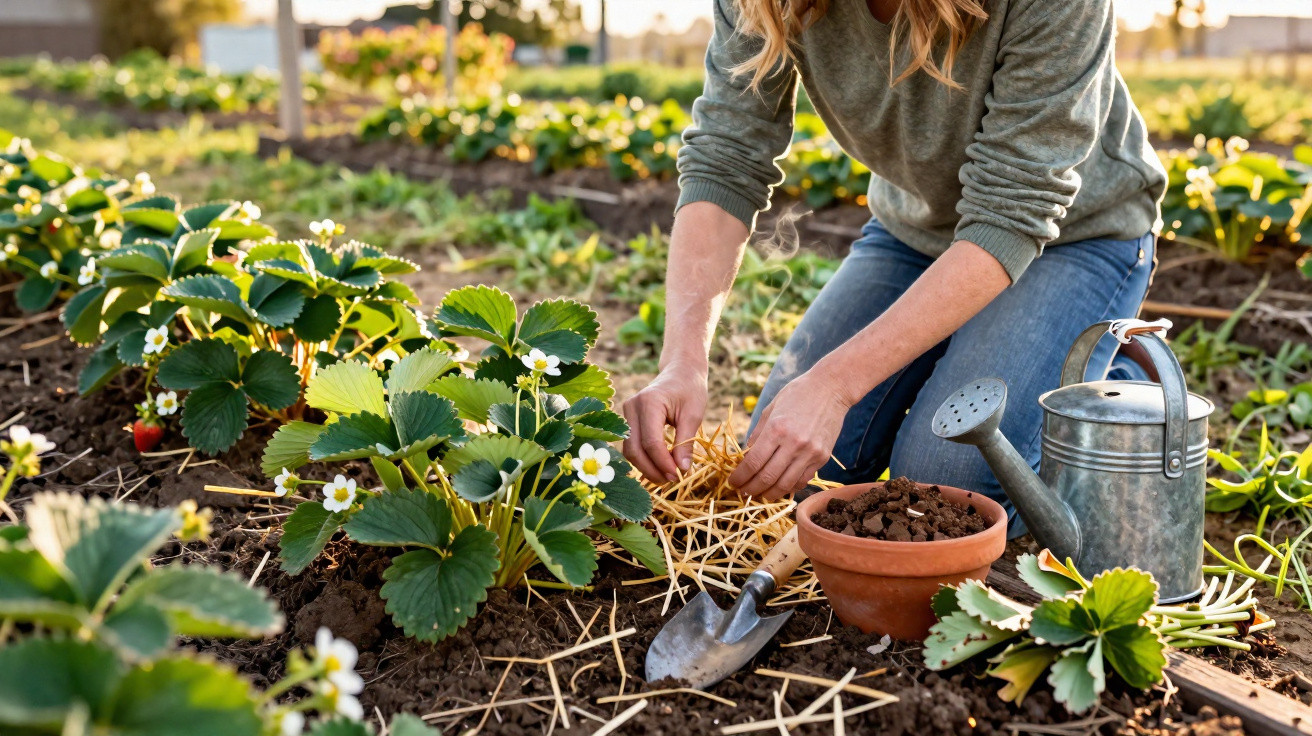
After winter, everything in the strawberry bed can still look rather tired. Days are getting longer, yet the soil is often cold and compacted. This is precisely the point at which the difference is made between a handful of scattered fruits and dense rows of plump, red strawberries. A targeted spring treatment before April can turn strawberry plants into remarkably productive fruit providers.
The right time: why the period before April matters so much
Strawberry plants begin their season early. Long before many home gardeners consider watering or feeding them, the centre of each plant is already forming the foundation for flowers and, in turn, the later crop. Supporting the plants at this stage strengthens that very process.
- Plants can direct their energy into fresh, healthy growth.
- The soil can still be loosened and improved easily.
- Weeds have not yet become fully established, so they are simpler to control.
The key is a combination of thorough pruning, soil care and smart protection around the roots - all completed before the first flowers emerge.
Spring clean for the bed: old leaves need to go
Following a wet, cold winter, many strawberry plants look worse for wear, with brown leaves, spotted remnants and soft, soggy leaf stalks. This does not merely slow growth; it also encourages fungal diseases and pests.
How to prune correctly
- Use sharp, disinfected garden secateurs.
- Remove every brown, dry or spotted leaf close to ground level.
- Cut away any rotten or discoloured leaf stalks as well.
- Make sure the plant’s crown - the small, slightly raised “knob” in the middle - remains uncovered.
“The crown of a strawberry plant is sacred: damaging or covering it risks the entire harvest.”
Once this pruning is done, the bed immediately looks tidier. The plants respond quickly: more light reaches the new buds, while fresh, healthy leaves begin to grow. Many gardeners quite rightly describe this job as a kind of wellness treatment for the bed.
Wake up the soil: loosen, feed and revitalise it
Rain and snow compact the top layer of soil during winter. Fine strawberry roots then have to contend with a hard crust, making it more difficult for water and nutrients to reach the plants.
Loosen gently rather than digging over
A small hand cultivator or garden fork is all that is needed to lightly break up the soil between the plants.
- Work only 3–5 cm deep so the shallow roots are not damaged.
- Carefully break up clods without disrupting the rows of plants.
- Remove larger stones and old plant debris.
This soil care allows air, water and beneficial soil organisms to penetrate more easily. That is exactly what strawberries need for strong growth.
Compost: the “black treasure” for sweet fruit
Feed the plants immediately after loosening the soil. Well-rotted compost is ideal: it should no longer have a strong smell and should crumble easily in your hand.
- Apply a thin layer of compost around each plant.
- Work the compost lightly into the upper soil layer.
- Keep the plant’s crown clear to prevent rot.
If you do not have homemade compost, use high-quality planting compost or an organic fertiliser for soft fruit. Bone meal, guano or a specialist organic product for berry bushes can also supply the necessary nutrients.
“Well-fed strawberries do not simply produce more fruit - they also taste fuller and more aromatic.”
The crucial step: mulch at the right time
The one technique that can transform ordinary plants into genuine fruit-producing machines is mulch. This protective layer sits around the strawberry plants like a natural bed and should ideally be applied by the end of March.
Which material is suitable?
- Dried straw (the classic choice for a strawberry bed)
- Flax or hemp shives
- Fine woodchip made from untreated material
The important thing is for the material to stay loose and allow water through. Grass clippings should be used only in a thin layer and once they have dried slightly; otherwise, they will rot.
How to apply mulch properly
- Place mulch 3–5 cm deep around every plant.
- Leave a small clear gap directly around the plant crown.
- Fill generously between rows, where weeds would otherwise appear.
“Mulch keeps fruit clean, protects it from grey mould and saves many hours of weeding.”
The layer also acts as a natural air-conditioning system: soil retains moisture longer in summer and does not heat up as intensely. This is particularly valuable during hot spells, helping to protect both yield and flavour.
Watering strawberry plants correctly: moisture yes, waterlogging no
Strawberry plants thrive in fresh, lightly moist soil, but they do not tolerate “wet feet”. Overwatering washes nutrients away and encourages fungal diseases.
The simple finger test
- Push a finger into the soil beneath the mulch.
- If the soil is still moist at a depth of around 3 cm, do not water.
- If it feels dry and crumbly, the bed needs water.
Collected rainwater is ideal. It is low in limescale and is usually at a pleasant temperature. Cold tap water straight from the tap places unnecessary stress on the roots.
Final check before flowering: are your plants ready?
Before the first white or pale pink flowers open, take a quick walk through the bed and check the following:
- Have all old, diseased leaves been removed?
- Is the plant crown clear and well ventilated?
- Is the mulch spread evenly without covering the plants?
- Does the soil beneath it look loose and crumbly rather than muddy?
“Anyone who ticks off this list before April is setting the course for a noticeably larger, healthier strawberry harvest.”
Why this effort pays off several times over
This spring treatment may take one to two hours in a small bed, but its benefits last throughout the gardening season. Diseases spread less readily, fewer fruits end up lying in the dirt, and weeds remain manageable.
Experienced home gardeners report that, after this treatment, they often fill considerably more punnets without needing to experiment with additional fertilisers later in summer. Acting early therefore saves work, frustration and costly specialist products.
A few extra tips for maximum strawberry power
- Replace old, heavily exhausted plants after three to four years.
- Use runners deliberately to produce young, vigorous plants.
- Do not plant strawberries directly beside hungry crops such as cabbage.
- Sprinkle a little rock dust between the rows from time to time to strengthen the plants.
If there are children in the household, the spring pruning and mulching routine is an excellent activity to do together. The work is simple, while the reward later on, when picking and tasting the fruit, is all the greater. Step by step, this creates a bed that can look almost like a small strawberry plantation in summer - only right outside your own front door.
Comments
No comments yet. Be the first to comment!
Leave a Comment