
Growing the same varieties every year means missing a genuine insider tip for home gardeners. A hardy fruit tree from Asia produces juicy, crisp fruit, needs little attention and draws surprised looks from people passing the garden fence in summer. It is time to take a closer look at this unusual tree.
A fruit tree that looks like an apple and tastes like a pear
What makes the Nashi so exciting in the garden
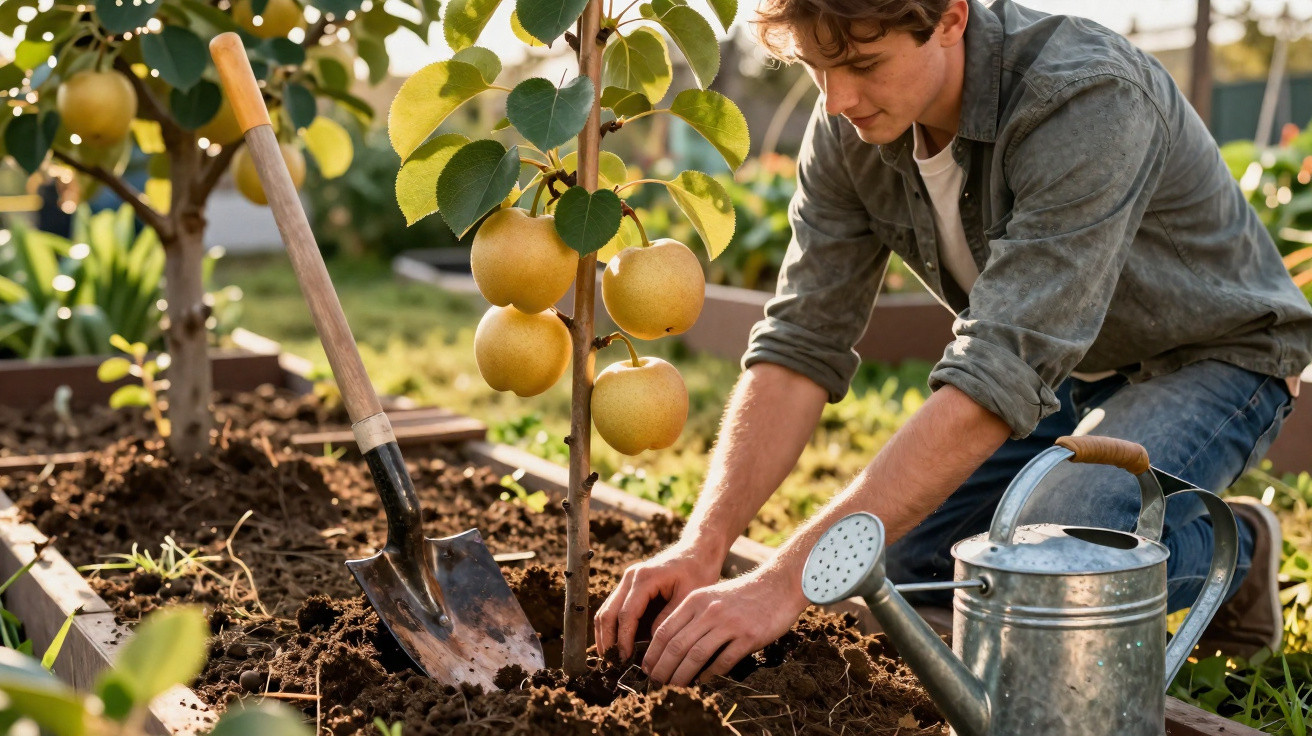
The star of the story is the Nashi, often called an apple pear in the UK. Its fruits are as round as apples, with smooth skins ranging from yellowish to bronze, and look rather unremarkable in a fruit bowl. The real surprise comes with the first bite.
Its texture is reminiscent of a crisp apple, while its flavour is distinctly pear-like: gentle, sweet, extremely juicy and wonderfully refreshing. On hot late-summer days, one of these fruits can feel almost like a natural thirst quencher.
“The Nashi combines the best of two worlds: crisp like an apple, aromatic and juicy like a pear.”
It also scores highly as an ornamental tree. In spring, it is covered in numerous white blossoms; in summer, it carries an abundance of round fruits ripening to golden yellow or copper, depending on the variety. Anyone wanting more variety than the traditional orchard can make an excellent choice with this tree.
Hardy, frost-tolerant and ideal for small gardens
Nashi trees are considered tough and cold-tolerant. Many varieties cope with German winters without difficulty, provided the location is suitable. For smaller plots, low-vigour rootstocks and espalier forms are available, both of which can be trained effectively against house walls. This exotic tree can therefore fit even into a terraced-house garden.
The perfect position: plenty of sun and controlled watering
Why light determines the sweetness of the fruit
To get the very best from the tree, give it a spot in full sun. The more light its canopy receives, the more fully the fruit’s sweetness and aroma can develop. Partial shade can soon result in watery, bland Nashi fruits, which would be a waste of their potential.
A well-aired position is also ideal, allowing the canopy to dry quickly after rain. This reduces the risk of fungal diseases from the outset.
Soil: loose, free-draining and still rich in nutrients
Nashi roots are sensitive to waterlogging. Heavy soils that remain wet can restrict growth and damage the roots. If your garden has clay soil, incorporate plenty of sand or fine gravel when planting. Compost will provide nutrients at the same time as creating a more open soil structure.
“Rule of thumb: soil in which rainwater drains away quickly is usually suitable for Nashi too.”
Simply inspect the ground after a heavy shower. If water remains in the planting hole for a long time, the soil must be improved or a slightly raised position selected, such as a gentle mound bed.
How to plant a Nashi in spring, step by step
Why late March is an ideal planting window
The best time to plant is around the end of March. The soil has already warmed slightly, the risk of frost is declining, and the tree can establish a new root system before summer heat arrives.
Planting too early can expose young shoots to frost damage. Starting too late puts the tree under pressure, as it must grow, flower and produce new roots all at once.
The planting hole: larger is better than smaller
Planting is straightforward when a few basic principles are followed:
- Dig a planting hole roughly twice as wide and deep as the root ball.
- Use a spade to loosen compacted soil around the sides of the hole.
- Mix the excavated soil with compost and, for heavy ground, sand.
- Set the tree in place so that the top of the root ball sits level with the surrounding soil.
The graft union, the slight swelling above the roots, should remain visible a few centimetres above ground level. Burying it can cause problems for the tree later on.
Securing the tree: a stake prevents wind damage
Newly planted fruit trees can rock back and forth in the soil in windy weather. This tears delicate new roots and delays establishment. A sturdy stake solves the problem.
Drive the stake into the hole before backfilling it, so the roots are not damaged. Attach the trunk loosely with a wide, soft tie in a figure-of-eight knot, giving it support without constricting it. After two to three years, once the tree is firmly rooted, the support can usually be removed.
Without a partner, the tree will produce almost no fruit
Why a Nashi should not stand alone in the garden
One important point is often overlooked: many Nashi varieties are not self-fertile. They may flower profusely, but they will set only a small number of fruits if there is no suitable pollination partner nearby. For abundant crops, the tree needs pollen from another variety.
“Anyone planting just one Nashi will soon be looking at an almost empty canopy in summer.”
Insects, especially bees, carry out the pollination. They travel between trees, transferring pollen from flower to flower. If the appropriate trees are too far apart, this exchange works only to a limited extent.
Suitable pollinators and planting distances
In many cases, a conventional European pear tree nearby is sufficient, such as Williams or another common dessert pear. The key requirement is that their flowering periods overlap, so bees visit both trees at the same time.
As a guide, pollination generally works well within 20 to 30 metres. In closely built-up residential areas, it is worth looking beyond the garden fence: a neighbour’s pear tree may already be able to act as a pollinator.
| Criterion | Recommendation for good crops |
|---|---|
| Pollinator tree | Pear tree with a similar flowering period |
| Distance | No more than a few dozen metres |
| Insects | Bee-friendly planting in the garden |
No water, no start: why the first watering matters
A thorough soak immediately after planting
Once the planting hole has been backfilled, the tree needs a generous amount of water. Around 15 to 20 litres is sensible, even if the soil appears damp or rain is forecast.
This thorough watering flushes out air pockets in the soil and creates close contact between the root ball and the surrounding earth. Only then can the fine root hairs explore new areas and take up nutrients.
Balancing drought stress and waterlogging
During the first few months after planting, keep a close watch on the soil. Cracks in the ground, limp leaves or curled young shoots indicate a lack of water. In that case, give the tree a deep soak rather than frequent tiny amounts.
A thick mulch ring around the base of the trunk acts as a natural protective layer. Bark pieces, grass cuttings or shredded branches retain moisture in the soil for longer, suppress weeds and gradually improve soil structure.
When the first fruits arrive – and what they taste like
Patience pays off
A worthwhile crop can usually be expected after a few years, depending on the initial size of the young tree. In good years, the branches may later carry such a heavy load that a prop beneath a fruiting branch fork becomes necessary.
Depending on the variety, ripe fruits turn yellow to bronze. The ideal moment to harvest is when the skin yields slightly and the stalk comes away with a gentle twisting motion. Nashi fruits picked from the tree taste far better than the imported shop fruit, which is often harvested hard.
Uses in the kitchen and everyday life
The fruits can be eaten straight from the hand, but they also work particularly well:
- as fresh cubes in a fruit salad
- as thin slices in a green salad with nuts
- as a crisp accompaniment to cheese boards
- in Asian-inspired dishes, for example finely grated into marinades
Because of their high water content, they are less suited to traditional preserving as a purée, but they work well as a compote with a little lime and ginger.
What beginners should also know
Pruning, diseases and choosing a variety
Pruning is similar to pruning a pear tree: remove crossing shoots in winter, thin out older branches slightly and develop an open, airy canopy. Many varieties are fairly resistant in the home garden. For prevention, maintain good airflow through the canopy, avoid permanently damp ground and strengthen the tree with compost applications in spring.
When choosing a variety, consider both ripening time and tree size. Early varieties bear fruit in late summer, while later ones ripen closer to autumn. Low-vigour rootstocks are suitable for small plots or espalier forms along a fence.
The Nashi as a way to bring more variety to the orchard
By planting a Nashi tree, a garden owner adds a species to their collection that many neighbours will never have seen growing on a tree of its own. It increases garden diversity, attracts pollinating insects and provides a talking point at the next barbecue.
Anyone already considering planting a new fruit tree can confidently choose an apple pear instead of yet another apple variety. With the right location, a suitable partner tree and some care with watering during the first few months, there is a good chance of soon biting into home-grown, crisp Nashi fruits.

Comments
No comments yet. Be the first to comment!
Leave a Comment