
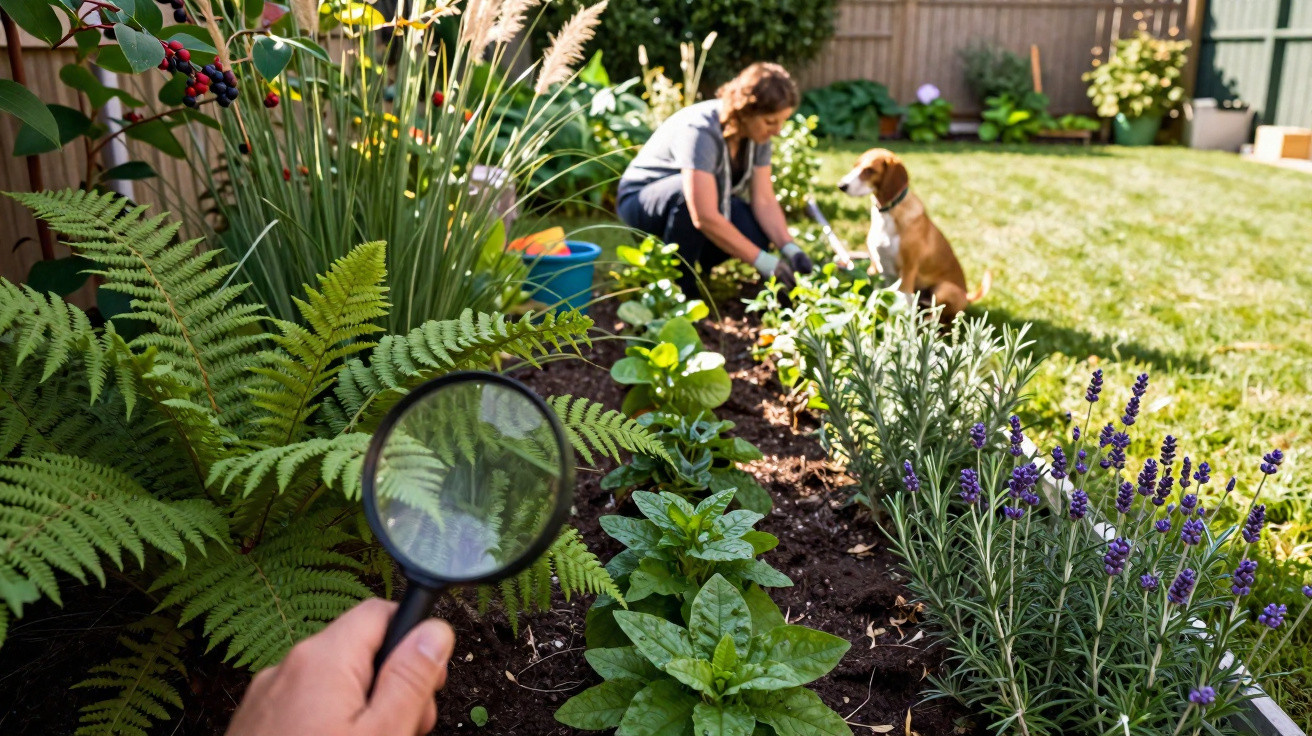
Many keen gardeners enjoy lush greenery, shady spots and wild corners in the lawn. Yet these are precisely the places where a dangerous garden resident may be waiting: the tick. Certain plants and garden features make it especially easy for these arachnids to settle in and wait for their next host, whether a person, child or pet.
Why certain plants practically attract ticks
Ticks do not jump from trees, nor do they fly. Instead, they wait close to the ground or up to around knee height on blades of grass, leaves and twigs. Three conditions matter most to them: moisture, shade and dense vegetation. Many popular garden plants provide exactly this.
"Ticks love dense, damp and shady corners – anything without good air circulation quickly becomes a tick hotspot."
Common high-risk areas in the garden include:
- tall, unmown grass along boundaries and fences
- dense hedges and shrubs
- overgrown corners containing brambles and piles of branches
- tree surrounds beneath fruit trees, where there is plenty of leaf litter and moisture
- log piles, old pallets and shaded areas around sheds
These plants and structures encourage ticks in the garden
It is not that plants themselves draw ticks in like a magnet. However, they create an ideal habitat: cool, shaded and slightly damp. Combined with birds, rodents, hedgehogs or pets that serve as hosts, this creates a perfect location for ticks.
Ferns, wild grasses and tall perennials
Ferns are decorative, thrive in partial shade and grow densely. Moisture remains there for a long time, particularly after rain or heavy watering. The same applies to tall wild grasses and islands of unmown lawn.
- dense leaves and fronds protect ticks from sunlight and drying out
- long stems provide ideal ‘waiting positions’ for the next host
- leaf litter and plant debris often build up beneath ferns and grasses
Leaving these areas directly beside a patio, play area or garden bench effectively brings the tick zone right up to the house.
Dense shrubs, hedges and brambles
Shrubs with many branches are also popular with ticks. These include dark-leaved ornamental shrubs, heavily branched hedges and bramble thickets. Their lower sections are often damp, dark and poorly ventilated.
Typical problem areas include:
- neglected hedges with plenty of shoots at ground level
- wild bramble hedges with dense, impenetrable growth
- shrubs directly bordering lawns where children play
Small mammals such as mice and hedgehogs live in these areas, regularly bringing ticks in and shedding them again.
Conifers, fruit trees and layers of leaves
Conifers such as spruces, firs and other needle-bearing trees often form a dark, difficult-to-reach space near their base. Fallen needles and twigs create a dense layer that holds moisture. Fruit trees provide additional shade and attract wildlife with their fruit, which can act as hosts.
| Structure | Why ticks favour it |
|---|---|
| Conifer hedge | dense branches, very little air circulation, damp soil |
| Fruit tree with a carpet of leaves | shade, fallen fruit and leaves attract small animals |
| Pile of leaves | stays damp for a long time, with many places for ticks to hide |
| Log pile | crevices, shade and mouse runs – an ideal refuge |
Which plants can keep ticks away
Fortunately, some plants contain strong essential oils that are more likely to deter ticks. They do not work as an invisible barrier, but they can significantly reduce how attractive particular areas are.
Aromatic herbs as a natural barrier
Several familiar culinary herbs create an environment with scents that ticks find unpleasant:
- Rosemary – ideal alongside paths and patios
- Lavender – popular with bees, unpopular with ticks
- Lemon balm – releases an intense, fresh fragrance
- Thyme – suitable as ground cover between stepping stones
- Wormwood – has a bitter scent that many insects avoid
- Scented geraniums – popular in pots on balconies and patios
"Anyone using aromatic herbs as border planting creates a ‘scent belt’ that makes it harder for ticks to reach the heart of the garden."
It is particularly useful to plant these around seating areas, play spaces and frequently used paths. This creates a type of protective strip between tick habitats and areas where people spend time.
How to make your whole garden less tick-friendly
A few herb plants alone are not enough. What matters is making the garden as a whole unattractive to ticks. This can be achieved with several simple measures applied consistently.
Maintenance that removes tick habitat
- mow the lawn regularly, especially at the edges and beside hedges
- clear away leaves in autumn and spring rather than allowing a thick layer to remain
- thin out bushes and hedges so that air and sunlight can reach the soil
- do not store log piles directly beside the patio or play area
- make damp hollows drier with gravel paths or drainage
Where more sunlight reaches the ground and moisture dries more quickly, ticks are less likely to survive over the long term.
Protection for people and pets
No garden will be entirely tick-free. The key factor is how people behave there, especially in high-risk areas.
- wear long, light-coloured clothing when gardening in taller vegetation
- tuck trouser legs into socks or boots
- check exposed skin thoroughly after spending time outdoors
- apply suitable tick repellent to the skin when coming into contact with lots of vegetation
- check dogs and cats after every wander around the garden
Finding and removing ticks early significantly reduces the risk of infection. Gardeners who often work in long grass or beneath shrubs can also loosely wrap wide sticky tape around their ankles. Ticks will get caught on it before they can crawl further up.
What makes ticks so dangerous – and how to remove them correctly
Ticks are tiny, initially often scarcely larger than an apple pip. They may appear harmless, but can transmit pathogens, including Borrelia bacteria that cause Lyme disease.
After a bite:
- remove the tick as quickly as possible using tick tweezers or a tick-removal card
- do not crush it or treat it with oil or glue
- monitor the bite site for several weeks
- seek medical advice if redness, flu-like symptoms or a spreading rash develops
Many chemists sell simple tick-removal tools that belong in every garden shed. Anyone who works regularly outdoors is best advised to keep a set for both home and garden.
How to combine high-risk and protective plants wisely
Anyone unwilling to give up ferns, brambles or dense hedges can position them deliberately. Tick-friendly areas belong at the edge of the property, as far as possible from seating areas, the sandpit and the dog kennel. A strip of lavender, rosemary and other strongly scented herbs can then be planted in front of them.
This creates distinct garden zones: a wild, natural section for insects and birds, alongside a deliberately maintained area where children can play and adults can lie barefoot on the lawn without having to think about ticks with every step.






Comments
No comments yet. Be the first to comment!
Leave a Comment