
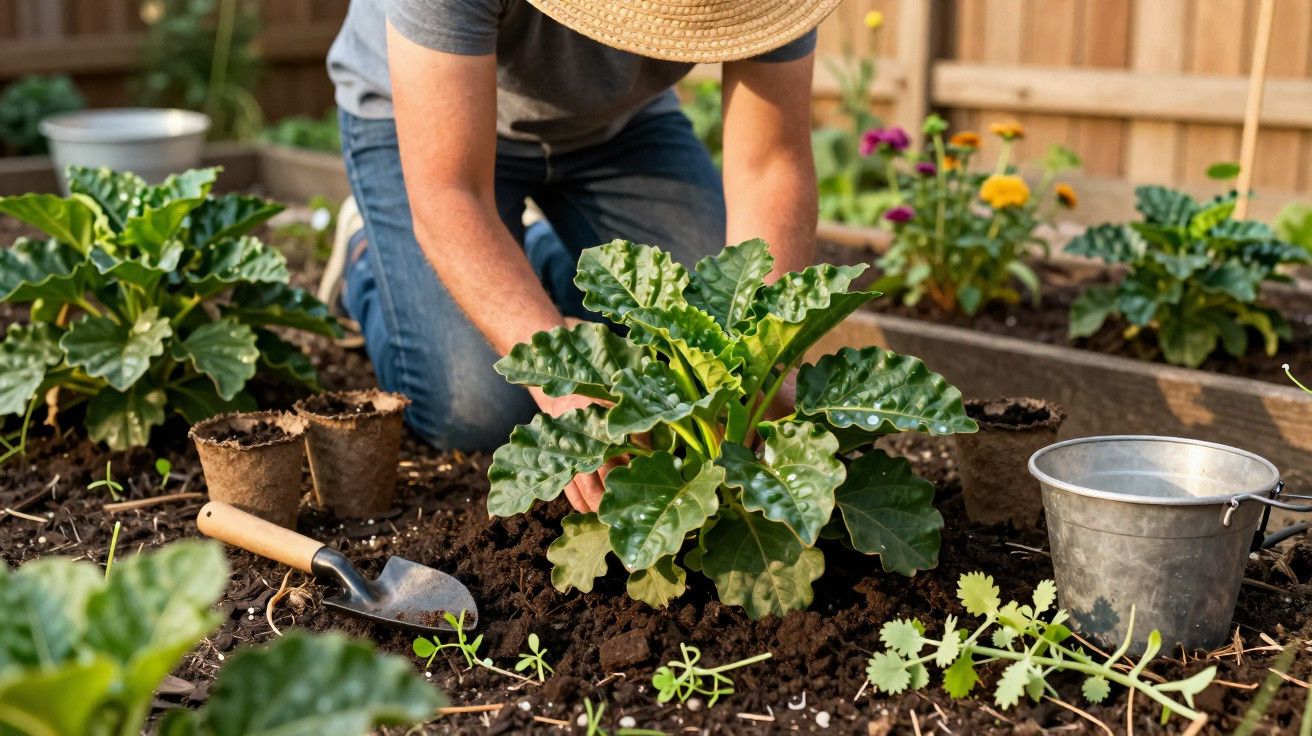
Many amateur gardeners will recognise the problem: no sooner has a border been neatly prepared than grasses and weeds reappear among the perennials and shrubs. Now that chemical weedkillers are largely off limits in private gardens, the issue can seem even more pronounced. Rather than spending every weekend on your knees, however, you can plant the soil strategically with a permanent living cover.
The unassuming border hero: Bergenia as living weed control
The plant in focus is a perennial commonly sold as Bergenia (Bergenia purpurascens). It is a long-lived, hardy perennial that can withstand severe frosts of -20 to -30°C. Once established, it will remain in the garden for many years and become more dependable with every season.
Within a few years, a single plant grows to around 30 to 50 centimetres tall and 40 to 70 centimetres wide. Planted in groups, they create a thick carpet of large, leathery leaves. In spring, sturdy flower stems bearing pink blooms rise above the foliage; depending on the variety, flowers may also be white or purple. This provides not only natural weed protection but also an attractive focal point.
Gardening experts report: a well-established ground cover such as Bergenia can reduce weed growth by 70 to 90 per cent after one to two years.
This effect comes from the large leaves, which shade the ground completely. The surface dries more quickly and receives little light, so many weed seeds barely germinate in these conditions. Any wild plants that do emerge rarely manage to grow through the dense foliage.
Where Bergenia offers the greatest benefit in the garden
Bergenia is among the most adaptable ground-cover plants for ornamental gardens. It grows well in ordinary garden soil, provided it is not waterlogged. Loose, free-draining soil produces the best results. It also copes well with sandy soil after an initial feed of compost.
Suitable positions at a glance
- Borders beside paths: Used as a green edging along garden paths or driveways, it prevents grass and weeds from creeping into the edges.
- Beneath deciduous trees and shrubs: It is ideal at the base of deciduous trees and shrubs, where conditions are often dry and full of roots, making lawns difficult to establish.
- Banks and slopes: In hard-to-reach areas, the plant greatly reduces maintenance while also helping to stabilise the soil.
- Rock gardens or at the base of walls: Combined with stones or dry-stone walls, it creates soft green transitions.
- Partly shaded areas: Suitable along north-facing sides, beneath open hedges or at the edge of shrub belts.
Bergenia tolerates sun, partial shade and even so-called “dry shade” locations, meaning areas beneath large trees that receive very little rainfall. Regular watering is helpful at first in these places, until the plant develops deeper roots. In very dark, permanently wet sites, however, it will struggle. There, combining it with other ground covers such as robust cranesbill varieties or periwinkle is worthwhile.
The best time to plant Bergenia
Spring or autumn, outside frost periods, are the ideal planting seasons. In many temperate regions, March and April are particularly suitable. The soil is still moist after winter, temperatures rise gradually, and plants can root undisturbed before summer stress begins.
Planting in spring often results in a noticeably lower weed density in the same year. Autumn planting, for example in September or October, instead gives plants a quick start the following year, as they benefit from soil activity during winter and grow away rapidly in spring.
| Planting season | Benefits |
|---|---|
| Spring (March–April) | Good root development before summer, an early visible effect on weeds |
| Autumn (September–October) | Less watering required, a head start the following spring |
Creating a dense Bergenia carpet: planting step by step
For Bergenia to achieve the desired result as living weed protection, the establishment phase is especially important. Careful preparation at this point will save many hours of weeding later.
Preparing the soil
- Clear the area thoroughly of existing weeds, digging out roots as completely as possible.
- Loosen the soil to a depth of approximately 20 centimetres, removing stones and compacted areas.
- On poor soil, work in two to three centimetres of mature compost.
- Avoid waterlogging; if necessary, incorporate grit or sand to improve drainage.
Spacing and planting method
Set individual plants around 35 to 40 centimetres apart. At this spacing, the leaves should join to form an unbroken carpet within one to two years.
- Dig planting holes slightly wider than the root ball.
- Position each plant so that the root collar sits at soil level.
- Firm the soil well to prevent air pockets.
- Water thoroughly immediately after planting.
If desired, spread a thin layer of bark mulch or grass clippings between the plants afterwards. This temporary mulch prevents drying out and suppresses weeds until the perennials have reached their full spread.
Care during the first year: minimal effort, major benefit
Bergenia is one of the easiest perennials to maintain. During the first year after planting, gardeners need only keep a few straightforward points in mind:
- Water regularly so that the soil remains evenly moist, but never waterlogged for extended periods.
- Pull out newly emerging weeds early, while the leaves have not yet closed over the ground.
- Remove dried or damaged leaves occasionally, allowing the plant to direct more energy into fresh shoots.
Once it has established, Bergenia proves remarkably drought tolerant. In average summers, it can often manage without additional watering. Only during prolonged hot spells will it appreciate an occasional watering.
Every three to five years, it is useful to divide older clumps. In spring or autumn, lift the plants, divide them with a spade or knife, and replant the younger outer sections. This keeps the carpet vigorous and allows it to be extended gradually, without buying new plants.
How the “living mulch layer” works in the garden
Gardeners often refer to densely growing ground covers as “living mulch”. This means a plant covering that delivers benefits similar to conventional mulching materials while looking considerably more attractive.
Bergenia performs several tasks at once: it slows weeds, protects the soil, retains moisture and enhances the appearance of borders.
In practical terms, this means:
- Fewer weeds: Lack of light and space makes life difficult for many wild plants.
- Protection against erosion: Soil is more likely to stay in place on banks.
- Moisture retention: Shaded soil dries out more slowly, extending the intervals between watering.
- Soil life: Earthworms and microorganisms thrive beneath the leafy canopy, improving soil quality.
Limitations, risks and useful combinations
The method does have its limits. Vigorous spreading weeds such as couch grass or ground elder can sometimes still push through between the leaves. Anyone with these troublesome weeds in the garden should clear the area particularly carefully before planting and inspect it more closely during the first few years.
In very wet locations, Bergenia can become susceptible to root rot. A raised bed or a site with a gentle slope is more suitable in such conditions. Constant deep shade without daylight is also unfavourable: plants remain weak and their weed-suppressing effect declines.
Bergenia becomes especially interesting when mixed with other tough ground covers. Between open-grown trees and shrubs, suitable companions include:
- cranesbill species, which add loose, flowering cushions,
- small spring bulbs such as crocuses or snowdrops, which peep through the foliage in early spring,
- or low grasses, which introduce structure and movement.
Anyone wishing to maintain their garden with fewer chemicals over the long term can use plants such as Bergenia as one element of a well-considered planting plan. The denser and more varied the planting in a border, the harder it is for unwanted plants to gain a foothold – leaving more time to genuinely enjoy the garden rather than constantly weeding.

Comments
No comments yet. Be the first to comment!
Leave a Comment