
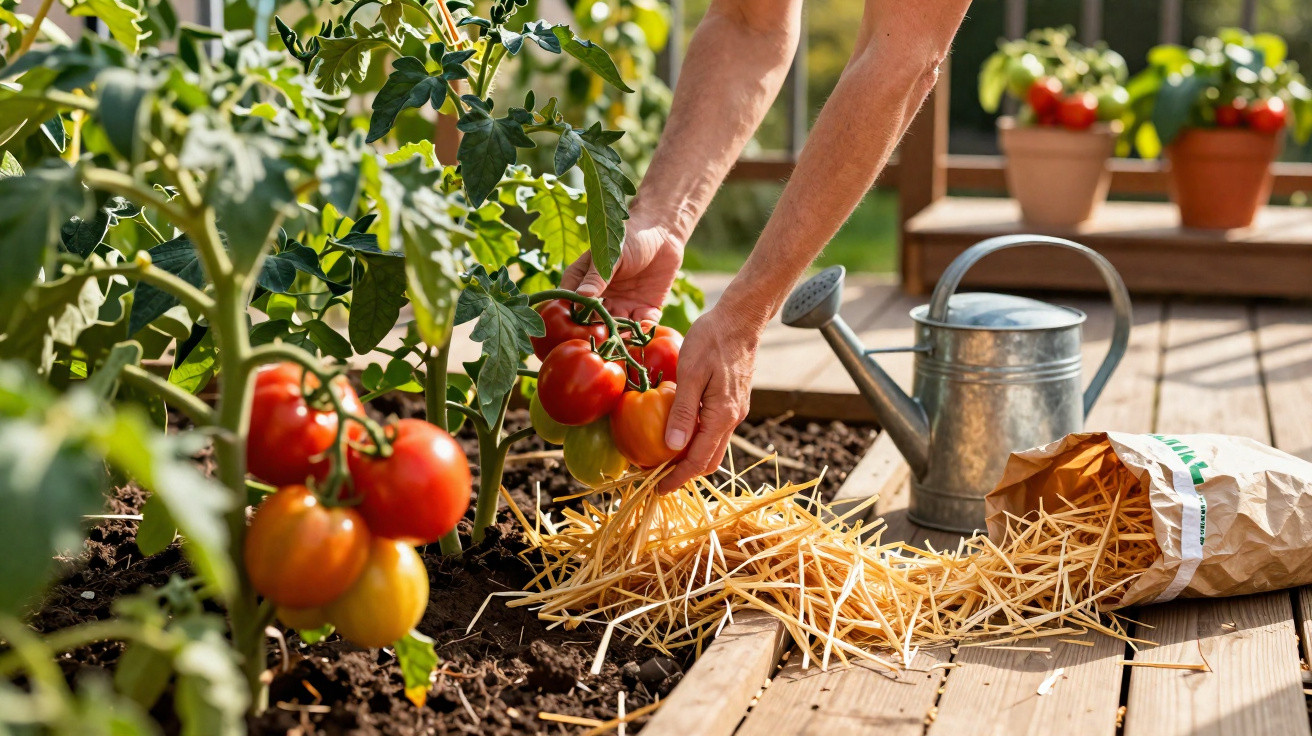
A seemingly minor step can transform the outcome.
Anyone growing tomatoes in the garden or on a balcony will recognise the familiar problems: fruits split, leaves turn yellow, and fungal disease suddenly appears. Watering is usually blamed straight away – too much, too little or at the wrong time. Yet the issue is often not simply the volume of water, but how it reaches the soil and what sort of soil receives it.
Why tomatoes wilt despite plenty of water
Tomatoes have a high water demand, but they react badly to an inconsistent supply. Going without water for days and then receiving a full watering can in one go puts the plants under strain.
Common signs of watering problems include:
- tomatoes splitting after heavy rain or thorough watering
- yellow, dry leaves caused by a lack of water
- soft, mushy stems when roots are sitting in wet soil
- increased fungal disease when foliage is repeatedly wetted
What matters less is how much you water, and more how consistently plants receive water and how effectively the soil retains it.
Garden experts therefore recommend watering tomatoes less frequently but thoroughly. Water needs to penetrate deeply to the roots rather than merely dampening the top few centimetres of soil. A slow flow is ideal, using a drip hose, for instance, or a watering can with a narrow spout aimed directly at the soil.
The biggest mistake: watering from above
Using a sprinkler or hose over the plants for convenience causes long-term harm. Leaves remain wet for a considerable time, particularly within dense tomato growth. These damp surfaces are exactly what fungi such as tomato blight thrive on.
Instead, you should:
- water only around the root zone, never over the leaves
- water in the morning or early evening, rather than in the midday heat
- water deeply and less often instead of giving a shallow daily watering
Even if you already follow this advice, healthy plants often still lack one crucial element: properly prepared soil that can store water and buffer fluctuations.
The overlooked task before the watering season
Before the main summer watering period begins, tomato plants need a protective layer directly on the soil. This task is surprisingly often overlooked, although it takes only a few minutes and remains effective for weeks.
Those who cover the area around tomato roots with a protective layer in good time stabilise the soil microclimate and make the plants far more resilient to stress.
This layer is known as mulch. It consists of organic material laid loosely over the soil around the stem. In effect, it covers the ground like a blanket, so wind and sunlight no longer hit the surface as intensely.
Mulching: how the protective layer works for tomatoes
Mulching means covering the bare soil around a tomato plant. It offers several benefits at once:
- water evaporates much more slowly
- soil remains loose and crumbly for longer
- temperature changes are moderated
- weeds have fewer opportunities to grow and cannot take nutrients from the tomatoes
Suitable materials for a mulch layer include:
| Material | Benefits | Notes |
|---|---|---|
| Straw | Dries quickly, lasts well and is readily available | Do not pack it too densely, so air can still reach the soil |
| Shredded leaves | Recycled garden material that improves the soil over time | Shred it as finely as possible to prevent it from matting together |
| Mature compost | Provides nutrients while protecting against drying out | Apply only a thin layer, as it is very rich in nutrients |
As a guide, a layer around 5 to 10 centimetres deep around each plant is sufficient. Important: mulch must not be packed tightly against the stem; leaving a small gap helps prevent rot at the base.
The right time to apply tomato mulch
Good gardeners do not wait until hot weather has already arrived before thinking about mulch. It makes sense to lay the first layer once the soil starts warming in spring – usually in March or April outdoors, and often a little earlier on balconies.
After planting out tomatoes in May, the layer can be topped up or lightly replenished. If the soil is already dust-dry at that point, water it thoroughly first and mulch afterwards. This allows the mulch to lock in the existing moisture.
How to water properly when the soil is mulched
A mulch layer also changes how you should water. Many people carry on watering as before, then wonder why the soil looks dry on top. Beneath the mulch, however, conditions are often very different.
A quick check before every watering helps:
- Gently move the mulch aside.
- Push a finger 3–5 centimetres into the soil.
- Check whether the soil still feels cool and slightly moist.
If the soil beneath the mulch still feels fresh, tomatoes generally do not need water – even when the surface appears dry.
Only when the soil is dry several centimetres below the surface is a thorough watering worthwhile. Then water slowly at the base of the plant, allowing the water to run beneath the mulch. This keeps leaves, stems and fruit as dry as possible while ensuring the roots receive what they need.
Why mulched tomatoes are often healthier
Garden experts repeatedly observe that tomatoes in mulched beds grow more strongly and are less prone to disease. There are several reasons for this:
- The soil dries out less, so roots experience stress less often.
- Consistent moisture lowers the risk of fruits splitting.
- Soil splash carrying fungal spores is less likely to reach the leaves.
- The organic material gradually makes the soil more fertile.
Many amateur gardeners report better flavour and sturdier plants when they mulch early and consistently water only at the base. The plant has less need to “repair” itself and can devote more energy to flowers and fruit.
Common mistakes when mulching tomatoes
The method is straightforward, yet small mistakes often reduce its effect:
- Pressing mulch directly against the stem: this raises the risk of rot.
- Using piles of fresh grass cuttings: they can rot and tie up large amounts of nitrogen.
- Creating an overly thick, airtight layer: the soil may begin to develop mould.
- Mulching very wet, cold soil in spring: this slows the warming of the ground.
Those who take it gradually, check regularly and replace material when needed will soon develop a feel for the amount and material that suit their garden.
How balcony and container gardeners benefit
This technique is not limited to a traditional vegetable garden. Tomatoes grown in pots or containers are particularly vulnerable to drying out quickly because their containers are exposed to sun and wind on every side.
A thin mulch layer is useful here too. It is also worth:
- choosing light-coloured pots, which heat up less
- filling saucers with water only briefly after watering, rather than leaving them full permanently
- carrying out the moisture check under the mulch morning and evening during very hot weather
For pots on a balcony, decorative materials such as chopped coconut fibre can be used instead of straw. The effect is similar: the surface stays cooler and the plant gets through summer with considerably less watering stress.
Ultimately, it is not the size of the watering can but soil preparation that determines whether tomatoes grow vigorously and produce flavoursome fruit. A simple mulch layer and a quick feel of the soil before each watering can make the difference between vulnerable and resilient plants – and take only a few minutes of work.
Comments
No comments yet. Be the first to comment!
Leave a Comment