
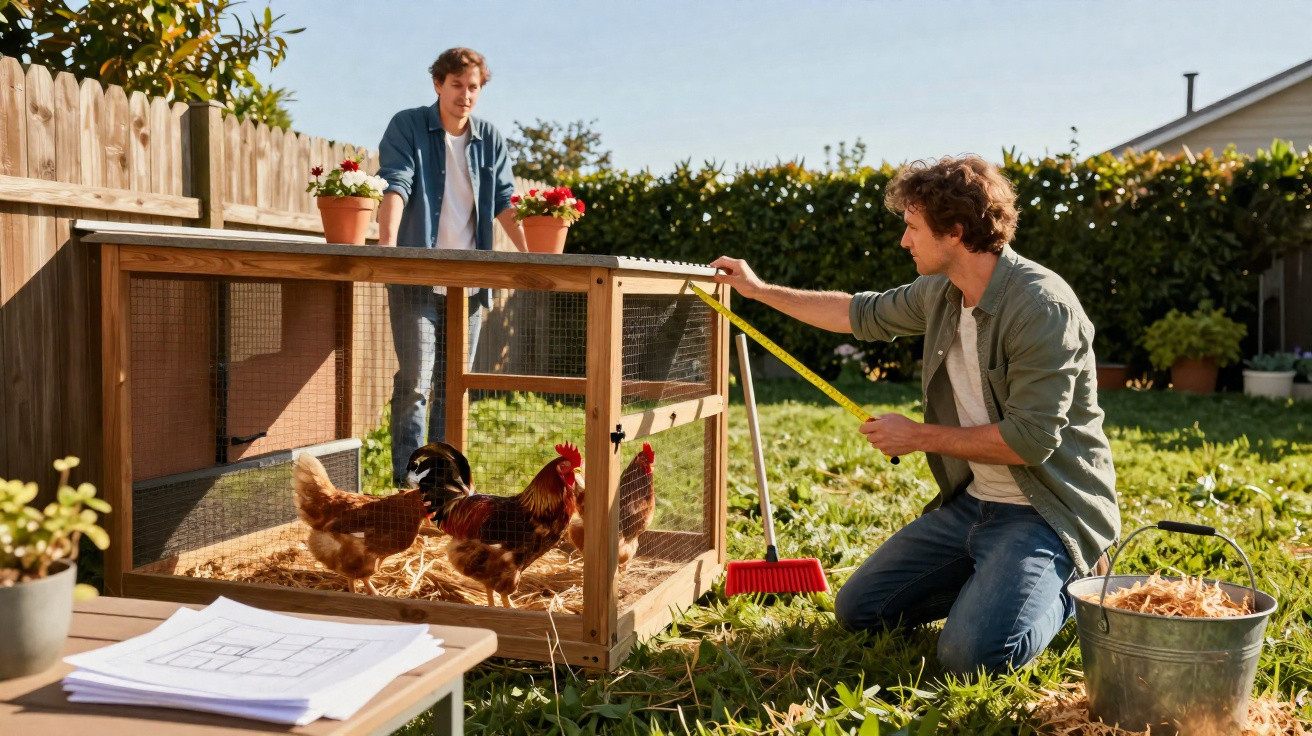
Fresh eggs, recycled peelings and animals in the garden: keeping a small domestic flock appeals to people in both rural and urban areas. Although this type of set-up is often seen as harmless, it can cause friction. Repeated noise, smells, flies or a poorly positioned chicken coop may lead to a complaint against the owner. In some cases, the cost can run to several hundred euros.
A private garden does not permit every type of installation
Owning a plot does not give someone free rein to build any structure they wish or keep as many animals as they like. Before buying a shelter and hens, it is essential to check the rules that apply in the local commune.
The local development plan, municipal by-laws and departmental health regulations may all set restrictions. Some residential areas limit livestock installations. Others impose minimum distances, maintenance requirements or specific rules for cockerels.
The size of the shelter is also important. A very small movable or removable chicken coop will not usually require a planning procedure. However, when the structure is permanent and larger, a prior declaration may be required. The biggest constructions may need planning permission.
“Before any installation, the town hall remains the most direct point of contact for finding out which local rules apply to a chicken coop and where it may be located.”
It is also necessary to check the co-ownership regulations or the specifications for a housing development. These private documents may prohibit certain animals or regulate their presence, even where municipal rules do not object.
Chicken coop distances depend on the number of poultry
There is no single distance that applies throughout France between a chicken coop and a neighbouring boundary. Local health rules often establish thresholds according to the number of animals kept and the type of installation.
Under commonly used guidelines, a separation of 25 metres may be required where a flock includes between 10 and 50 hens. Once there are more than 50 birds, the distance may rise to 50 metres. These thresholds never remove the need to consult the regulations for the relevant department, as a commune may impose stricter requirements.
Practical steps that prevent many disputes
- Position the shelter away from neighbouring windows, terraces and bedrooms.
- Choose ground that can be easily cleaned and kept dry.
- Clear away droppings and leftover feed regularly.
- Store feed in airtight containers to deter rodents.
- Do not allow water to collect, as stagnant water attracts insects.
- Discuss the project with neighbours before the animals arrive.
The last measure may seem straightforward, yet it can defuse many potential problems. A neighbour who has been informed may be more tolerant of occasional noise than of an installation that suddenly appears a few metres from their terrace.
A cockerel’s crow can cost 135 euros
Hens cluck, scratch at the ground and may become restless if disturbed. The cockerel, however, is often at the centre of complaints. Its crowing may begin very early and recur throughout the day. Contrary to a widespread belief, being a farmyard animal does not automatically shield it from action by neighbours.
Noise may be regarded as an abnormal disturbance when, through its duration, repetition or intensity, it affects the peace of nearby residents. Depending on the circumstances, municipal services, municipal police, the gendarmerie or other authorised officers may be called upon.
“An isolated crow does not automatically result in a penalty. The risk arises when the nuisance continues, is repeated and no solution is sought.”
A fine of 135 euros may be imposed for neighbourhood noise nuisance established under certain conditions. If the matter proceeds to court, penalties may be more severe, including a claim for compensation for the harm suffered. A judge may also order practical measures, such as moving the chicken coop, reducing the number of animals, removing the cockerel or improving the shelter’s insulation.
Smells and flies can also lead to action
Noise is not the only source of disagreement. A poorly maintained chicken coop can create strong odours, attract flies and encourage rats. A build-up of droppings, damp bedding and food waste left in the open can quickly turn a small family flock into a nuisance.
In such circumstances, a neighbour can report the matter to the town hall or hygiene services. Departmental health regulations generally require suitable standards of cleanliness and sanitation. An owner who allows the situation to deteriorate may receive a formal notice.
The fine may then reach 450 euros, depending on the offence identified, in addition to the costs of cleaning, repair work or any civil proceedings.
A useful day-to-day maintenance routine
Keeping a chicken coop clean does not necessarily take hours of work. Removing the most obvious droppings several times a week, replacing bedding as soon as it becomes damp and emptying feeders in the evening already prevents much of the inconvenience.
Composting droppings can be a good option, provided it is done away from property boundaries and in a suitable bin. Hen droppings are high in nitrogen. If used before they have matured, they may scorch plant roots. It is preferable to leave them to break down with dry matter, such as fallen leaves or straw, before using them in the garden.
Act before a neighbour makes a complaint
When a disagreement arises, discussion is often the quickest route. Moving the shelter, improving cleaning practices or giving up the cockerel may be enough to restore calm. A judicial mediator can also help both parties reach a compromise without immediately starting proceedings.
Owners therefore have an interest in keeping a flock suited to the size of their garden. Three or four well-housed hens already provide a regular supply of eggs and make use of some vegetable waste. Keeping more animals in a small space increases smells, noise and health risks. In this area, a discreet, well-maintained chicken coop protects both the poultry and neighbourly relations.






Comments
No comments yet. Be the first to comment!
Leave a Comment