
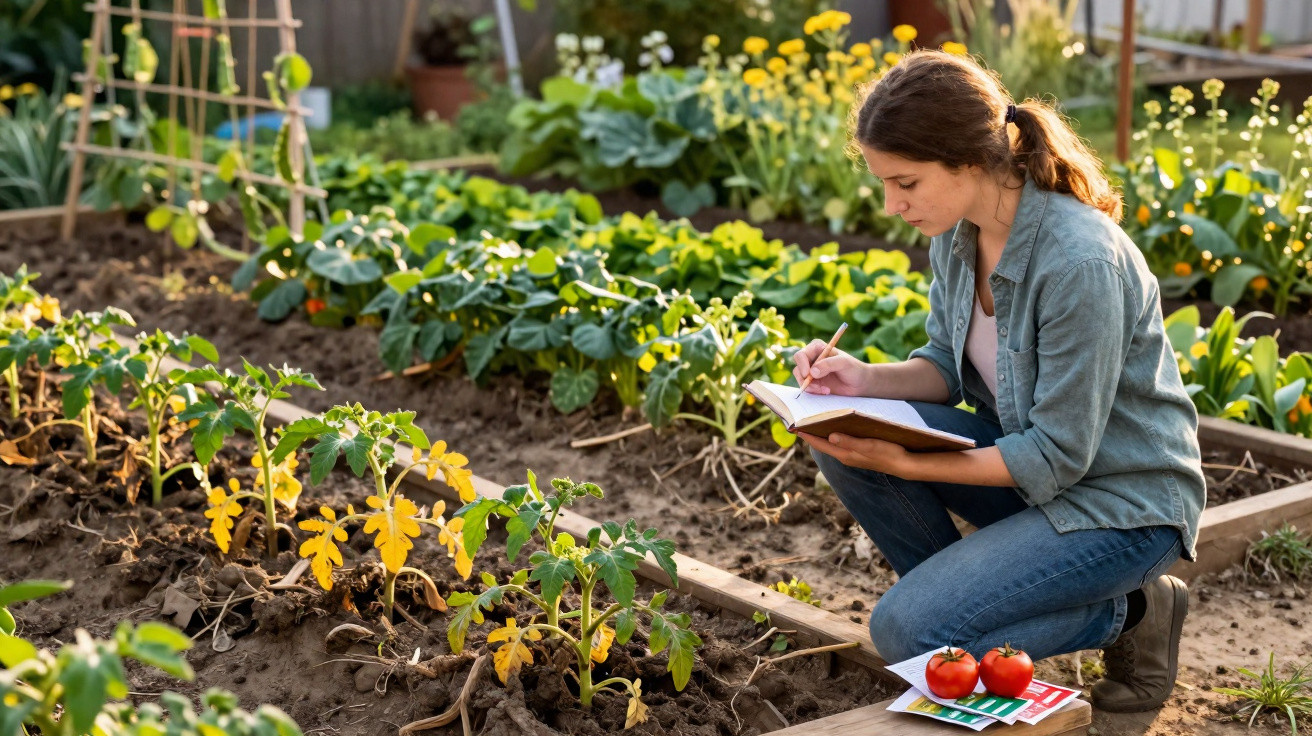
Many amateur gardeners plant their tomatoes in the same spot year after year – then wonder why fungal disease appears, plants struggle and fruits stay tiny.
An experienced vegetable gardener nearby would never do this. Instead, he follows one straightforward rule that keeps his beds healthy, stabilises yields and greatly reduces the dreaded late blight fungus. Anyone who understands and applies it in their own garden can avoid plenty of frustration – without using chemicals.
Why tomatoes decline when grown in the same place every year
Tomatoes are among the hungriest crops in a vegetable garden. They take substantial quantities of nutrients from the soil, particularly nitrogen, potassium and calcium. When they occupy the same site for several consecutive years, these reserves are gradually depleted.
The soil loses more than nutrients: its structure also deteriorates. It may become compacted, develop cracks or turn silty after rain. Water either drains away too quickly or collects in the pores. The roots suffer, plants look weak and growth slows down.
The consequences are easy to spot:
- Leaves turn yellow or develop spots
- Fruits remain small or fail to ripen properly
- Plants topple over more easily in windy weather
- Water soaks into the ground unevenly
There is also another issue: diseases and pests build up. Spores of late and early blight (often simply called “mildew” or “fungus” in everyday language) survive in plant debris and soil. By putting tomatoes back in the same place every year, you are effectively serving these pathogens a permanent buffet.
The apparent “unlucky grower” in the tomato bed is usually not unlucky – they repeat the same growing mistake every year.
The key rule: avoid the tomato site for several years
Professional growers rarely work on impulse; they follow a fixed planting plan with a clear rotation. For tomatoes, the rule of thumb is that they should not return to the same position for at least four years.
In practical terms, if a particular area contains tomato beds in 2026, it should remain free of tomatoes until at least 2030. Other vegetable families can be grown there during this break. This allows the soil to recover and deprives many pathogens of their foundation.
The nightshade family is particularly important. It includes:
- Tomatoes
- Potatoes
- Peppers
- Chillies
- Aubergines
All of these crops share similar diseases and pests. Planting potatoes immediately after tomatoes therefore changes very little – the problems remain in the bed. For the soil, it makes little difference whether the roots produce red fruits or tubers if they belong to the same plant family.
What matters is not the individual variety but the plant family. Separating families breaks disease cycles.
What to grow in the bed after tomatoes
Once a tomato season has ended, there is an opportunity to use the space to restore the soil while continuing to harvest crops. Several crop groups are especially suitable.
Legumes as natural nutrient suppliers
Beans, peas and broad beans work alongside root-nodule bacteria. These tiny helpers capture nitrogen from the air and make it available to plants. As a result, the bed can replenish its nutrients.
- Peas: planted early in the year; they prefer lighter soils that are not excessively wet
- Dwarf beans: produce plenty of green material while remaining compact
- Broad beans: tolerate cool conditions and are ideal for early spring
“Green manure”: plants that repair the soil
A useful step between two vegetable crops is sowing what is known as green manure. These plants are not harvested; instead, they work for the soil.
- Phacelia: creates a dense network of roots, loosens the soil and attracts many insects
- Winter vetch or other clovers: add nitrogen and protect against erosion
- Oats or rye: root deeply and improve soil structure
A practical sequence could look like this:
- Harvest the tomatoes in summer and remove all diseased plant material completely.
- Lightly hoe the soil and sow a green manure crop, such as phacelia in late summer.
- In spring, work the plants in shallowly or leave them on the surface as mulch.
- Then plant legumes or other compatible crops.
Gentle follow-on crops with low nutrient needs
After nutrient-hungry tomatoes, choose vegetables that demand less from the soil and do not belong to the same family. Typical options include:
- Radishes
- Turnips and swedes
- Lamb’s lettuce
- Leeks
- Spinach
These crops keep the soil active without exhausting it completely. At the same time, the risk of passing on diseases is reduced.
Rotation in a small garden: how it works even in 20 square metres
Many urban and terraced-house gardeners assume that crop rotation is a luxury reserved for large farms. It is not. Even a small garden can be divided into separate sections.
A simple layout for a home garden could look like this:
| Year | Area A | Area B | Area C |
|---|---|---|---|
| 2026 | Tomatoes and peppers | Lettuces, radishes, spinach | Beans, peas, kale |
| 2027 | Beans, peas | Tomatoes, peppers | Root vegetables (carrots, beetroot) |
| 2028 | Root vegetables | Beans, peas | Tomatoes, peppers |
Nothing more is needed. Three broad sections are enough to move tomatoes each year and avoid the worst problems.
Better a simple plan that you follow than the perfect system in your head that is never put into practice.
Why a garden diary works wonders
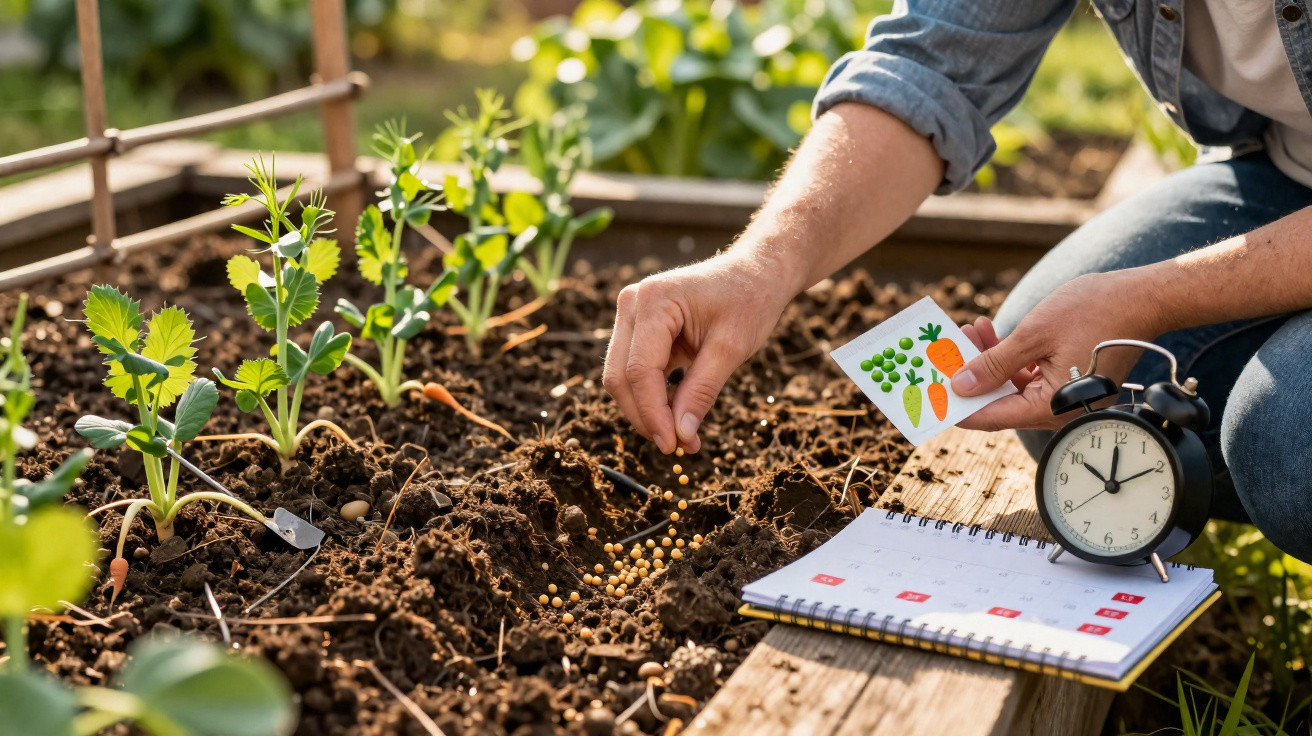
The neighbour with vigorous tomatoes usually does not have a photographic memory; they have a notebook. They make a short note of what grew where. Several years later, they can see exactly which corner is suitable for tomatoes again.
Just a few brief notes are enough:
- Year
- Sketch or bed number
- Plant families (for example: “nightshades”, “brassicas”, “legumes”)
This small effort prevents tomatoes from ending up on old problem sites again.
Tips for healthy tomato beds from autumn onwards
The foundations for strong plants are not laid only when young plants are set out in May, but months earlier. Autumn in particular offers good opportunities.
- Apply mature compost: 2 to 3 kilograms per square metre improves soil structure and supplies nutrients.
- Do not leave diseased material in the bed: remove tomato debris affected by fungus consistently; do not put it on the ordinary compost heap.
- Avoid digging the soil constantly: gentle loosening with a garden fork preserves soil life and earthworms.
- Use mulch: grass clippings or leaves keep the surface moist and protect it from drying out.
Under glass or polythene, many of these effects become even stronger. In greenhouses, there is no rain, the soil dries out more quickly and pathogens can remain in the system more easily. Strict rotation or partial soil replacement is particularly worthwhile in these conditions.
Why late blight keeps returning – and how to slow it down
The dreaded late blight thrives on wet leaves and poor air circulation. When the bed is not changed, several unfavourable factors are often combined: exhausted soil, weakened plants and surroundings full of old spores.
A few further adjustments can make a clear difference:
- Grow tomatoes beneath an overhang or rain shelter where possible
- Do not water from above onto the leaves; water directly at the roots instead
- Remove side shoots regularly so that more air can circulate
- Avoid overcrowding; grow fewer plants with more space between them
Combining these growing methods with a well-planned change of site noticeably reduces fungal pressure. If late blight does still occur, it spreads more slowly and the harvest does not collapse completely.
How to apply the principle to other vegetables
What works for tomatoes can be applied to many other crops: heavy feeders should not be grown in the same place every year. Cabbages, squashes, celery and leeks also benefit from breaks and rotation with legumes or green manure.
Anyone familiar with the main plant families can quickly create better plans. Common recurring groups include:
- Brassicas (white cabbage, broccoli, Brussels sprouts)
- Carrot family crops (carrots, parsnips, parsley)
- Cucurbits (courgettes, cucumbers, winter squash)
- Alliums (onions, garlic, leeks)
Even a basic understanding of these families helps to prevent mistakes, without needing complicated tables.
Anyone who stops stubbornly putting tomatoes in the same spot and instead changes their location consistently will gradually build resilient, living soil. The plants repay this with fewer diseases, stronger growth and fruits that taste of summer again – rather than disappointment.
Comments
No comments yet. Be the first to comment!
Leave a Comment