
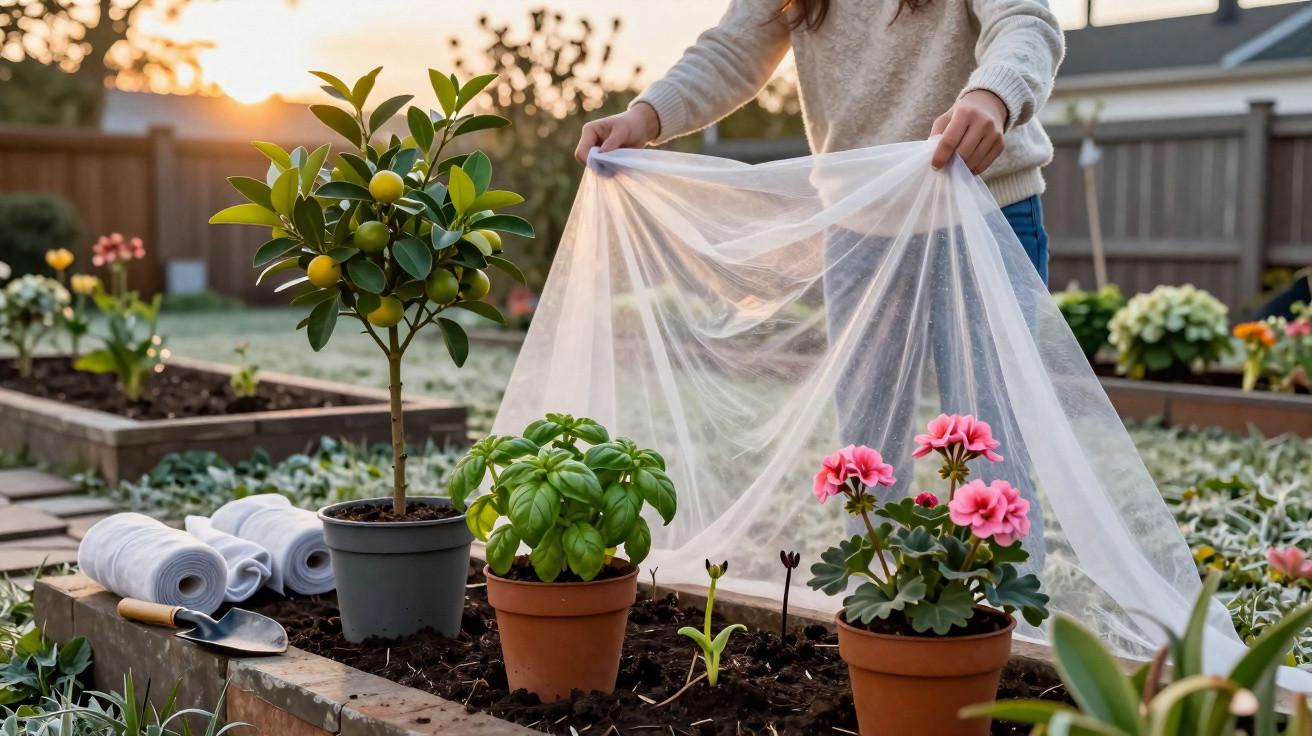
Days are becoming milder, yet cold April nights can quietly cause total devastation in many gardens – despite the sunshine and springtime excitement.
Relax too soon and the morning can bring an unwelcome surprise: limp leaves, blackened shoots and herbs that look as though they have dried out. Late frosts in April hit young, delicate plants particularly hard. In many cases, the damage can be avoided altogether with a simple material from the garden centre, costing little more than three euros, which is quickly placed over plants in the evening.
Why April nights are especially treacherous for the garden
During the day, April often already feels like early summer. The sun is out, jackets stay open and fresh shoots emerge in the borders. This is precisely why many amateur gardeners underestimate the risk of frost.
As soon as the sky clears at night, conditions can change rapidly. Temperatures drop sharply, often to between 0 and minus 2 degrees. Hardy perennials usually cope without difficulty, but fresh, juicy young shoots do not.
Plants lose heat through night-time radiation, effectively straight into the sky. Without a protective layer of cloud, leaf surfaces cool even faster than the surrounding air. Water inside the cells freezes, and ice crystals rupture the delicate structures.
The real damage often becomes apparent only with the first morning sunshine: the ice thaws abruptly, weakened cells burst, and leaves turn translucent, droop limply or become brown. Once this stage is visible, the affected plant parts can generally no longer be saved.
Prevention is the only reliable strategy against April frost – once damage has occurred, there is little chance of recovery.
Experienced gardeners therefore watch the weather app more closely than the calendar. It is not the date that matters, but the overnight temperatures – and this is where one simple aid comes in.
The unassuming fabric that provides several degrees of warmth
The solution is a thin, white protective fleece, available from virtually every garden centre. Most people know it as frost-protection fleece or winter-protection fleece. It weighs almost nothing, costs only a few euros and still acts as a small insulating layer over the bed.
Laid loosely across plants, the fleece traps the warmth stored in the soil during the day. Air and moisture can pass through it, while heat escapes much more slowly. This often gives the garden an extra two to three degrees – exactly the difference between undamaged leaves and completely frozen shoots.
Because the material is so light, it can rest directly on foliage without snapping stems. The aim is not to seal plants in airtight wrapping, but to create a gentle buffer of warmth.
A single piece of protective fleece is often enough to carry several sensitive beds through the frosty transition period.
Using it soon becomes an evening routine: if the forecast or weather app predicts a cold, clear night, place the fleece over vulnerable plants in good time before sunset. Remove it again in the morning as soon as the sun becomes strong.
These five plant types suffer most from April frost
Not every plant reacts to cold in the same way. Some familiar garden favourites need extra care now whenever overnight temperatures can still plunge.
Potted citrus – sun lovers with a cold intolerance
Lemon and orange trees, mandarins and kumquats bring a holiday feel to patios and balconies, but they come from warmer climates. Even light frost can harm them severely. Young leaves scorch and small fruits drop off.
Where possible, move citrus trees into a frost-free space on cold evenings: a garage with a window, a hallway, a conservatory or a cool spare room. Outdoors, a thick protective cover is the only option – and fleece also helps here as the first barrier, especially when combined with a sheltered, wind-protected position.
Basil – the most sensitive of kitchen herbs
Few culinary herbs are as delicate as basil. Even cool morning air can leave its leaves grey-green and mushy. Anyone who already has basil outdoors in pots should become cautious when temperatures fall below five degrees.
- Bring it indoors at night or place it against a sheltered house wall.
- Wrap the pot in fleece in the evening or cover it completely.
- Avoid cold draughts on the windowsill – a slightly brighter spot indoors is preferable.
Once basil has been properly frosted, it rarely recovers. Protecting it early avoids having to buy a replacement later.
Hydrangeas – buds in immediate danger
Many hydrangeas put on strong growth in April, with the buds for summer flowering already sitting at the tips of the shoots. A single frosty night can destroy these buds, resulting in far fewer flowers – or none at all – in summer.
Hydrangeas planted in beds benefit greatly from a fleece canopy in the evening. For smaller shrubs, it is enough to drape the fleece loosely over the plant like a bell and weigh it down at ground level with stones.
Geraniums – balcony favourites vulnerable to frost
Many people put geraniums outside permanently on balconies or patios as soon as the first warm days arrive. This is a mistake while night frost remains possible. The plants themselves often survive mild cold, but the fresh flower buds are highly sensitive.
A movable position is ideal: outdoors during the day, then in a protected place or indoors at night. Anyone who does not want the effort of carrying them back and forth can simply place fleece over the entire balcony railing and its planters in the evening.
Dahlias – tender shoots emerging from the ground
Dahlia tubers in the ground generally begin to shoot cautiously in April. Their first pale-green tips are soft and sensitive to cold. If these shoots freeze, the plant loses both energy and time.
A wide strip of fleece across the bed not only keeps out the cold but also shields young shoots from wind. In harsher locations, it is also worthwhile adding a small mound of soil or a mulch layer directly over the tubers.
How gardeners should apply protective fleece correctly
For the fleece to work properly, a few straightforward steps are needed. They quickly become part of the evening routine.
- Start before sunset: check the weather app and have the fleece ready.
- Lay it on loosely: spread the material over plants or beds without pulling it tight.
- Secure the edges: hold it in place with stones, bricks, pegs or pieces of wood.
- Do not create tents: the material should lie softly over plants rather than flapping in the wind.
- Ventilate early in the morning: remove the fleece when the sun grows stronger so that moisture does not build up.
For container plants, one large piece of fleece is often sufficient to cover several pots. If desired, secure it loosely around the pot rim with string.
Mulch as a second protective layer for roots
Fleece protects frost-sensitive parts of the plant above ground. Below the surface, however, roots are still exposed to fluctuating temperatures. This is where a second, frequently underestimated measure helps: a thick layer of mulch.
A layer of organic material measuring five to ten centimetres acts like a carpet:
- It insulates the soil and keeps temperatures more even.
- It reduces evaporation, so the soil dries out more slowly.
- Over time, it turns into humus and improves soil structure.
Suitable materials include shredded leaves, straw, partly rotted compost and specialist mulch from retailers. Important: do not press mulch directly against stems, as this can encourage rot.
The combination of fleece above and mulch below creates a complete “thermal jacket” for sensitive beds.
Common mistakes that undermine frost protection
Many well-intentioned measures lose their effect through minor oversights. Common pitfalls include:
| Mistake | Consequence |
|---|---|
| Putting fleece on only once the cold has begun | The plant has already cooled down considerably, so protection comes too late |
| Stretching the fleece tightly | Wind can catch it more easily, and the material may tear or blow away |
| Leaving fleece on in the morning | Moisture builds up, increasing the risk of disease |
| No mulch on the soil | Roots remain unprotected and soil temperatures fluctuate more |
Knowing these traps makes it possible to improve protection considerably – and prevents plenty of frustration in the garden bed.
How to spot damaging frost stress early
Not every cold snap ends in a total loss straight away. Those who watch their plants carefully can recognise signs of stress in time. Typical indicators include:
- Leaves look translucent or water-soaked in the morning.
- Shoot tips droop and do not lift again during the day.
- On herbs such as basil, leaves turn grey-green to black.
- Bud scales on hydrangeas or geraniums develop brown edges.
Do not immediately cut back affected sections extensively; instead, wait for one to two days. Only then does it often become clear which areas have truly died. A targeted cut back into healthy wood is worthwhile only after that.
Why the small evening routine is genuinely worthwhile
Covering plants in the evening may seem like an irritating extra task in everyday life. In practice, it usually takes only a few minutes – yet it can determine weeks of growth and abundant flowering.
Especially in years with rapidly changing temperatures, combining inexpensive protective fleece with simple mulch pays off. Those who use both aids can begin the season far more calmly: difficult April nights lose their threat, while the garden looks noticeably fuller, more colourful and more vigorous in summer.




Comments
No comments yet. Be the first to comment!
Leave a Comment