
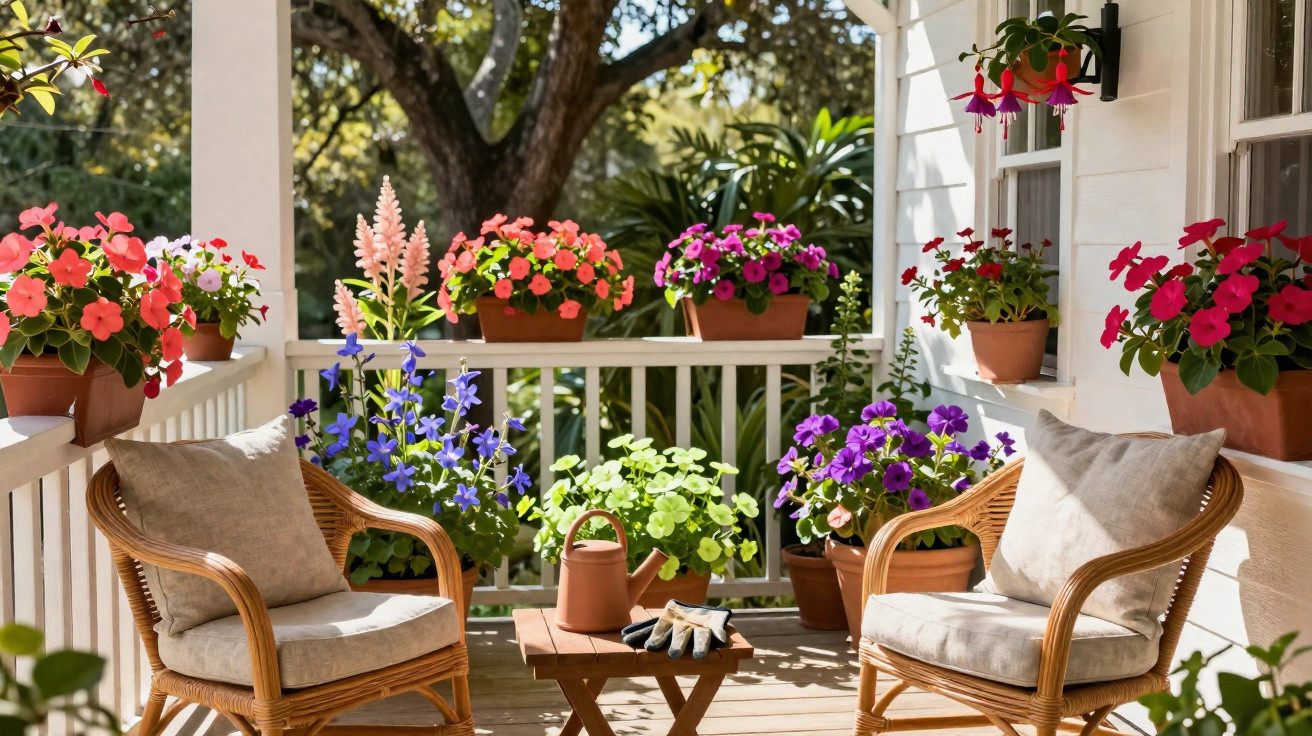
Yes, it is possible.
Many amateur gardeners give up on shady corners in frustration, perhaps planting nothing more than ivy. Yet, with the right shade flowers, these areas can be remarkably colourful. Paying a little attention to light levels, soil and suitable varieties can turn north-facing balconies, wall shade and cool garden corners into eye-catching displays that flower continuously from spring into autumn.
Shade is not all the same
Before introducing new plants, assess the site carefully: how much light does it actually receive, and at what time of day? The answers determine which plants will thrive there and which will not.
- Bright partial shade: sun in the morning or evening, with shade at midday.
- Dappled shade: filtered light beneath open-canopied trees and shrubs.
- Deep shade: almost no direct sun, such as beneath large trees or on the north side of tall buildings.
Many perennials are happy in bright partial shade, where they can cope with a few hours of sun. In genuinely dark spots, only plants that naturally grow in woodland or along woodland edges will succeed. Tiarellas, many perennial geraniums and astilbes come from precisely these conditions, bringing that resilience to containers and borders.
Shade affects the soil too: it dries out more slowly, stays cooler for longer and can easily become overly wet if it is watered according to a sunny-site routine. A loose, humus-rich growing medium is therefore invaluable. Well-rotted compost, leaf mould and a light mulch of chipped wood or leaves keep roots cool, prevent waterlogging and support long flowering periods from June well into September.
“Providing shady soil with plenty of humus and watering regularly but sparingly creates the foundation for a flowering north-facing balcony.”
Seven shade flowers that last all summer
The key is to combine annuals that flower continuously for an immediate display with tough perennials that return every year. These seven plants add colour to dark corners without demanding complicated care.
Impatiens – classic busy Lizzies for continuous colour
Impatiens are among the most dependable balcony flowers for shade and dappled partial shade. From June onwards, they flower almost without interruption, provided the compost never dries out completely. In window boxes and large bowls, they form dense cushions of blooms in white, pink, red or vivid cerise.
Removing faded flower heads regularly keeps the plants neat and encourages even more buds. During cool summers, impatiens can perform even better, continuing to flower until the first harder frosts.
Tuberous begonias – bright highlights for deep shade
Tuberous begonias are an excellent choice where almost no sun reaches the planting area. They prefer sheltered settings, including covered north-facing balconies and shady courtyards. In hanging baskets, window boxes or large pots, their sizeable flowers hang or stand like small lanterns in red, orange, yellow and pastel shades.
They provide uninterrupted colour from June to September as long as their tubers are planted in loose, lightly moist compost. Strong midday sun, however, does not suit them, as it can quickly scorch their leaves. In autumn, the tubers can be overwintered dry and frost-free, then started into growth again the following spring.
Fuchsias – elegant bells for the north-facing balcony
Fuchsias are happiest in conditions where other balcony flowers have long since given up: shade, shelter from wind and no excessive heat. Their characteristic two-tone bells dangle above the foliage for months. In mild areas, flowering often continues into October.
Fuchsias combine well with begonias and impatiens in hanging baskets, containers and window boxes. The important thing is to keep them evenly moist without allowing them to sit in water. Applying a liquid fertiliser for flowering plants every two weeks helps maintain an abundance of blooms.
Astilbes – feathery plumes for shady borders
Astilbes are classic perennials for partially shaded to shady garden areas with consistently fresh soil. Depending on the variety, their upright, feather-like flower plumes emerge from late May to August in white, pink, red or purple.
They work particularly well as background plants in a border: a carpet of low-growing perennials at the front, with astilbes and their tall flower plumes behind. Paired with ferns or hostas, they create elegant, calm planting schemes that still bring colour to darker spaces.
Campanula carpatica – small bells with lasting power
Carpathian bellflower stays low, spreads gradually into clumps and keeps producing delicate new flowers from May until early autumn. It performs at its best in light shade or bright partial shade.
It is ideal for border edges, pots or gaps between paving stones on a shaded patio. Regularly cutting away spent blooms helps to keep the plants flowering enthusiastically.
Perennial geraniums such as ‘Rozanne’ – a robust flowering carpet
Modern cultivars such as ‘Rozanne’ are regarded as marathon performers among perennials. They begin in June and continue producing fresh violet-blue flowers right through to autumn. In partial shade, they grow densely, suppress weeds and combine easily with taller planting companions.
In borders, they create a flowering foreground, while astilbes or fuchsias in containers provide height behind them. Cutting them back in high summer can rejuvenate the plants and encourage fresh new growth.
Tiarella – a carpeting perennial for cool shade
Tiarellas originate in the shady woodlands of North America, so they naturally flourish beneath trees and shrubs or on the north side of a house. They form dense cushions of decoratively marked leaves and delicate flower spikes in white or pale pink, from April until late summer.
They are hard to beat as ground cover beneath shrubs or trees. Combined with perennial geraniums, they create an almost unbroken carpet of flowers that offers slugs little exposed planting space.
How to combine shade flowers effectively
The strongest effect comes from planting several flowering varieties together while covering different heights at the same time. This simple formula transfers easily to a balcony or garden border.
- Ground level: perennial geraniums, tiarellas and Carpathian bellflowers.
- Colourful middle layer: impatiens and tuberous begonias in bold colours.
- Tall backdrop: astilbes or taller fuchsias in containers.
On a north-facing balcony, hanging fuchsia baskets above a dense band of impatiens and begonias work particularly well. In large containers, this creates a genuine curtain of flowers that can conceal walls or railings.
“Layering shade borders at three heights prevents bare patches and creates a harmonious picture from spring to autumn.”
Care for shade flowers: small tasks, big results
Shade plants also need certain basic conditions to fulfil their potential. Many issues, from fungal diseases to disappointing flowering, result from incorrect watering or unsuitable soil.
- Watering: water regularly and moderately rather than rarely and excessively. Waterlogging quickly leads to root rot.
- Soil: it should be humus-rich, loose and not compacted. Improve heavy soils with compost and leaves.
- Feeding: apply liquid fertiliser for flowering plants every two to three weeks in pots; in borders, a little compost in spring is usually enough.
- Removing spent blooms: for impatiens, begonias, fuchsias and Campanula, this considerably extends the flowering period.
- Mulching: leaves, composted bark or wood chips keep the soil cool and reduce watering work.
Avoiding common mistakes in the shade garden
Many plants struggle in shade not because there is too little light, but because expectations are wrong. Planting sun lovers such as lavender or roses directly against a north-facing wall almost inevitably leads to disappointment. It is equally problematic when container rootballs stand in constant rain or saucers are never emptied.
A short test is useful: after thorough watering, how long does the soil remain visibly wet? If it stays noticeably damp for more than two days, add a drainage layer of expanded clay or gravel to pots. In borders, work compost and sand more deeply into the soil.
When shade is actually an advantage
Shady positions have benefits too: pots dry out more slowly, heatwaves place less strain on plants and some species produce more intense colours in cooler conditions. Anyone who has seen a parched south-facing balcony on a hot summer day will suddenly appreciate a north-facing balcony.
Older people and busy city residents in particular benefit from the fact that shade-loving plants require less frequent watering than thirsty sunflowers or petunias exposed to blazing midday sun.
More ideas for dark corners
Alongside the plants already mentioned, hostas, combinations of ferns or evergreen grasses can bring structure to shaded areas. In window boxes, for example, mix hostas with tuberous begonias and fuchsias: broad leaves, dangling bells above them and bright blooms create a particularly lively arrangement.
For households with children, small “woodland islands” can be created in shaded spots: tiarellas, ferns, mossy stones and a few astilbes resemble a miniature forest floor. The once-boring north-facing strip of garden then becomes a secret favourite place – without blazing sunshine, yet full of colour and atmosphere.



Comments
No comments yet. Be the first to comment!
Leave a Comment